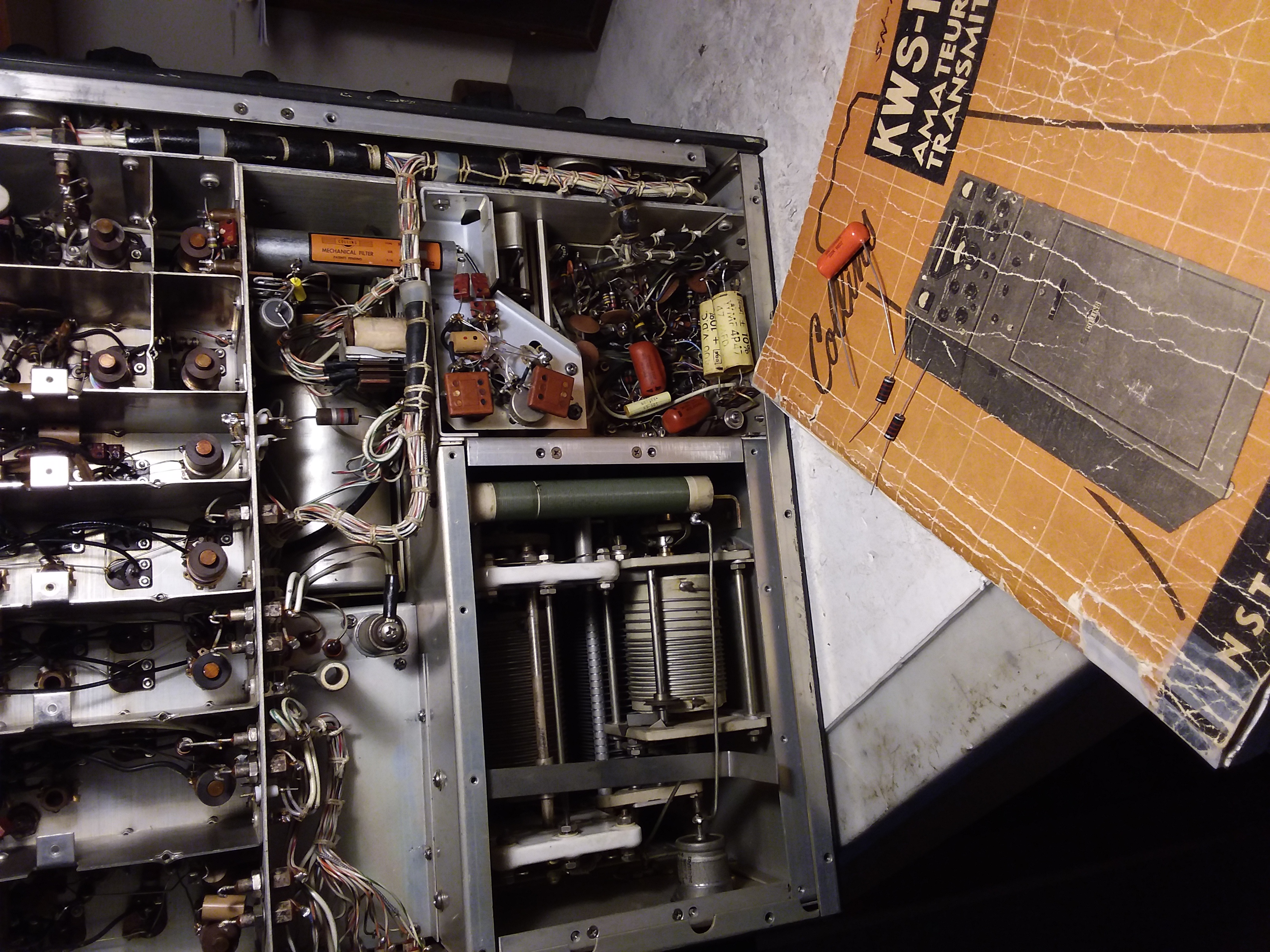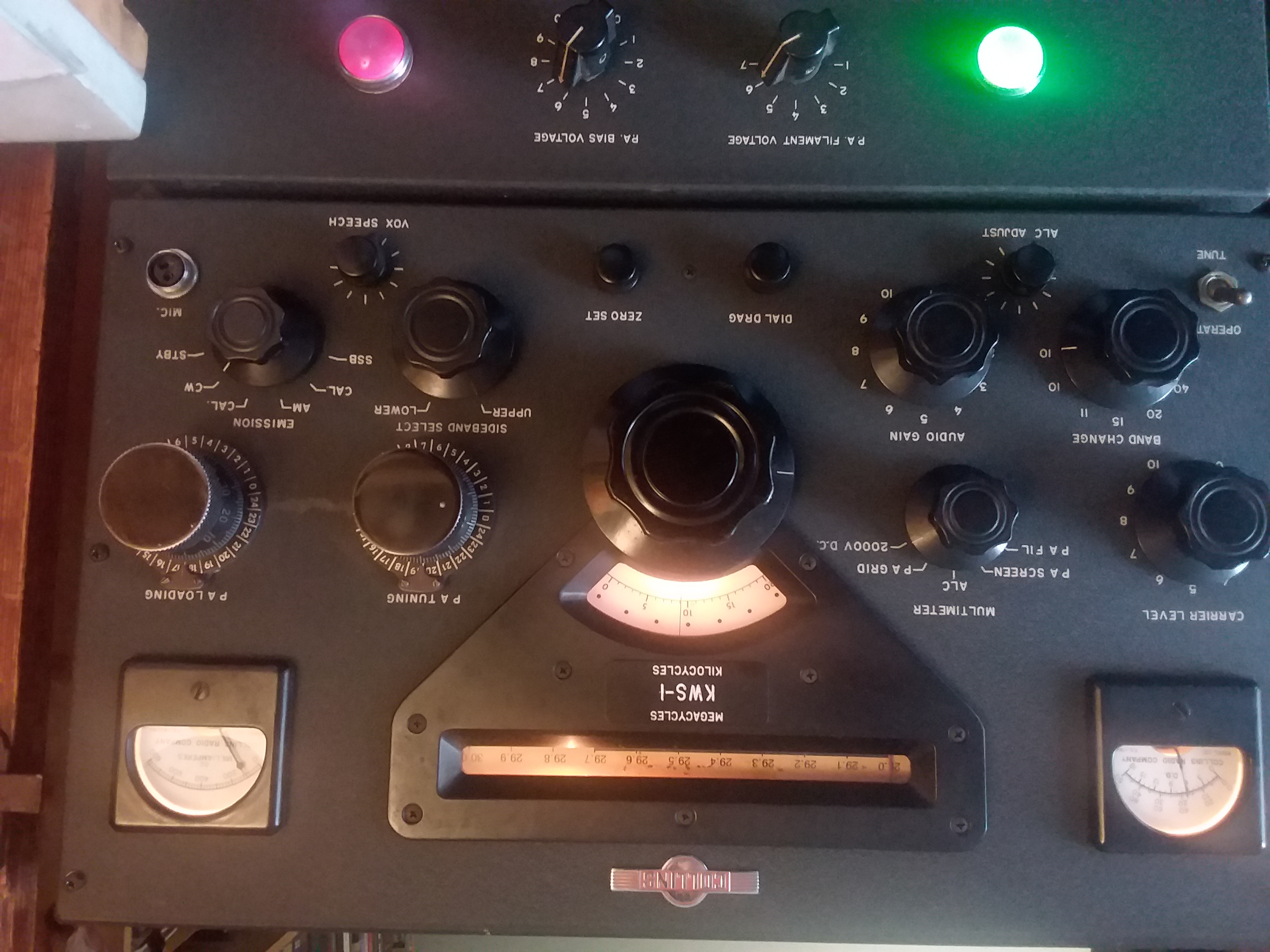
The Rehab

First Inspection

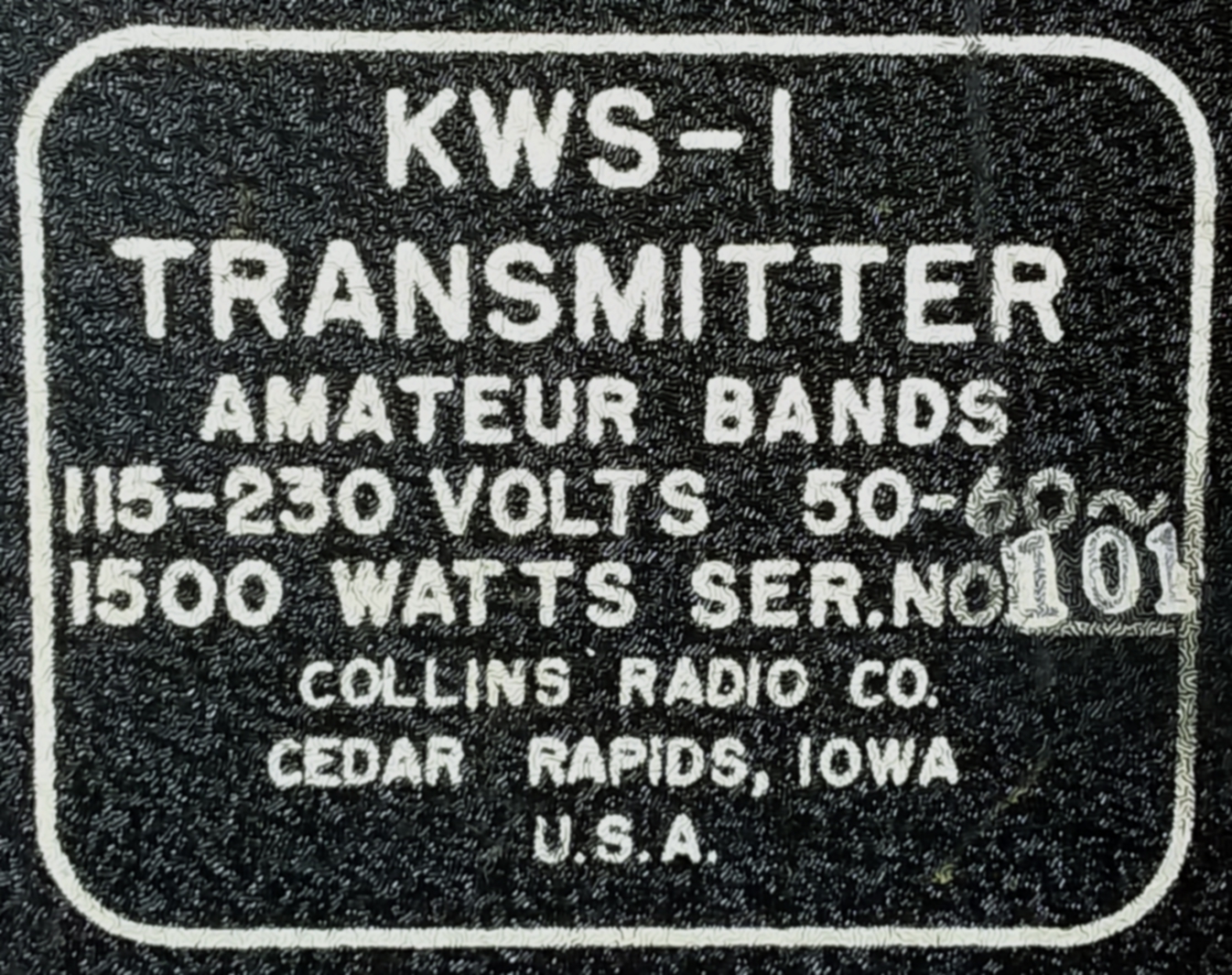
So all I know about this KWS-1 is that it powers up and there's no grid drive to the finals.

TheRebuild

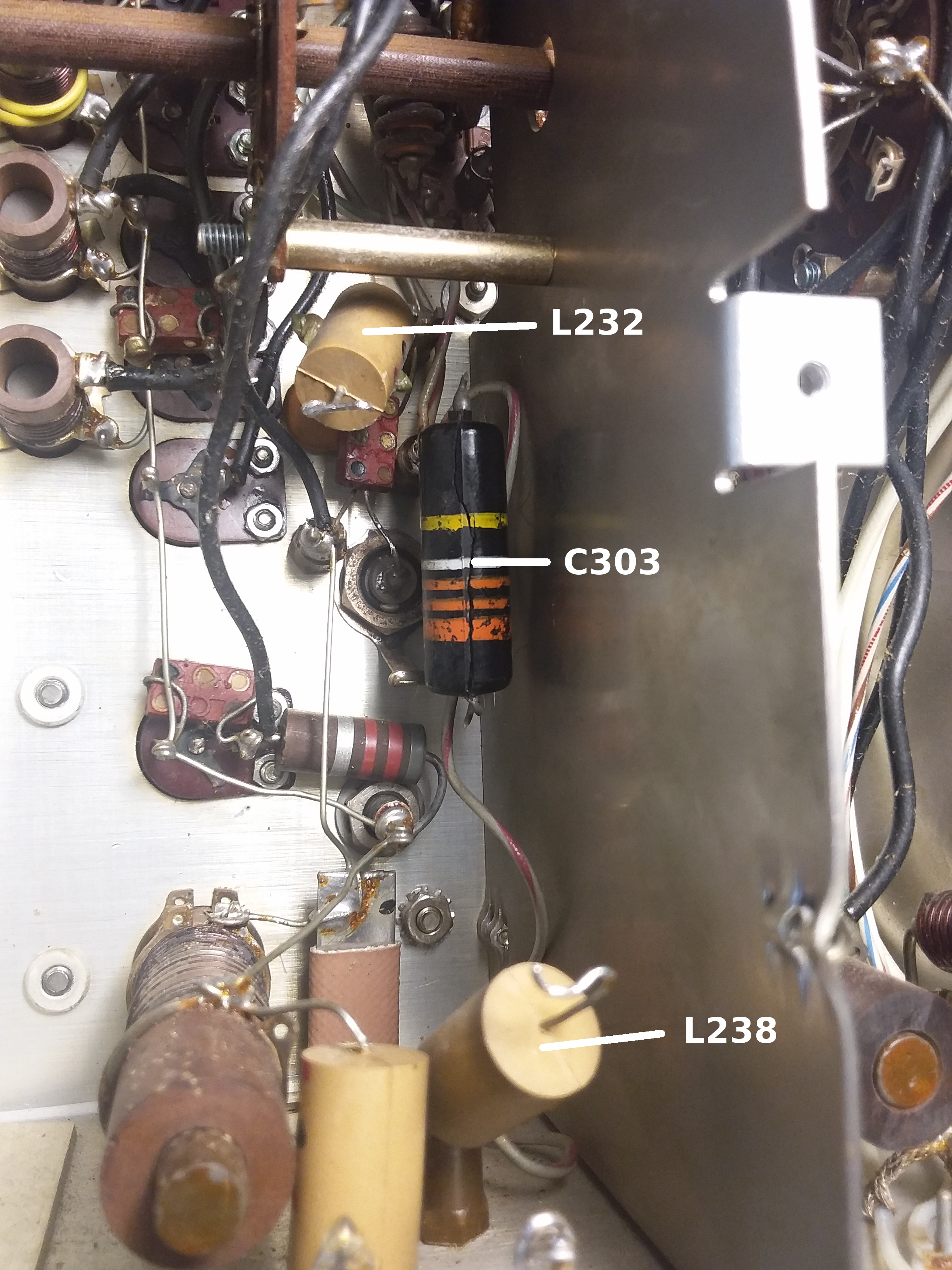
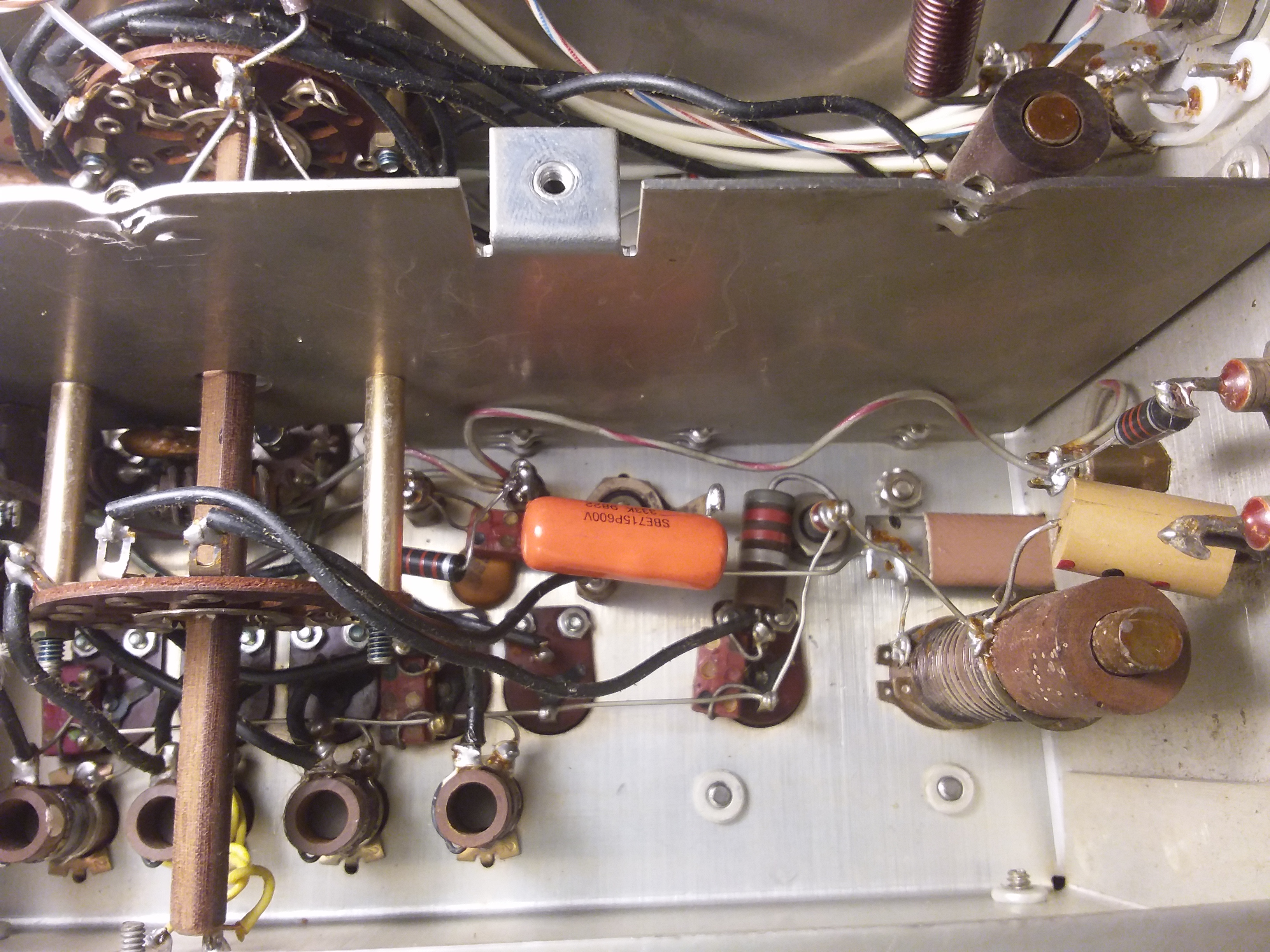
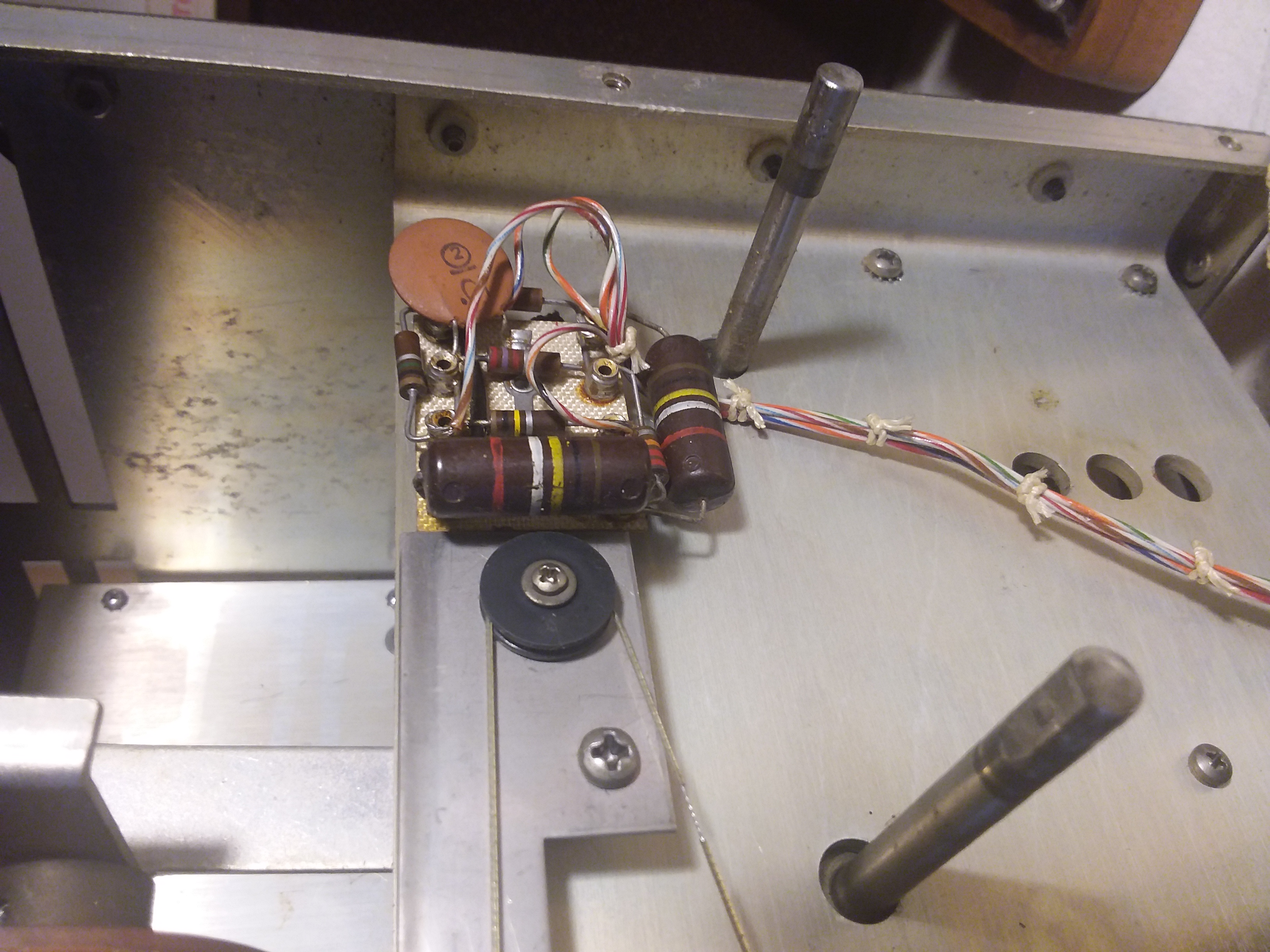
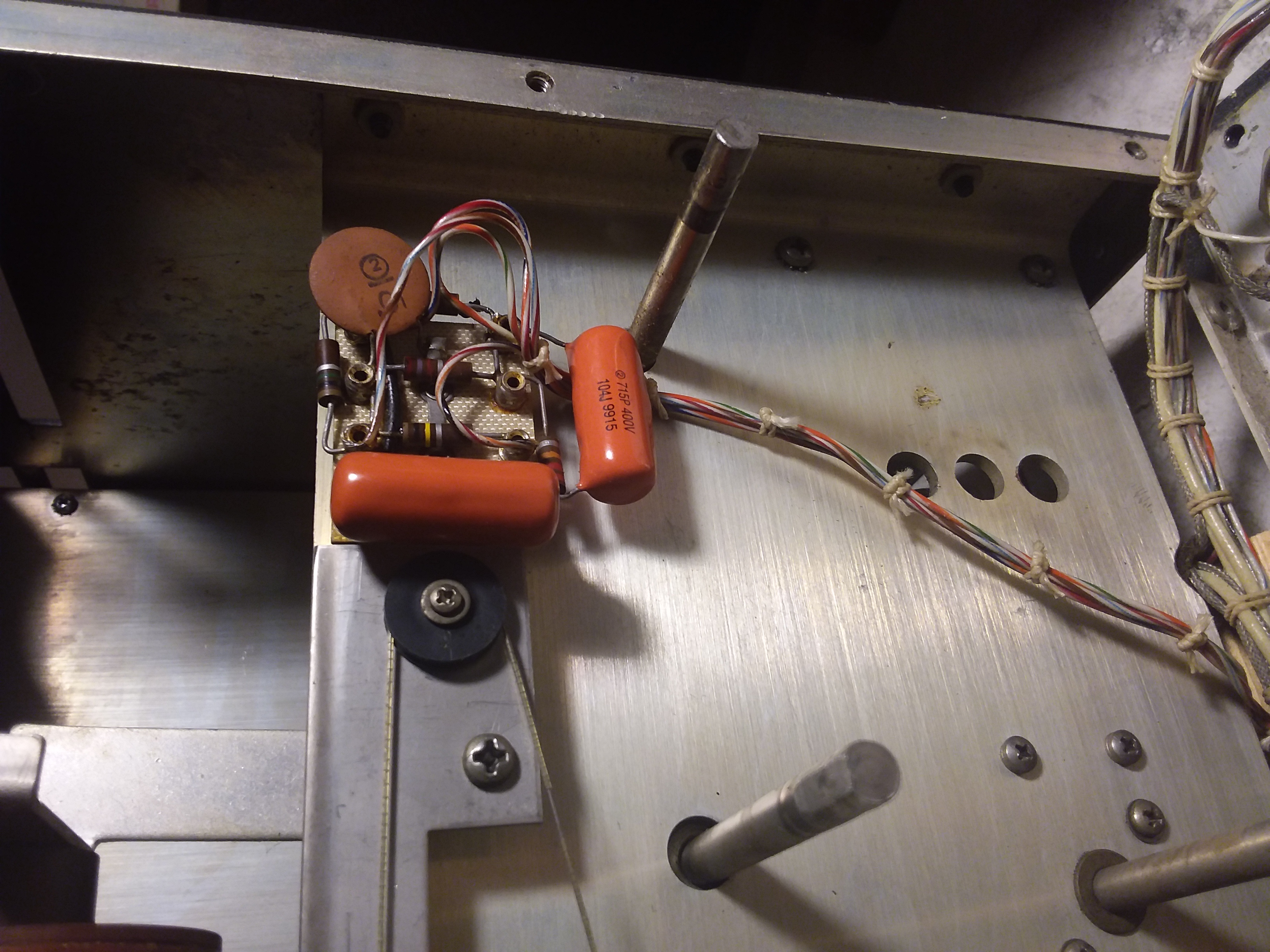
The first thing I noticed when I opened it up and started inspecting it was a cracked bumble bee capacitor, C303 in the driver tube area. Perhaps a clue to the missing grid drive.

TheDamageDone TheFix
C303 cracked open and the fix

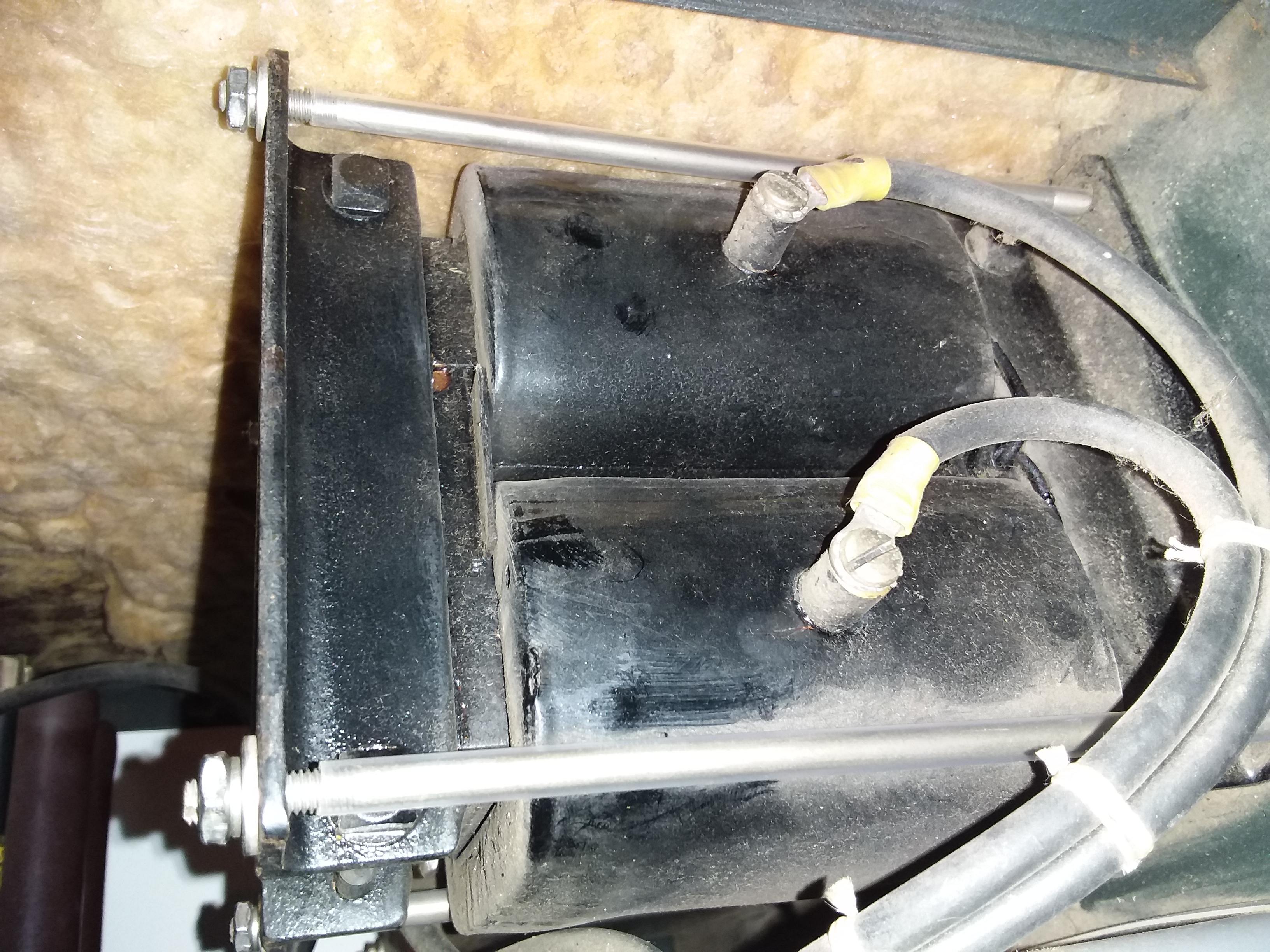
C303 is in the +275V B+ line so I traced it back and found that RF choke L238 had also opened up. So there was the missing B+ to the 2 6CL6 drivers. I noticed that L232, directly to the left of the cracked capacitor had 2 strange greenish ears sticking out of the molded seam on each side of the inductor. I measured it and it was 0mH. My guess is that the bumble bee shorted out and took L238 with it. But before it cracked open it was heating up and cooking L232 right next to it which caused it to bubble out at the seams.

ALCPlateCapacitor
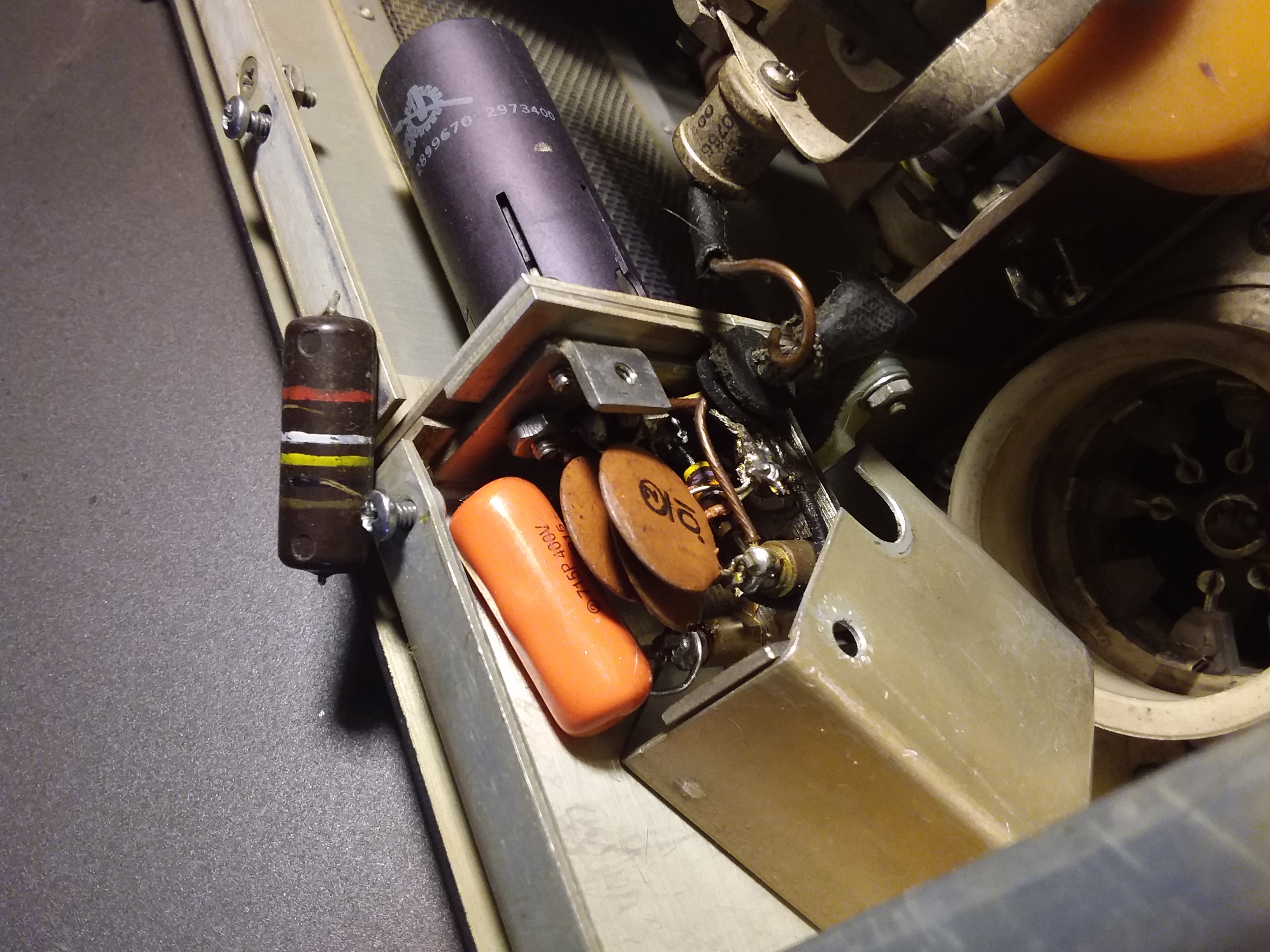
ALC capacitor C413

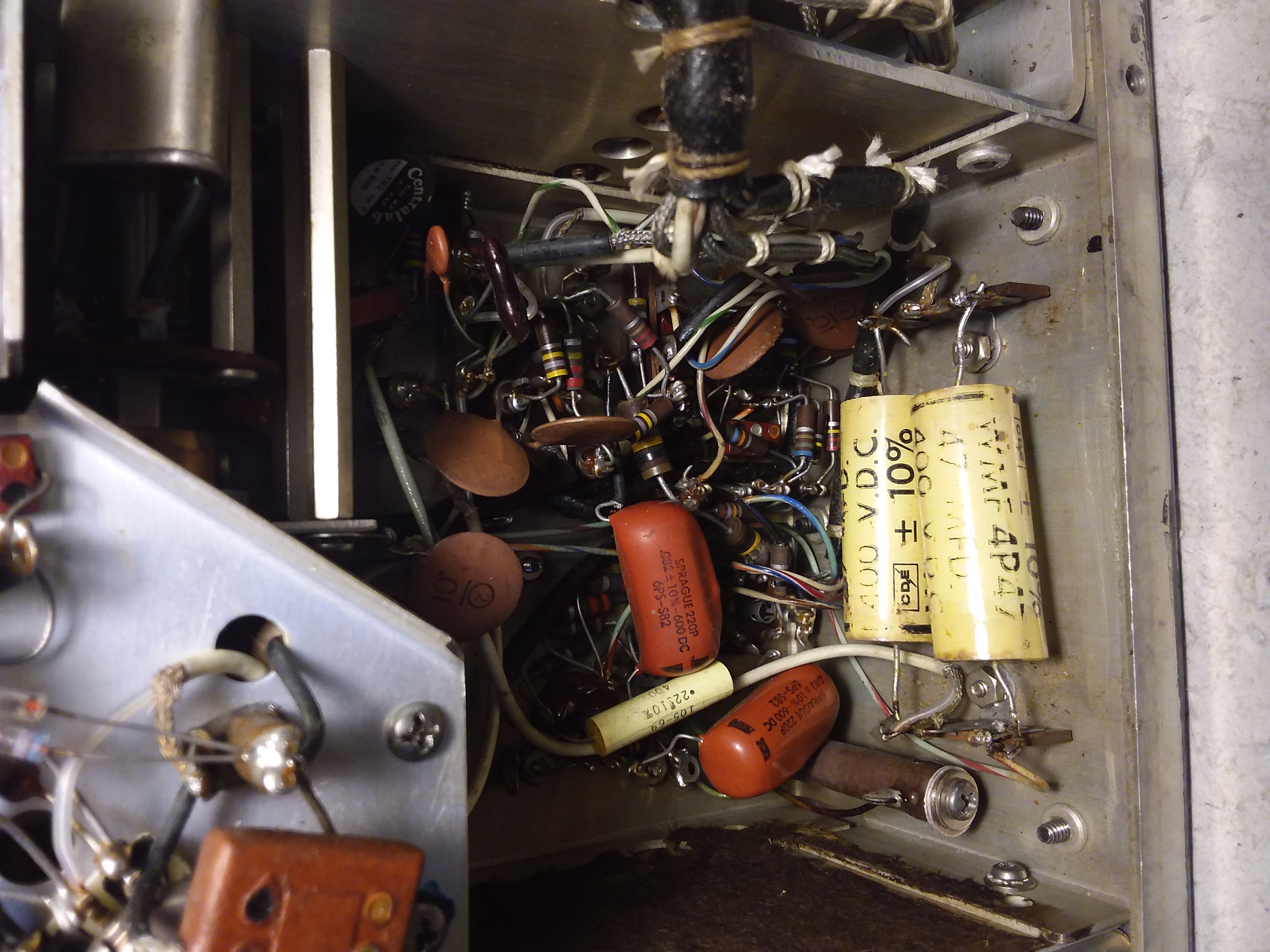
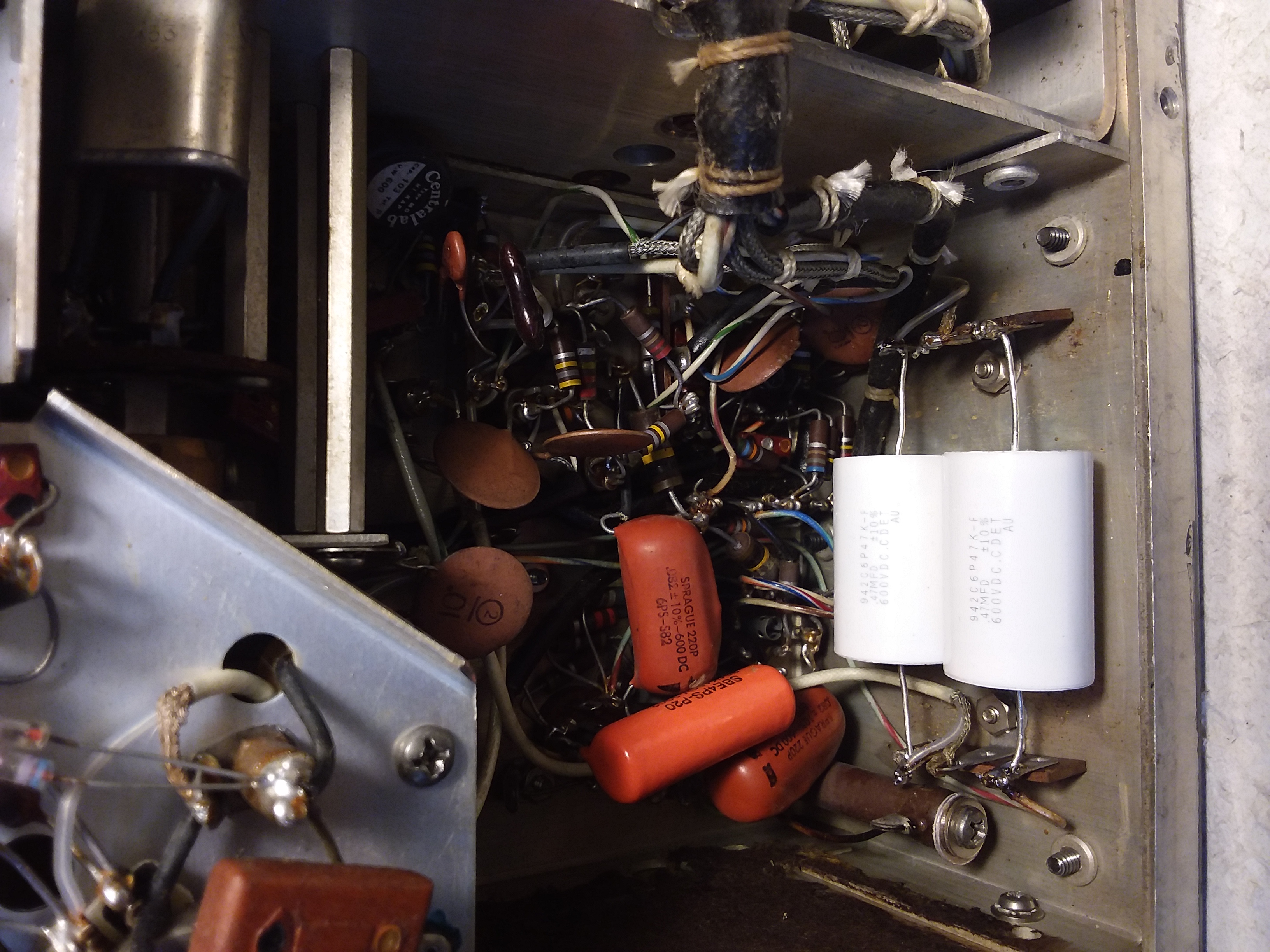
I found a copy of WA4HHG Chuck Rippel's KWS-1 "caps that must go" list and started hunting around for other likely replacements. Inside the ALC box in the PA section was C413 another bumble bee to get replaced. Down in the audio section I replaced the 3 yellow CDE caps with newer ones because they were easy to get at.

AudioOld AudioNew
Audio capacitors old and new

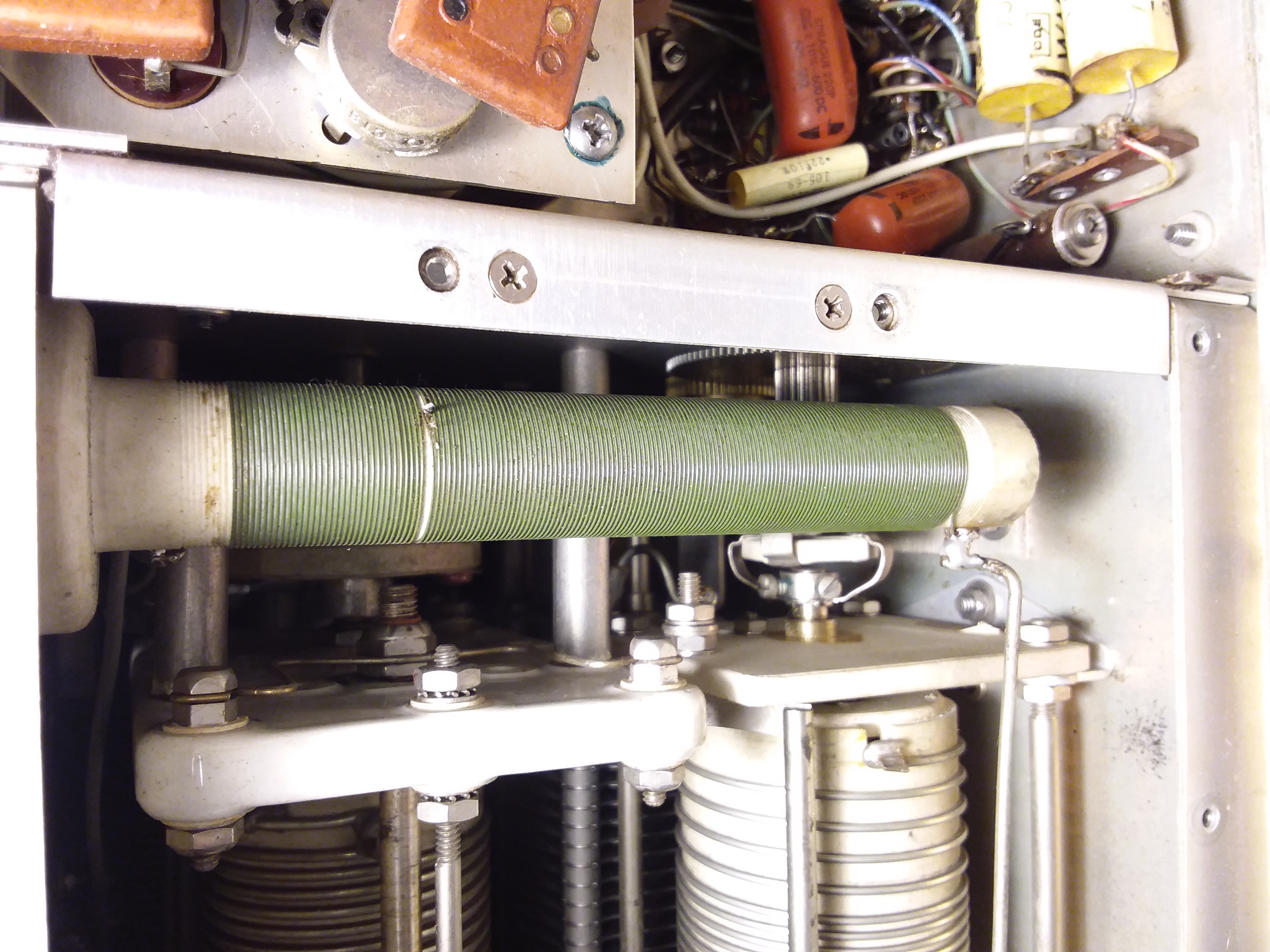
Other than a solder splice in the Plate Choke which may or may not be a problem I didn't notice anymore obvious problems underneath so I buttoned it up and started on replacing the HV line.

PlateChokeSplice
A splice in the Plate Choke


A New HV Line

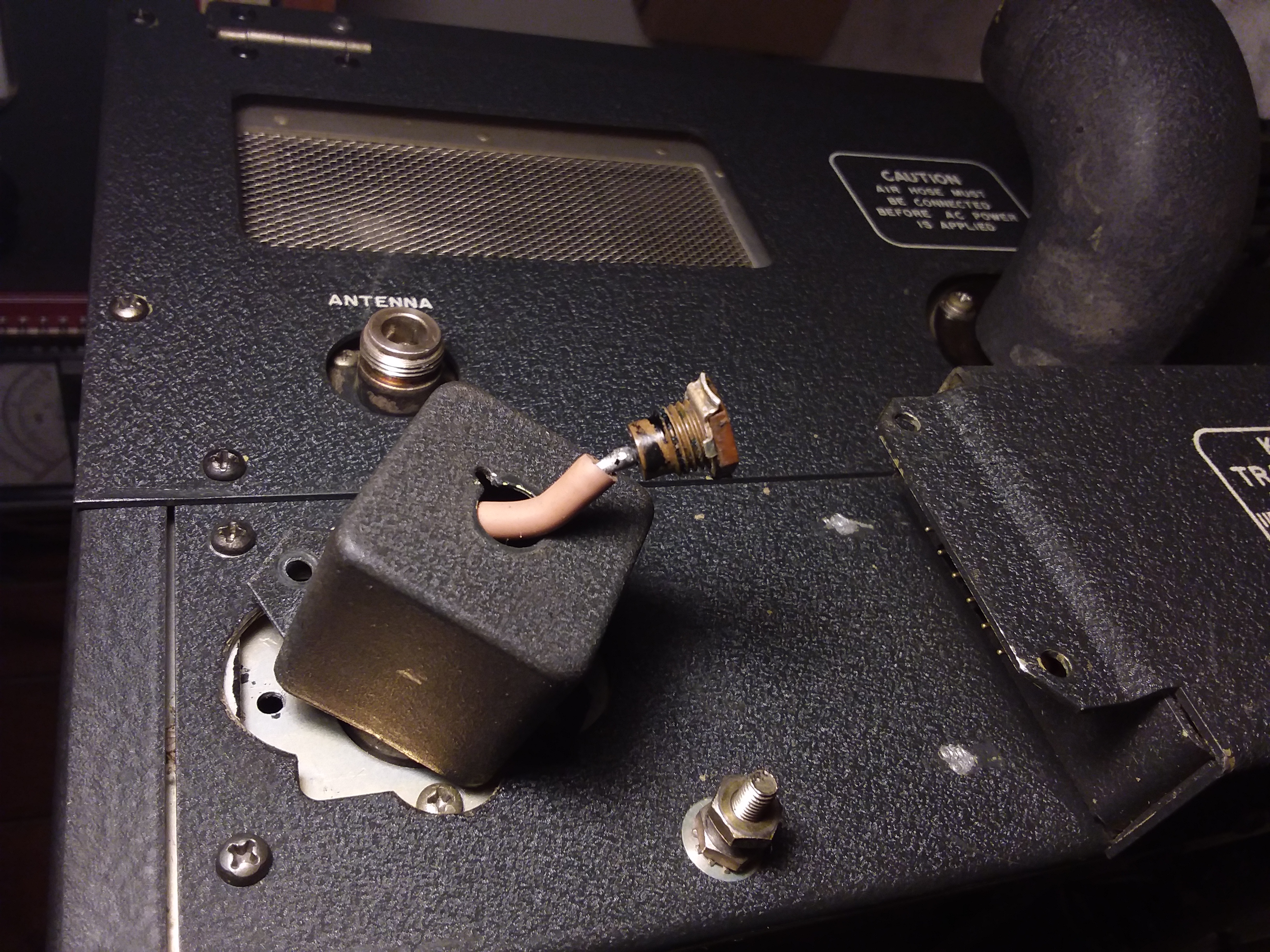
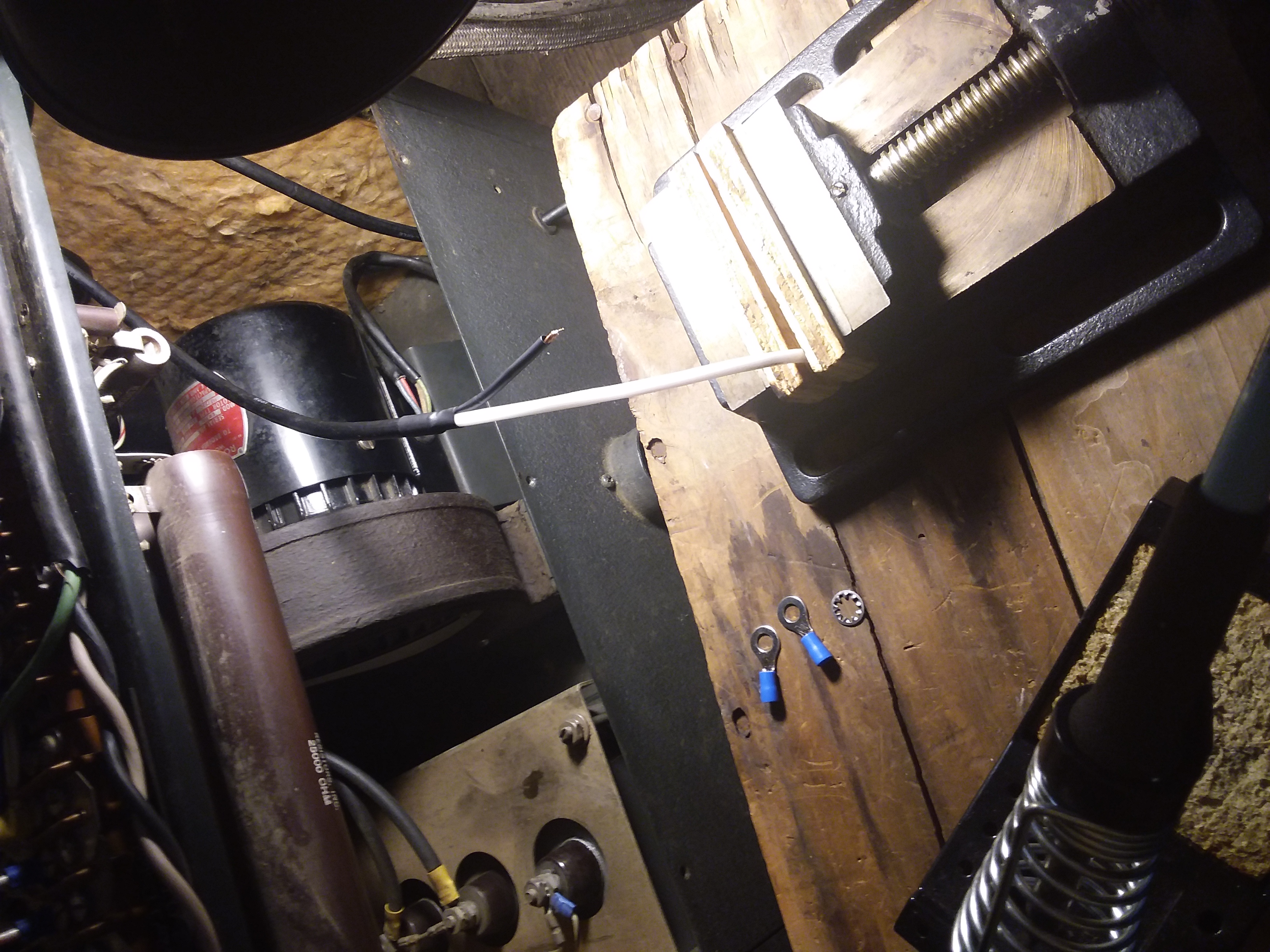
The HV line was an old piece of RG-58 with the original brown plastic latching connector to the brown plastic socket on the rear panel. Just looking at it gave me pause to consider powering the rig up. Ever since +300VDC from a Viking Valiant to my knuckle knocked me out of my chair and onto the floor many years ago I've had a healthy respect for voltage of any kind. High or low. Closer inspection of the connector showed that a piece of the plastic had cracked and was loosely sitting on the HV pin. I decided to upgrade the HV line with a new piece of RG-8 and SHV connectors.

HVCable HVConnector2
Old HV Setup

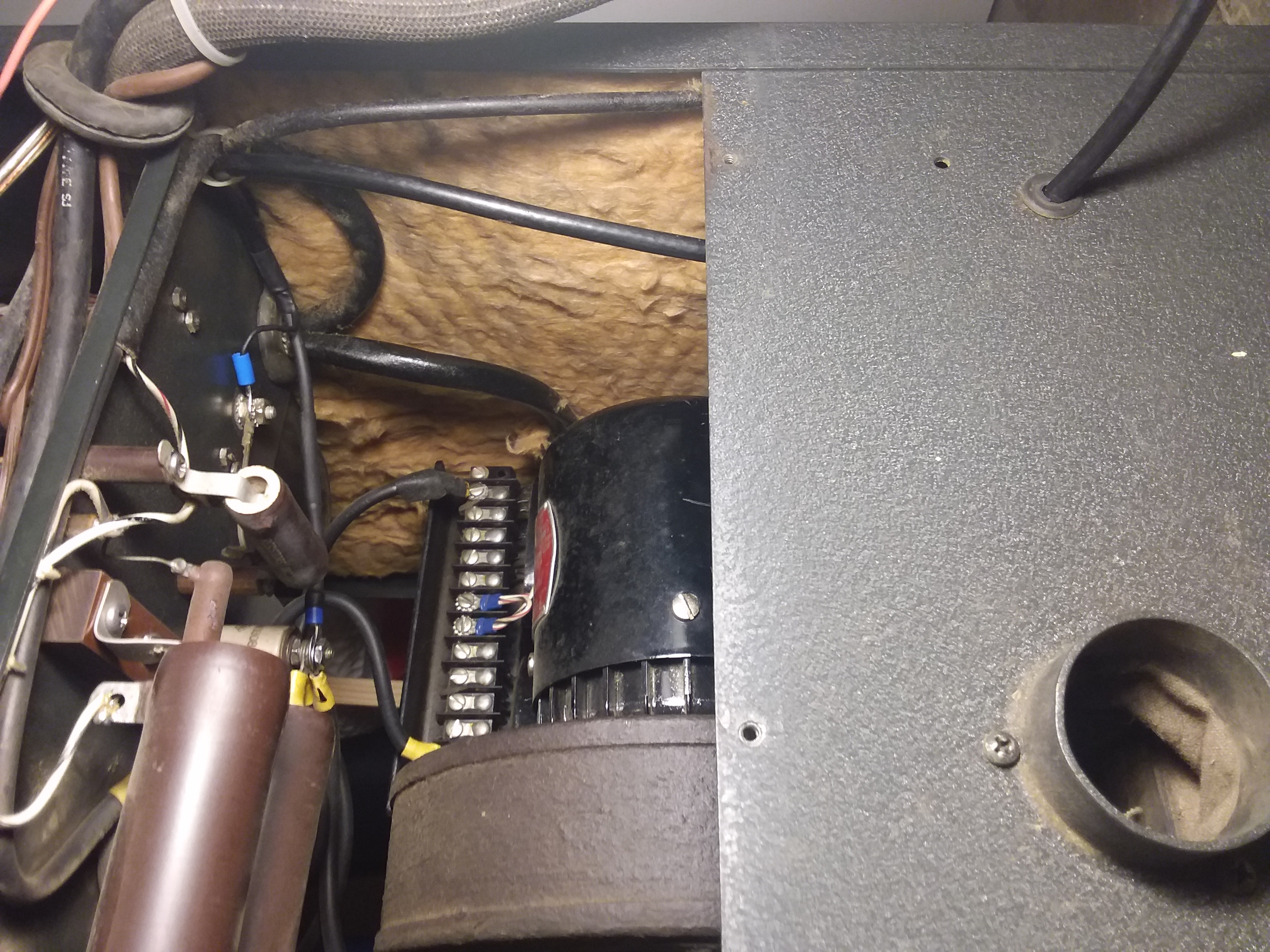
I snaked the new RG-8 into the power supply unit and hooked it up.

HVCable1 HVCable3
New HV Setup

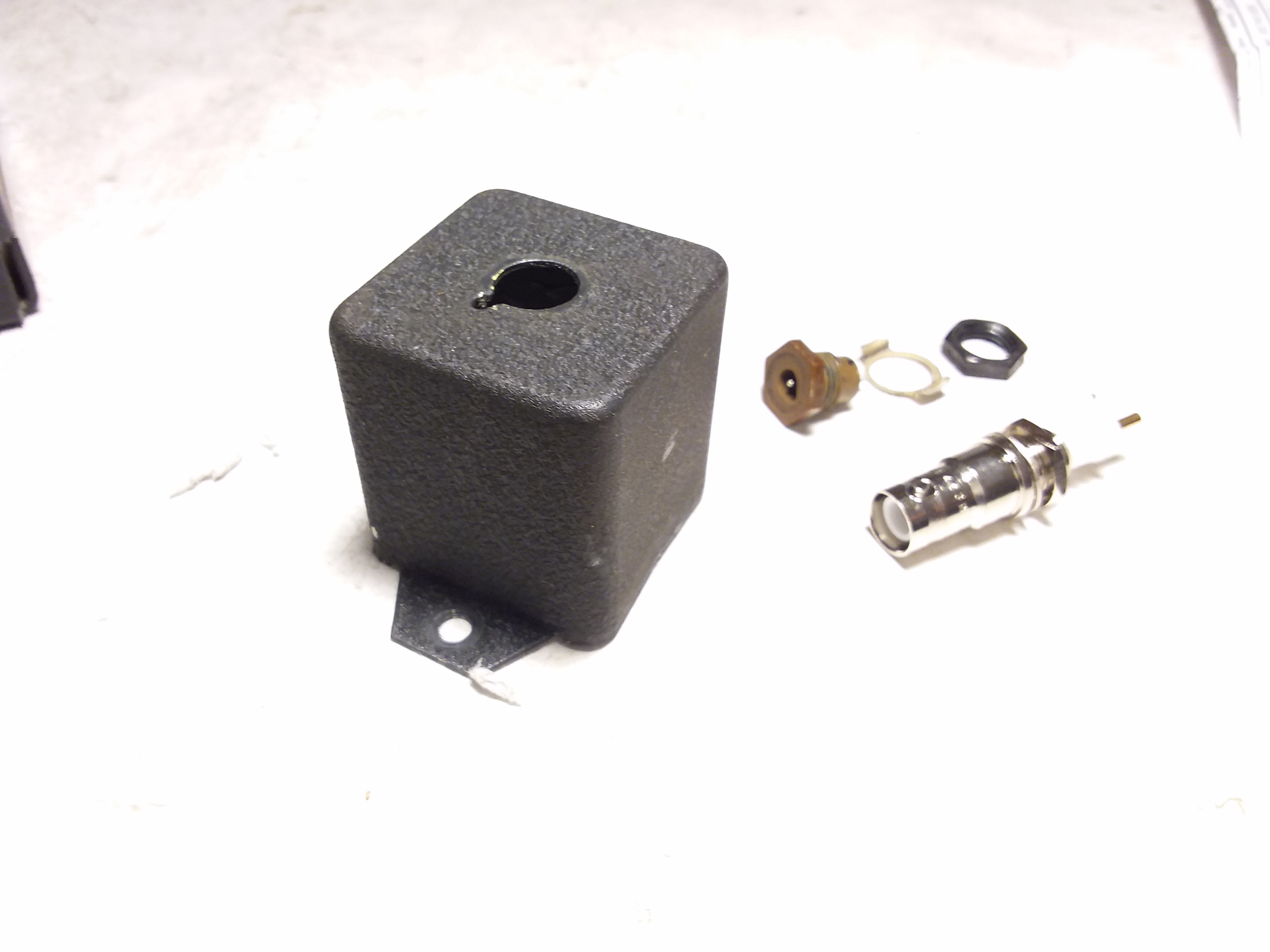
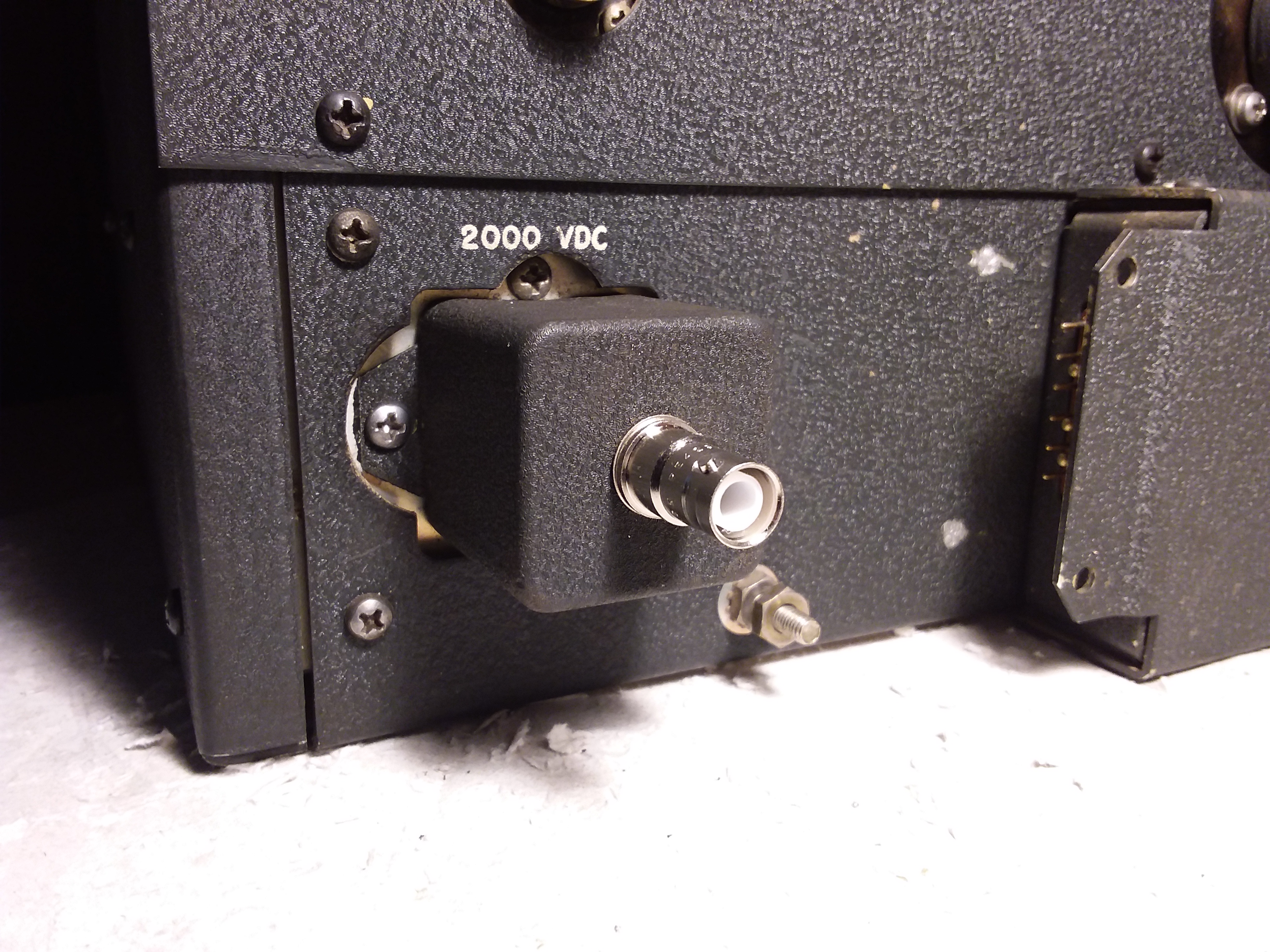
On the other end a pair of Pasternak SHV connectors.

SHV1 SHV5
The new SHV bulkhead connector fit precisely in the 3/8" chassis hole


Insulating L105

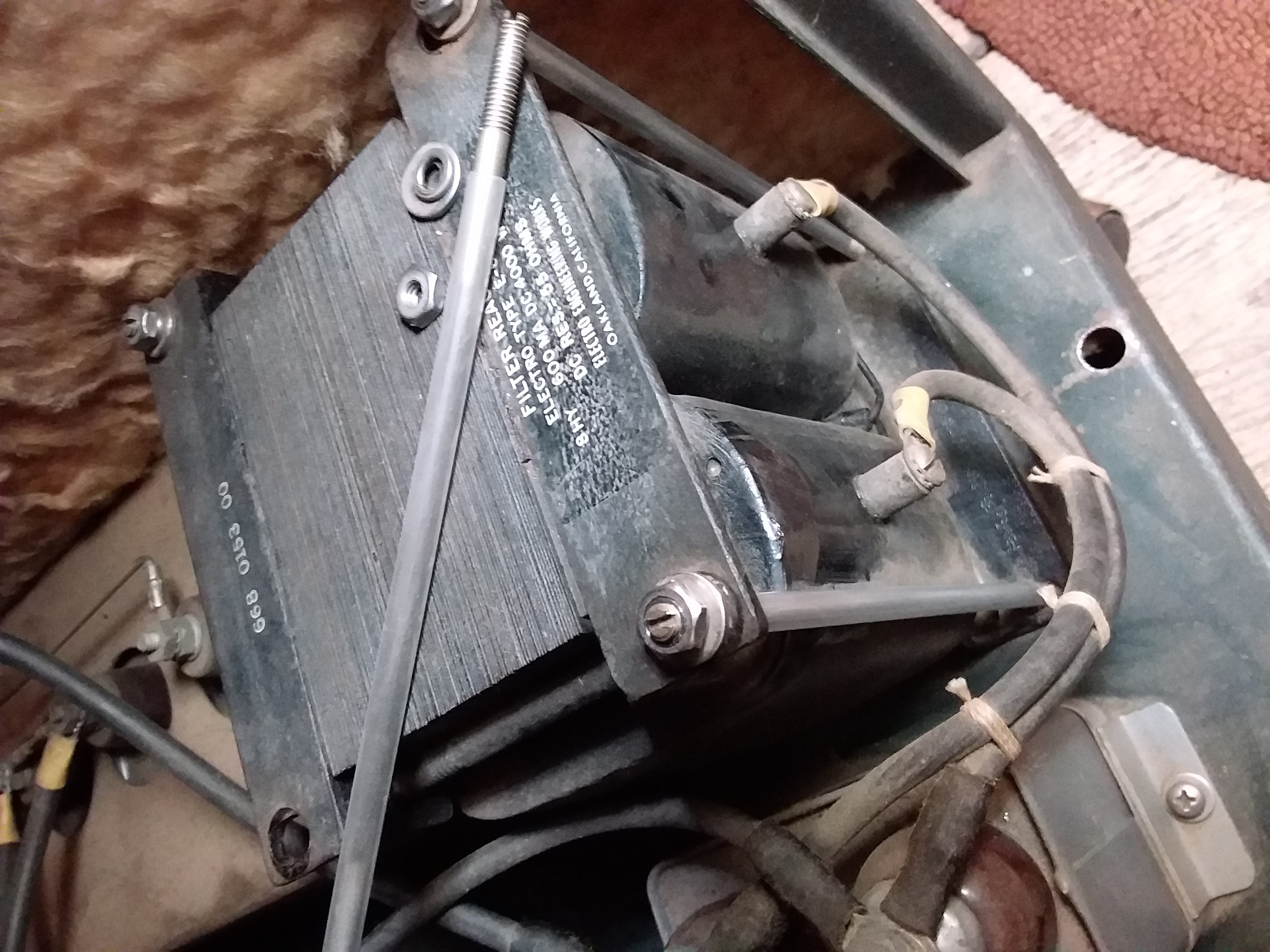
While I was rooting around down in the power supply cabinet I added some insulation to the mounting bolts on L105 the HV filter choke. The Spring 1992 issue of The Collins Collector's Quarterly Magazine is entitled "KWS-1 The care and feeding, and other trivia" by N7OTQ Bill Carns. He points out that L105 has a high failure rate due to the proximity of the high voltage windings to the metal bolts. He suggests covering the bolts with 3/16 inch heat shrink tubing which I did.

L105Insulation1 L105Insulation2
Insulation on the HV Filter Choke


First Power Up

First power up on a Variac at 110VAC was successful with no flare ups. Flipping the Filament switch brought the green lamp on, filament voltage read 6.3VAC and the blower was blowing. Noisy. But blowing. The ALC meter reading pegged and then started its descent to zero, never quite making it after about 5 minutes. The ALC Zero pot was corroded and hard to turn but I was able to bring the reading down to 0.

I'm never really keen on switching the Plate voltage on for the first time on any new-to-me boatanchor so searching around for other things to check I managed to slip the Zero Set control off of the fiducial plate. So now I had a good excuse to have to pull the front panel off. Finally I got my courage up and turned plate voltage on. The red lamp lit and there were no bad noises. I switched the meter and read 1.9KV. I adjusted the PA Bias pot and got a solid 100mA on the plate current meter.

GoodIdle

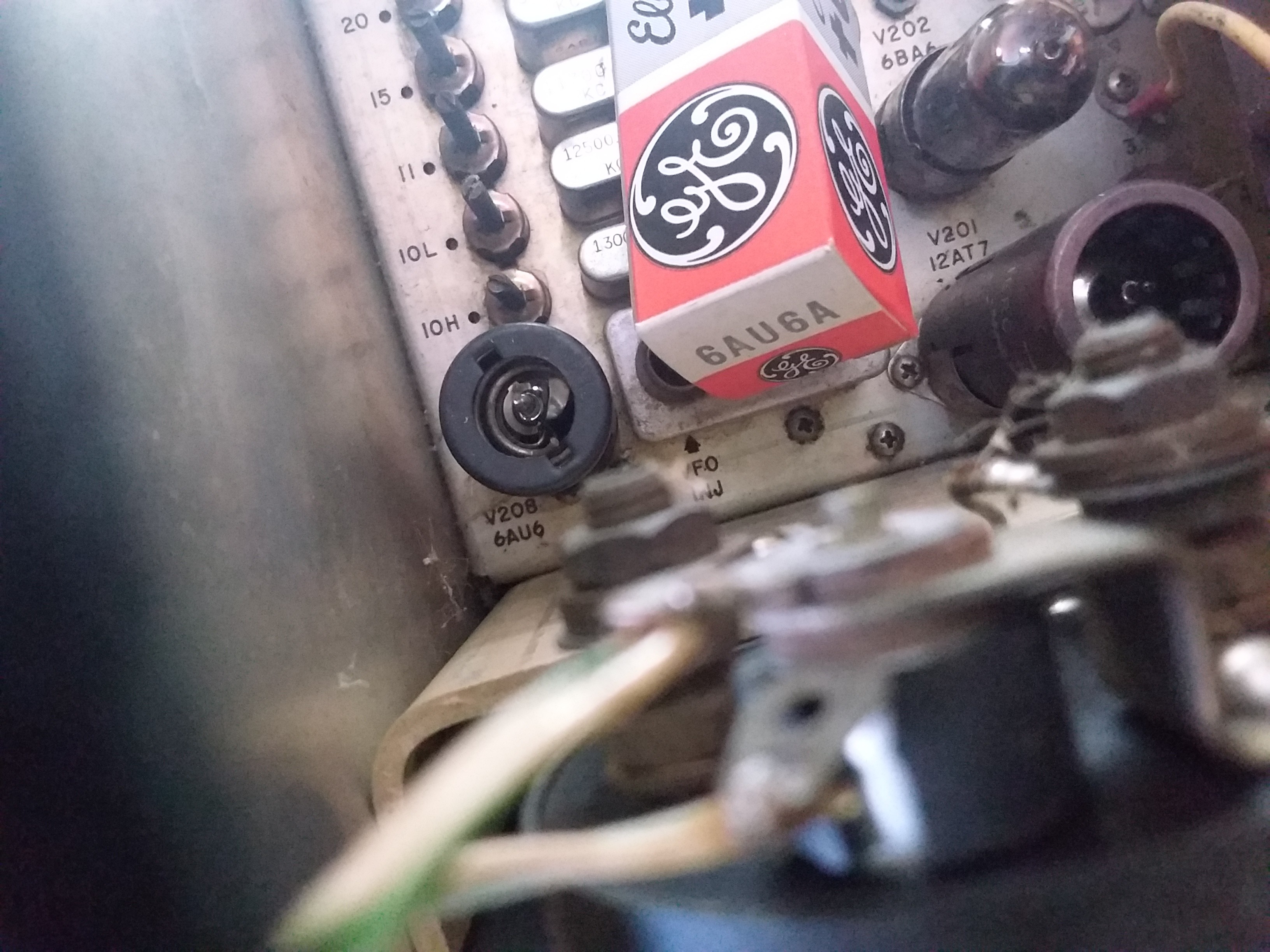
Things were going pretty good so far so I upped my game and decided to try and actually get some output into the dummy load. I keyed down and advanced the Carrier Level pot and got nothing. Still no grid drive. So I shut things down and pulled out the Hickok 533 tube tester. I went through the main RF path tubes, V104 the Oscillator/Mixer, all the 1st, 2nd, 3rd and 4th mixers and amps and the 2 driver tubes. None of them were bad. Then I tried V208 the Xtal Osc and it was way low.

V208
V208 replaced

I replaced it with a new 6AU6 and powered up again. Now there was grid and plate current flowing. I set up for 10 meters, pulled out the tuning chart and ballparked the Tune and Load controls for 29 mcs. Keying down I showed plate current but no output. Neither Tune nor Load control had any effect.

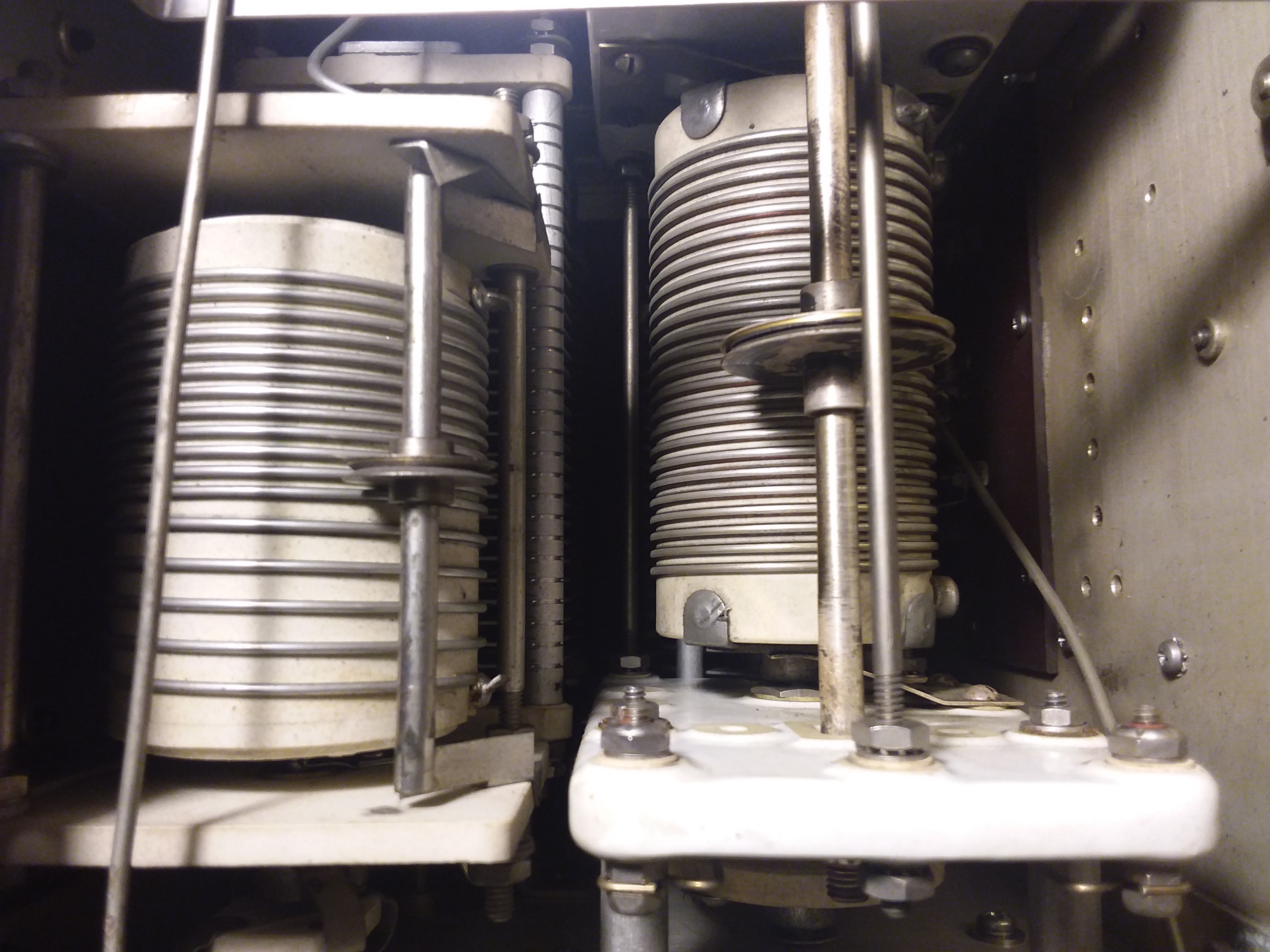
With the bottom covers off earlier I had noticed that the Tune and Load inductor rollers were not exactly where they were supposed to be. According to Service Bulletin #6 with the Tune and Load dials set at 0-0, all 3 variable capacitors should be at full mesh, the Tune inductor roller should be 1 turn from the end and the Load inductor roller 4 turns from the end. I needed to check the Tune and Load synchronization. But first it was time to pull the front panel and fix the Zero Set knob and see if anything else was lurking under there.


Down With The Front Panel

Pulling open the front panel the first thing I saw was a couple of bumble bee capacitors. C127 and C134 in the keyer shaping circuits. I replaced them with orange drops.

C127-134-1 C127-134-2
Bumble bee caps in the keyer filter network

I stared at the Zero Set mechanism and couldn't understand how the off-centered Zero Set disc was supposed to handle the full travel of the fiducial plate. Then I realized it wasn't supposed to. When I pulled off the Kilocycle knob in preparation for removing the front panel I was surprised to see 2 empty screw holes in the front panel. And there they were on the inside of the panel, missing their screws to stop the fiducial plate travel before it ran off of the Zero Set disc. I scavenged the parts box and found 2 (matching!) screws and put them in. With a dab of Elmer's glue to keep them from falling out again.

ZeroSet1 ZeroSet2
Missing fiducial stop screws reinstalled


Tuning And Loading Synchronization

Now to check the tuning synchronization. I reinstalled the front panel and reset the Tune and Load dials down to 0-0. I flipped the rig over to get a look at the PA cage from the bottom. The Tune inductor roller was sitting at the very end of the coil, right up against the solder blob stop. The Load roller was sitting 1 turn from the end. They needed adjusting. The Tuning capacitor was fully closed but the Loading dual capacitor was halfway in and out. It needed adjusting. I reset the Loading dial until the capacitors were fully meshed. Then I moved both inductor rollers until they were in their proper positions. I pulled both knobs, reset them to 0-0 and reinstalled them.

RollerInductors
The inductor rollers adjusted and sitting at resonance for 40 meters

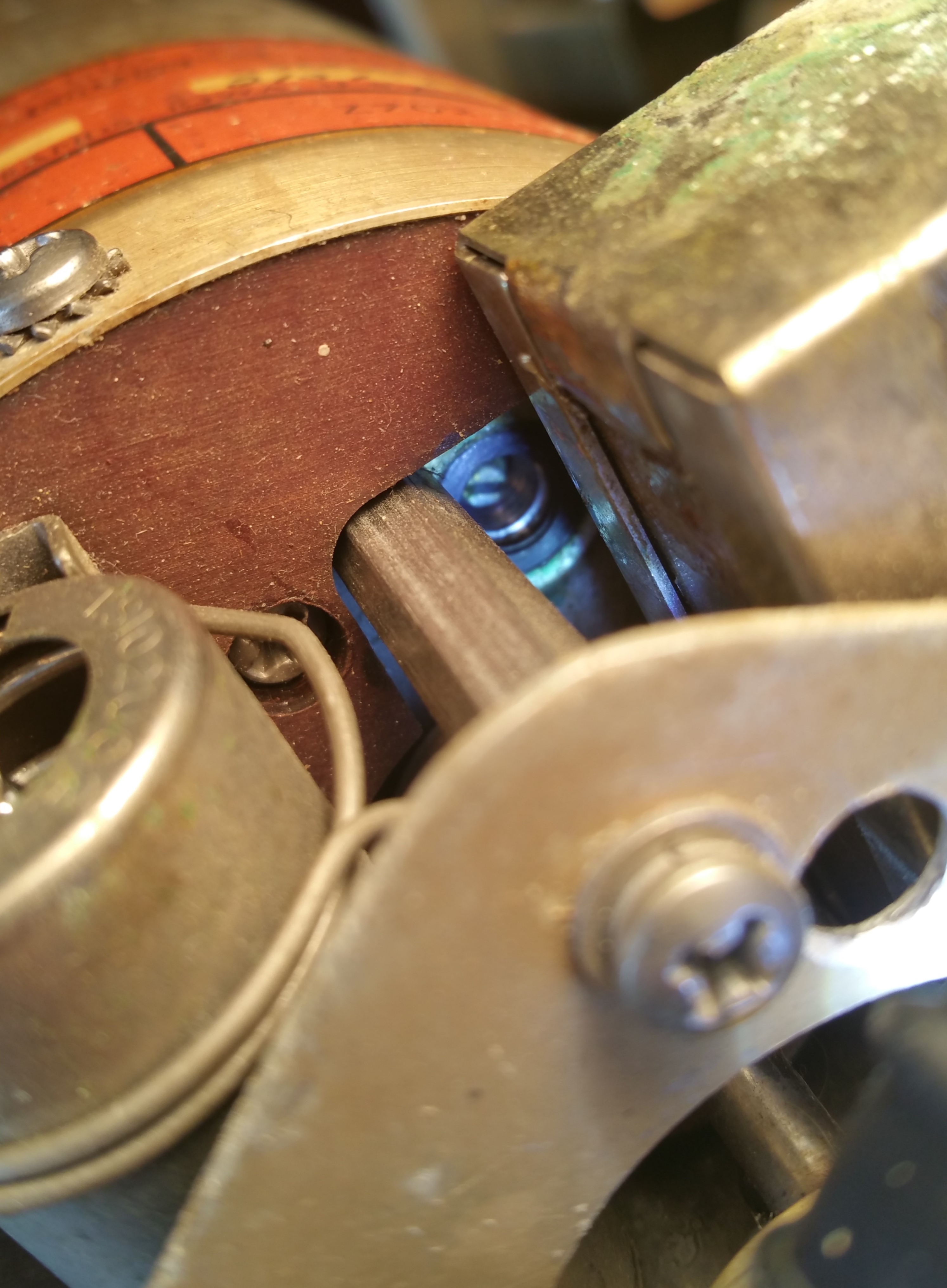
These dials are one of the weak links in restoring a KWS-1. They are made of half pot metal and half aluminum. (I have a 90 year old Atwater Kent with pot metal rollers that literally fell apart in my hands as I pulled them off a shaft) There is a tiny brass gear inside the knob which makes contact with 2 tiny gears on the shaft with tiny teeth. Overtime the knobs become deformed by cranking down on the set screw to keep proper contact with the control shaft. This is especially true for the Tune control which requires a lot of torque to turn the roller inductor. Needless to say these 65 year old knobs are no longer made anywhere. WBear2GCR has an extensive write up about repairing these things. And it's not easy.

I can feel the extra tightness in the Tune control compared to the Load control, and I wondered if it would be a good thing to remove the PA cage and do some quality cleaning of the shafts and gears. I've dealt with stiff gearing on my R-390 and doing a thorough cleaning of the gear assembly really made a difference in working the Kilocycle control. But I don't have a feel for whether the Tune control on this KWS-1 is in need of immediate attention. It's certainly stiff, and you feel an occasional bump as you slowly make your way through the gearing. But there's no slippage. It just takes a long time to get from 80 meters to 10. I'll put the gear assembly on the back burner for now and first see if I can finally get some output from this thing.


Output On 10 and 80

I tuned up on 10 meters again and was able to see 30 watts output. But tuning was not very sharp. And the heaviness of the Tune control made it difficult to get a feel for what exactly was going on. I moved down to 80 meters. Very slowly. Here at 3.9mcs I was able to load up to 400mA with 150 watts output showing on the old Waters 334 wattmeter. I have no idea what shape the final tubes are in. But I've got something to work with now.


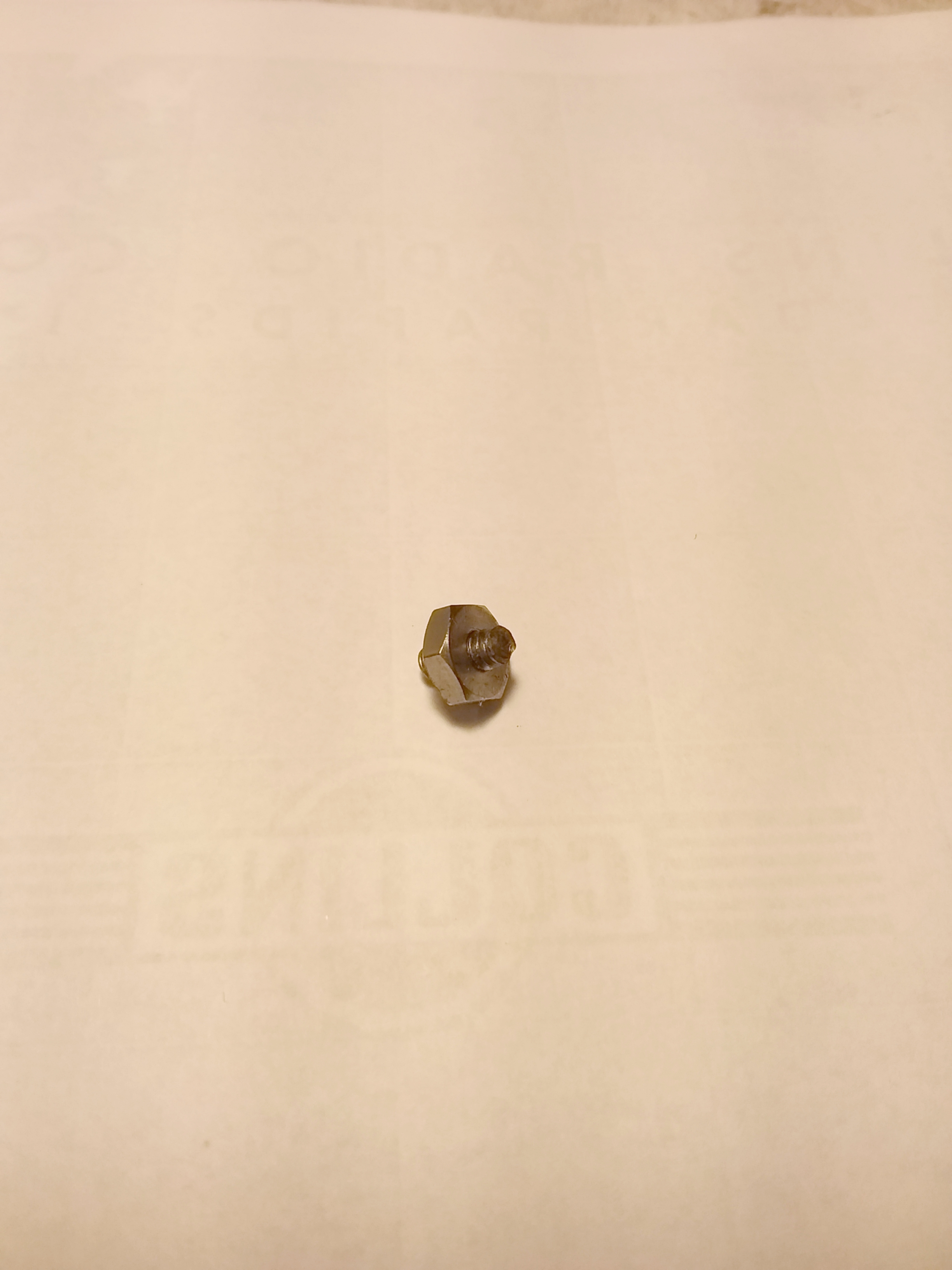
Oh By The Way, This Fell Out Of The Rig

LoosePieceFellOut
Unidentified loose metal rolling around the bottom cover

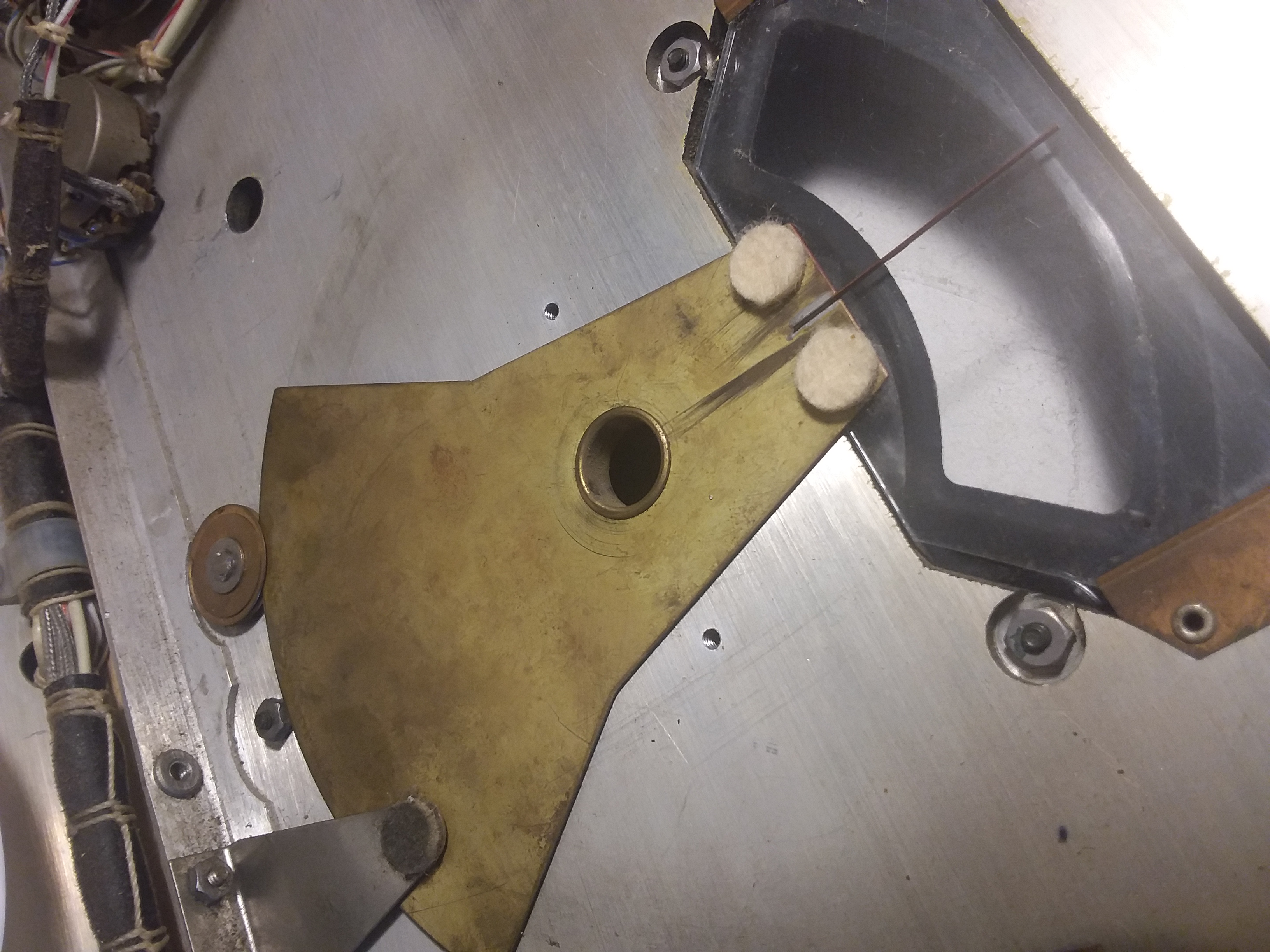
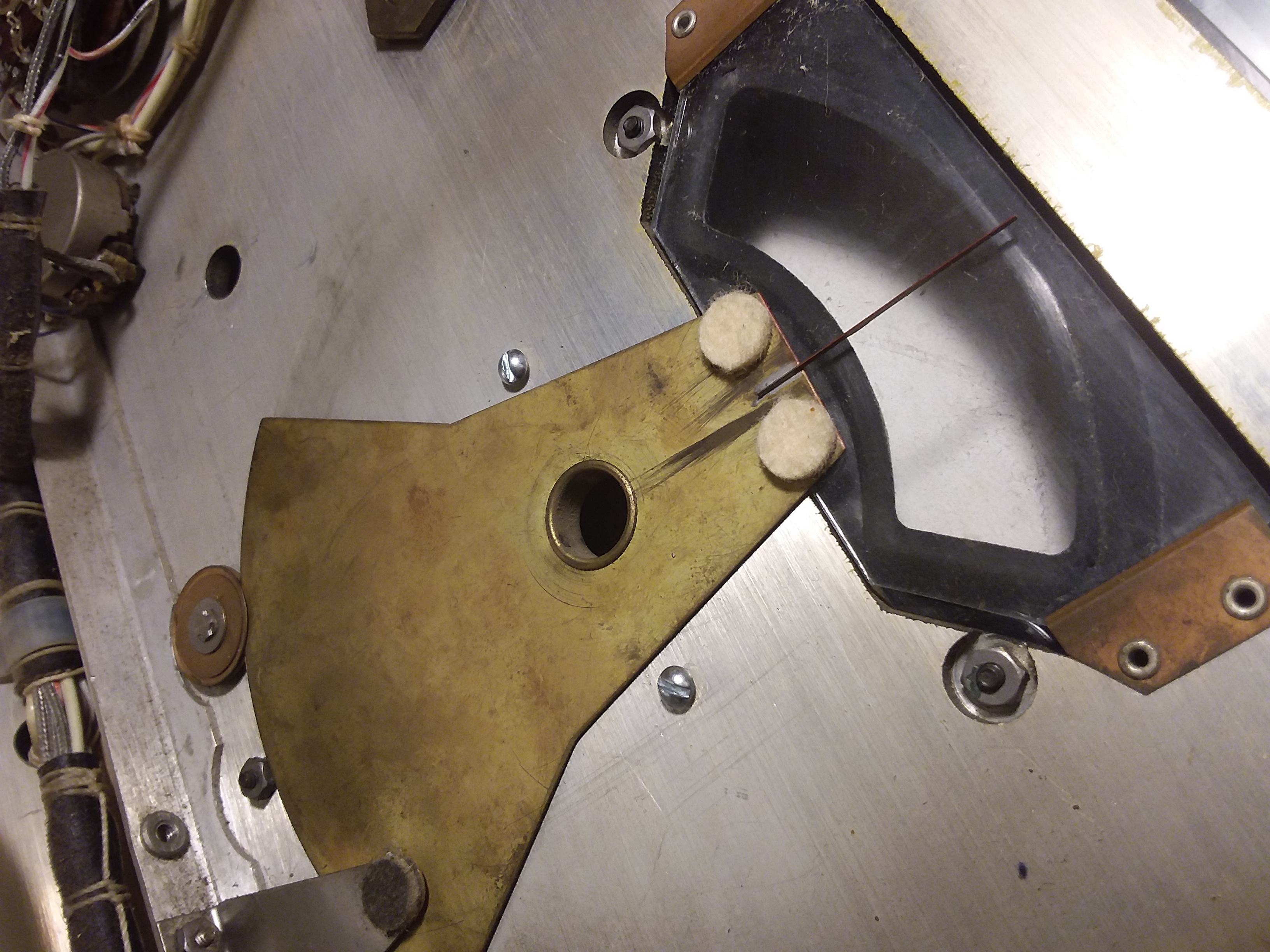
It looks like a piece of one of the roller inductors? I hope not.


New 6CL6 Driver Tube

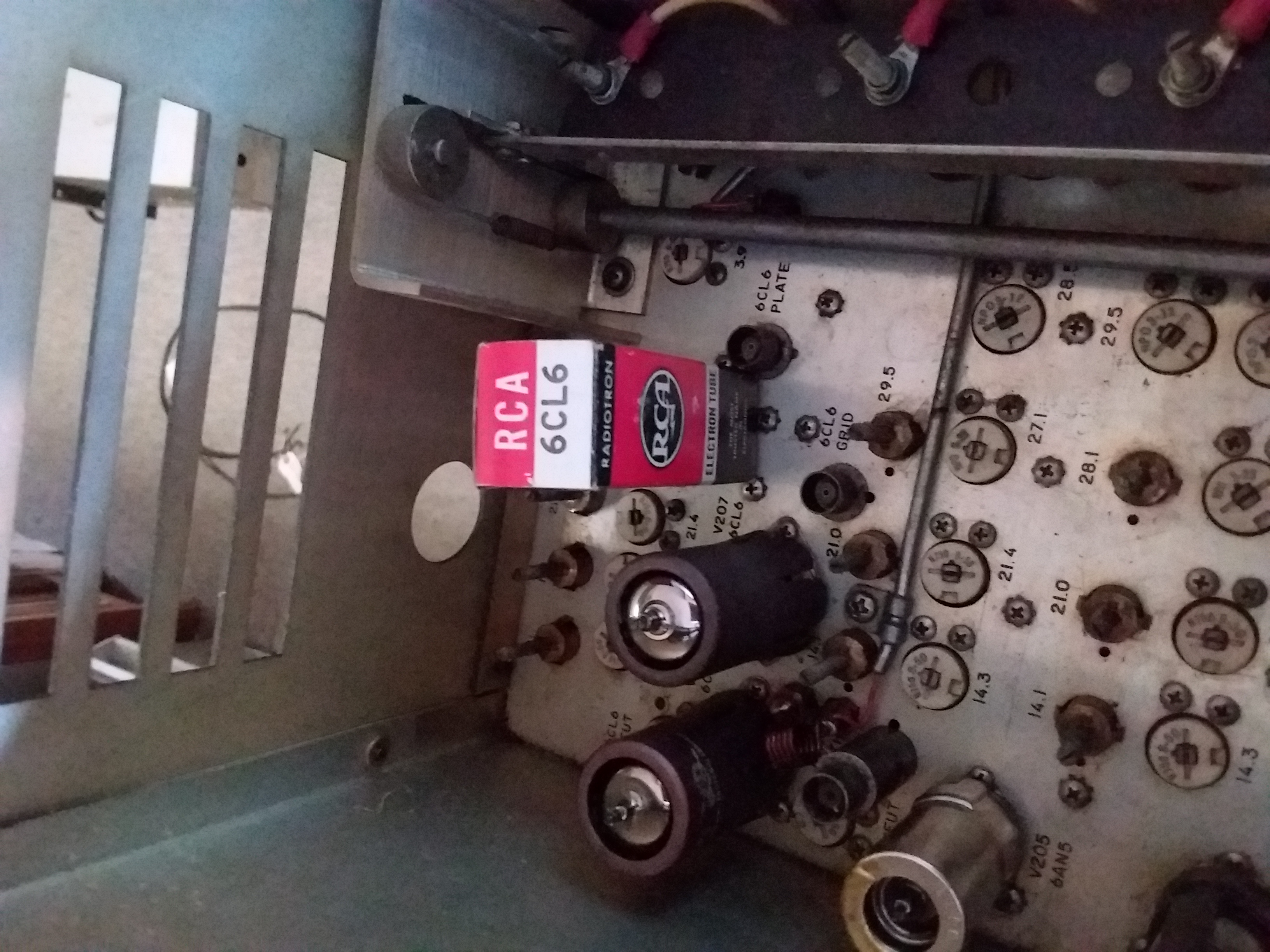
V207

A thank you to Don KA9JLM who suggested checking the 6CL6 driver tubes. One of them had tested a bit low so I swapped it out. I'm now getting 225W CW output @ 500mA into the dummy load on 40 meters.


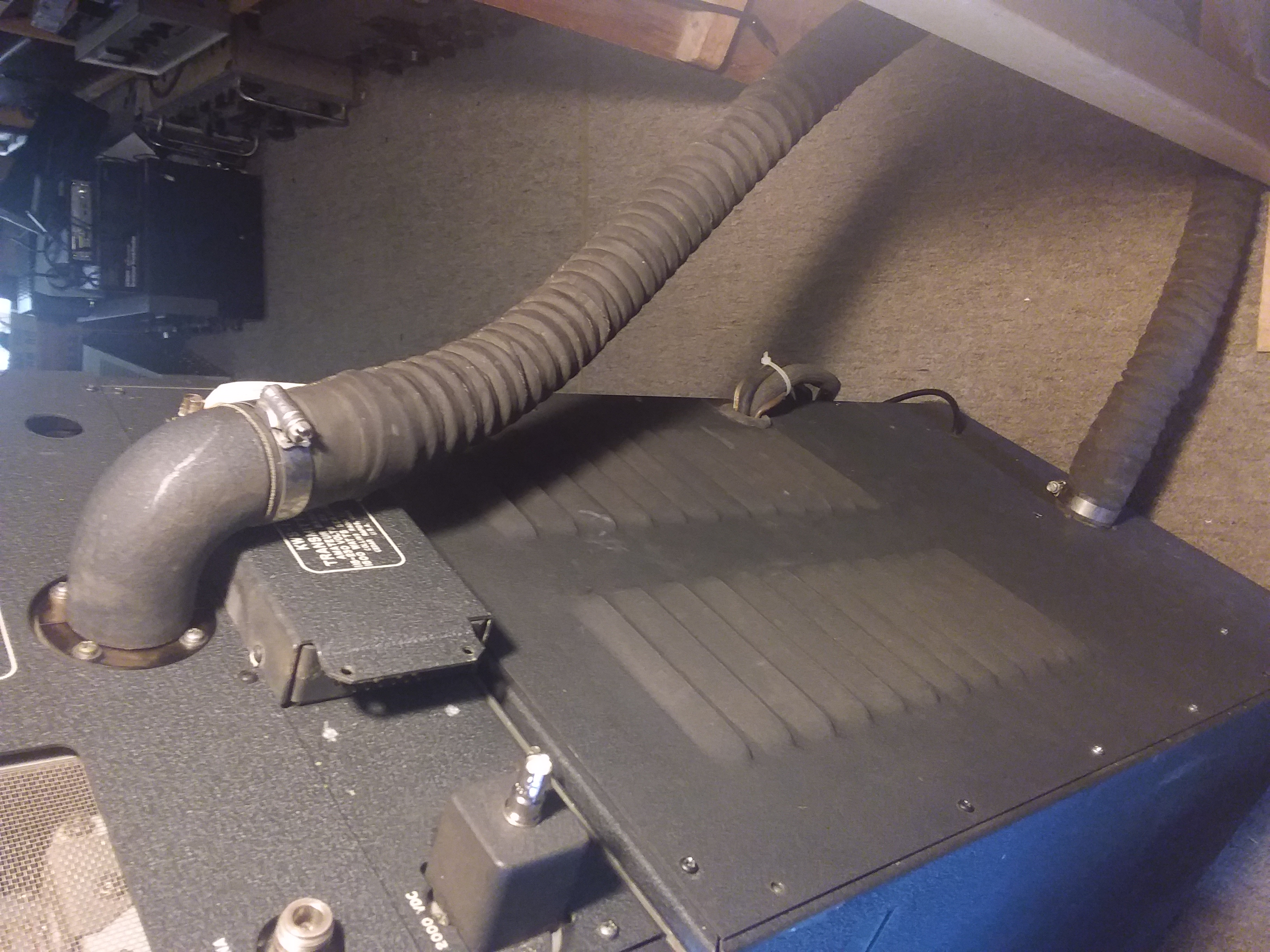
A New Air Handling System

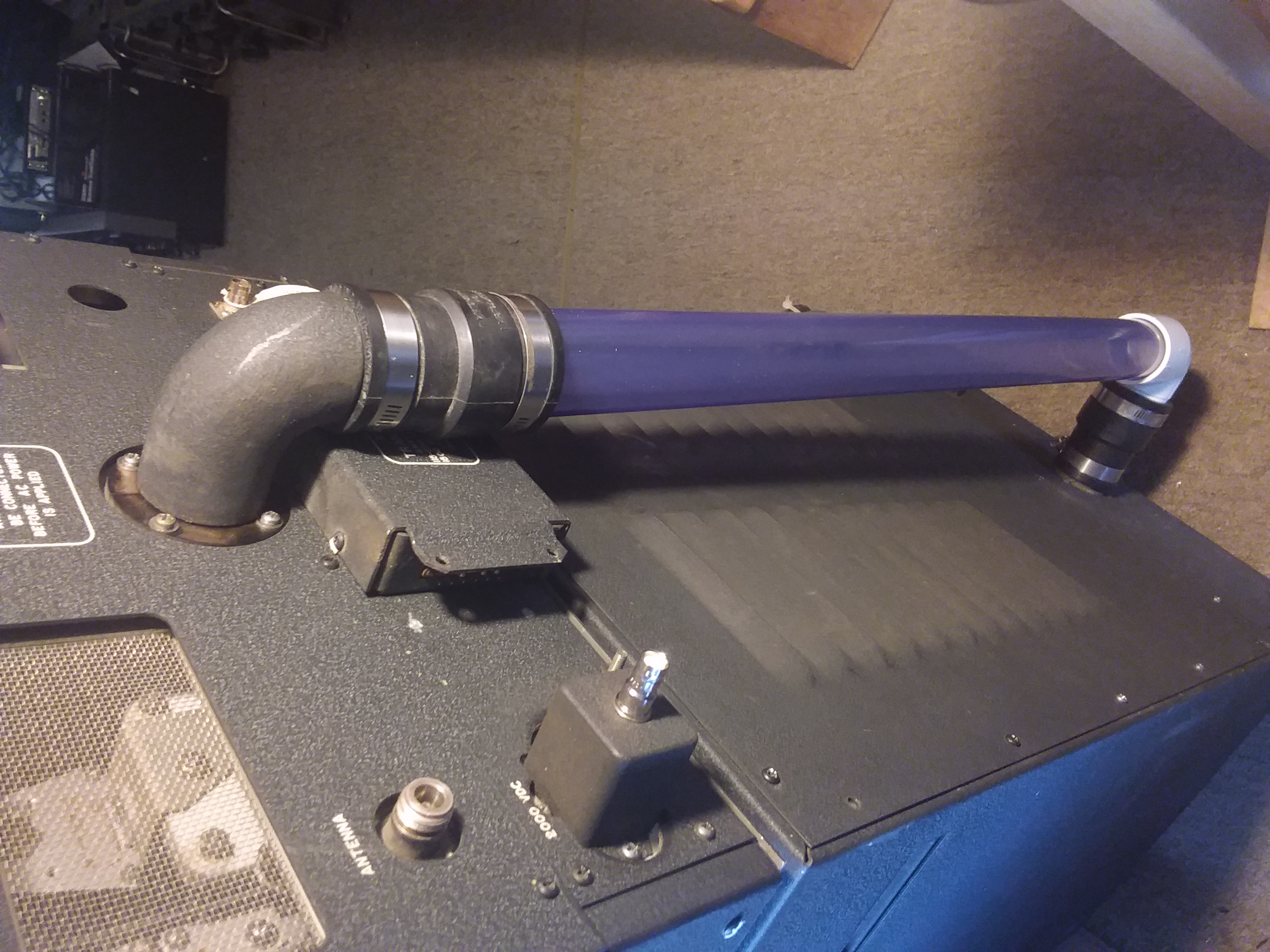
The original massive air hose that comes with the KWS-1 certainly cements its retro, 1950's, overbuilt and built to last, almost steampunkish cache in place. And I do appreciate the idea of trying to keep these rigs as close to original as possible. But I got tired of bumping into the old hose everytime I have to squeeze around the cabinet in my cramped quarters here. And it would be a tricky proposition getting the rig shoehorned into it's final position in a corner of the room with that big nozzle sticking out of the back panel. So I improvised a 21st century, non-invasive, removable and reversible solution with plastic maple syrup tubing from our local hardware store The Pick & Shovel.

OldAir NewAir1
Collins purists please avert your eyes here.

When we first moved to Vermont almost 30 years ago we tried our hand at maple syrup, tapping the 25 maple trees scattered around our woods. It was cool and mostly fun until the year the cinder blocks collapsed as the gravel garage floor thawed out under the hot coals and the stainless steel pan spilled a couple quarts of almost syrup and many hours of boiling time onto the ground. Back then to run your system there was 3/8" tubing for the trees, and 1" black pipe to bring it down the hill to your collector buckets. These days you can find all sorts of exotic sizes, shapes and colors to do the job. When you need plastic tubing you don't go to the Plumbing section anymore, you go outside to the separate Sugaring building and you build what you need. So here it is, black rubber couplers, purple tubing, and a white elbow. Collins purists please be assured I will at least paint the whole thing black. Probably not wrinkle black, but black nonetheless.


Missing Audio - Found

A Bad Mechanical Filter?

CW output was good so I moved on to SSB. I found the 4-pin to 2-pin adapter cable and plugged in the D-104. Tuned the rig up on CW, switched over to SSB, and I pulled in on the silver rod. The antenna relay that I was ignoring so far and was laying unused on the bench clicked in as usual so PTT was working. But nothing on the meters. No audio anywhere. I shut everything down, disconnected everything, and opened up the bottom cover figuring there was a break in the mic audio path somewhere.

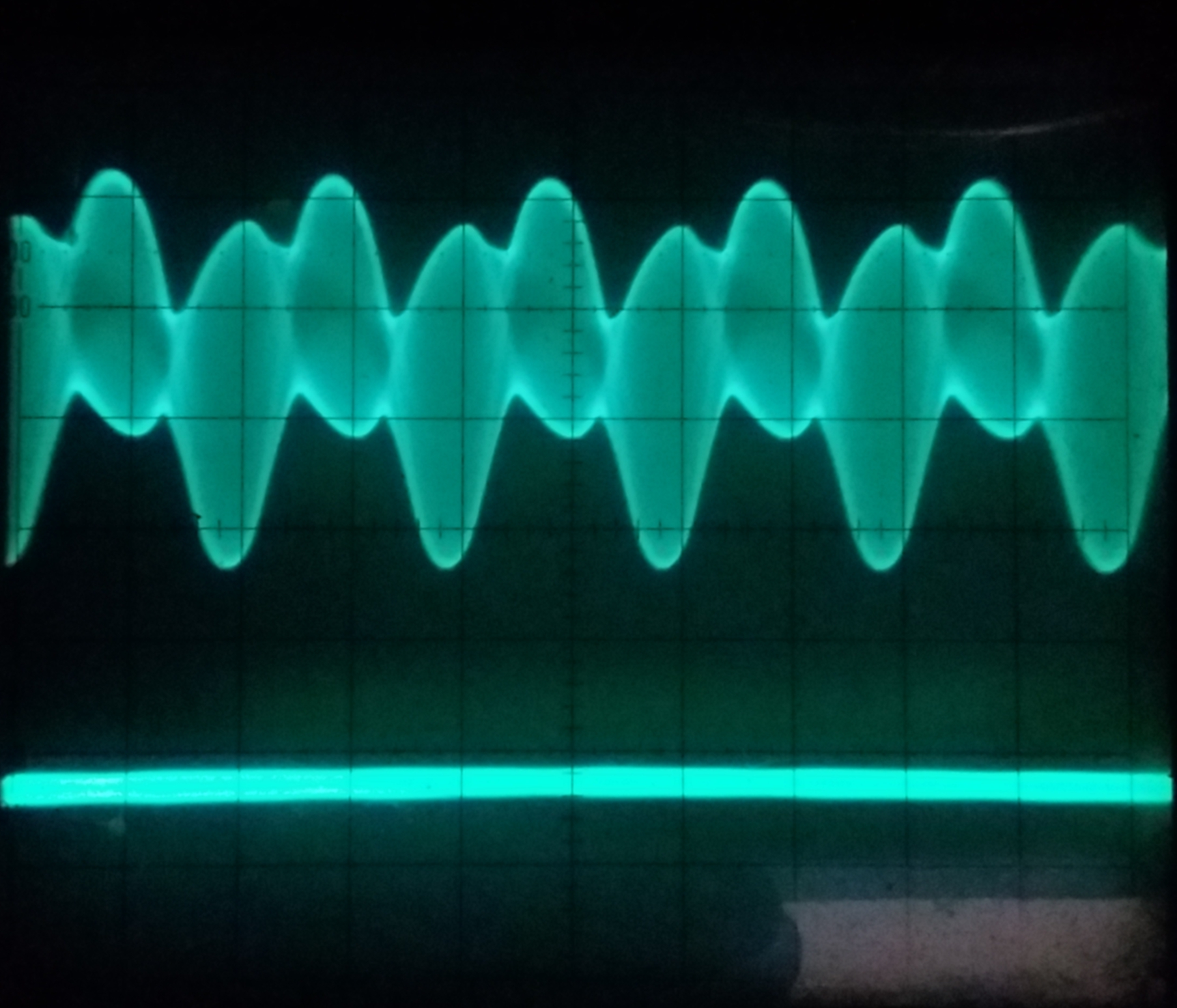
One thing I learned about myself a few years ago during the R-390 rebuild was that I go looking for the difficult answer to problems before I count out the simple ones. Couple that with unfamiliarity with some of the circuitry and you can lead yourself down into some very frustrating rabbit holes. I figured the CW path was good and it bypassed all the audio, the modulator and only went through the output of the filter. So the problem must be before the filter. I hooked up the signal generator to the mic connector and started tracing around the audio compartment with the oscilloscope. Audio through the mic amps, audio and carrier at the balanced modulator, audio and carrier at the input to the filter. 1kHz 3Vp-p riding on the 250kHz carrier. I went to the output of the filter and saw basically nothing. A thin straight line on the scope screen.

FilterWaveform
Missing Audio?

I'm unfamiliar with the details of how a Collins mechanical filter actually works. So to me this looked like a broken filter. I started to think that maybe this KWS-1 project was going to end a lot quicker than I had hoped. I was pretty sure these filters are hard to come by. For the R-390 rebuild I waited a year and a half for a junker unit to show up on eBay with the right combination of spare parts I needed to complete the job. But maybe there was something I overlooked. Maybe there's something about that distorted (to me) waveform that isn't right and the filter won't pass it. Grasping at this straw I tested every capacitor, resistor and diode in the balanced modulator. Out of circuit. That's the best way I know of to add extra mechanical damage to a 65 years old boatanchor. Easy to snap a standoff, melt some wire insulation or to gouge and break some component. I managed to avoid any of that, but the components all tested good.

I feared the worst, but it was time to get on the forums and get some expert guidance. Which is exactly what I got from the good folks at the Collins Collectors Association listserve. I told them I had no SSB audio output. I had traced audio into the filter but not out. Should I be searching for a new filter? Without questioning anything they said "check the antenna relay". The antenna relay? That's pretty far away from the filter I thought.

A Bad Antenna Relay

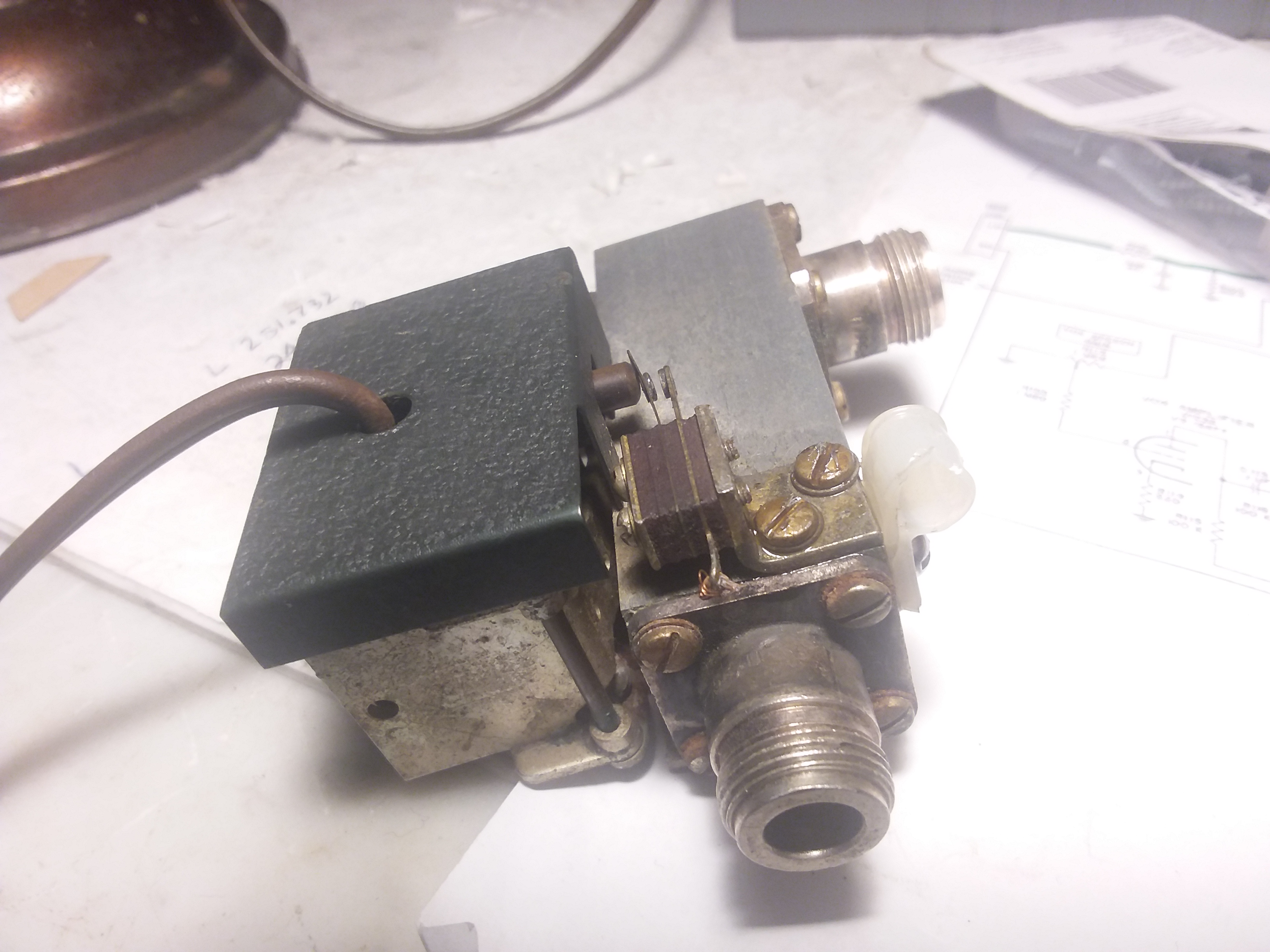
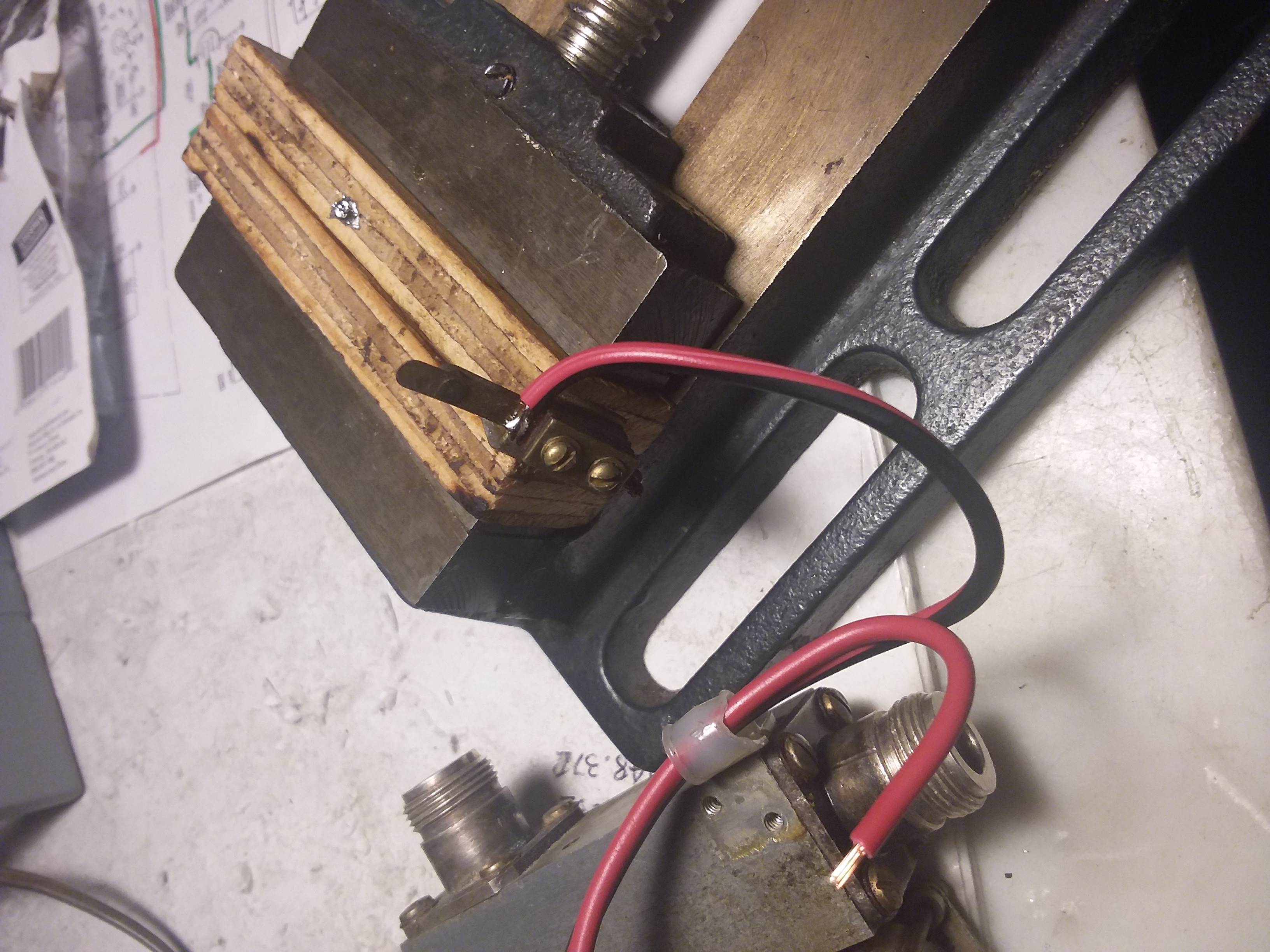
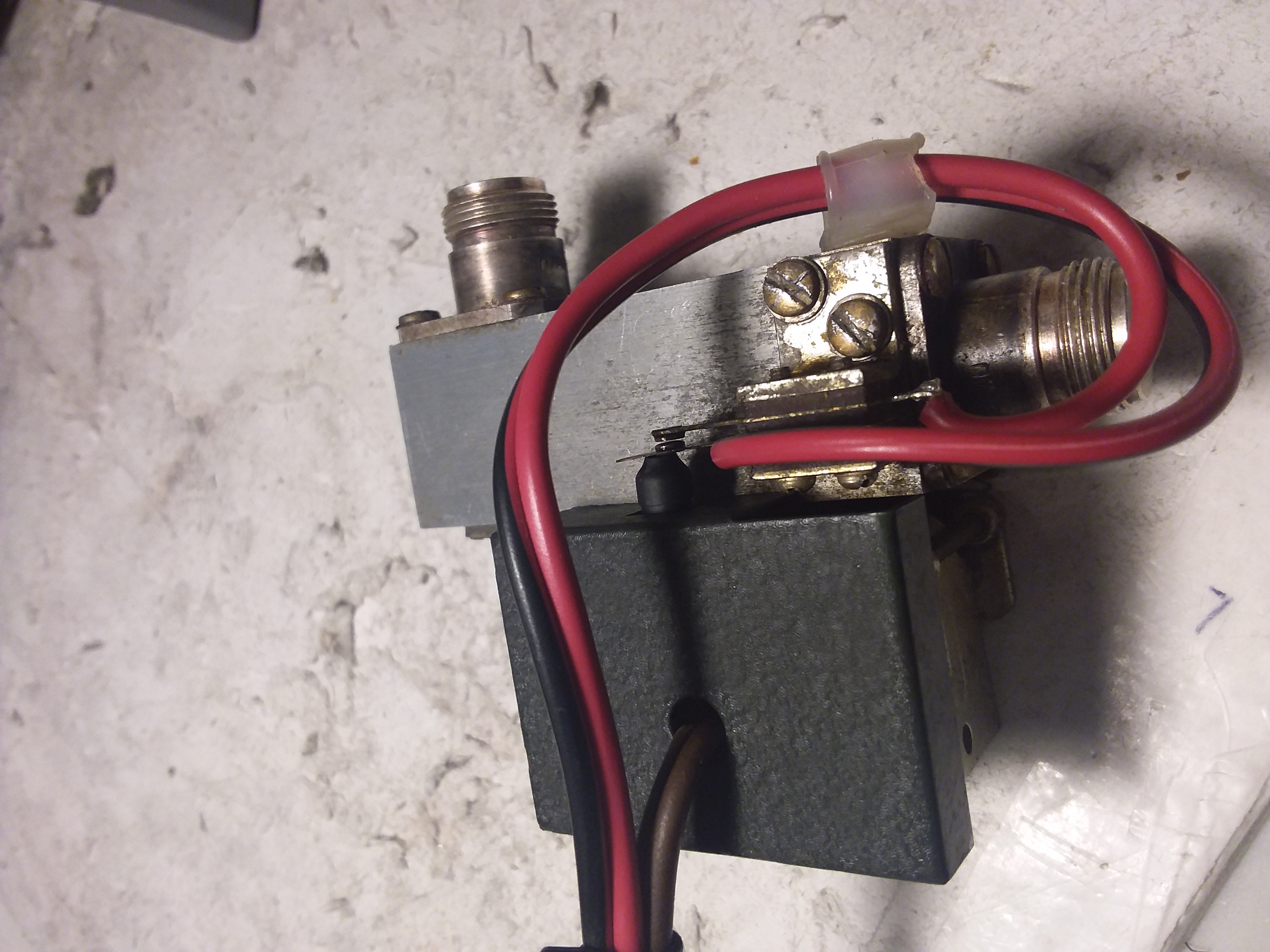
The antenna relay had by now been pushed against the back wall of the bench under the schematic and behind the soldering station, alcohol bottle, 3 pairs of needle-nose pliers, the Soldapult, and the box of chassis screws. When I first got the rig home and started poking around I was really confused by the antenna relay. It wasn't just an antenna relay it was a Dow Key relay. Except Dow Key is a brand name but this was a Collins branded relay. With a Collins part number but manufactured by Aemco. The relay coil had standard lamp wire going through the cable bundle back to the power supply. That seemed normal. But it had this outboarded switch with a broken off piece of wire on the solder lug. And where were you supposed to mount the whole assembly? Does it just lay on the floor? It was just an ungainly mass of BNC, N connectors, relay coil and switch.

Interlock3
The Antenna Relay

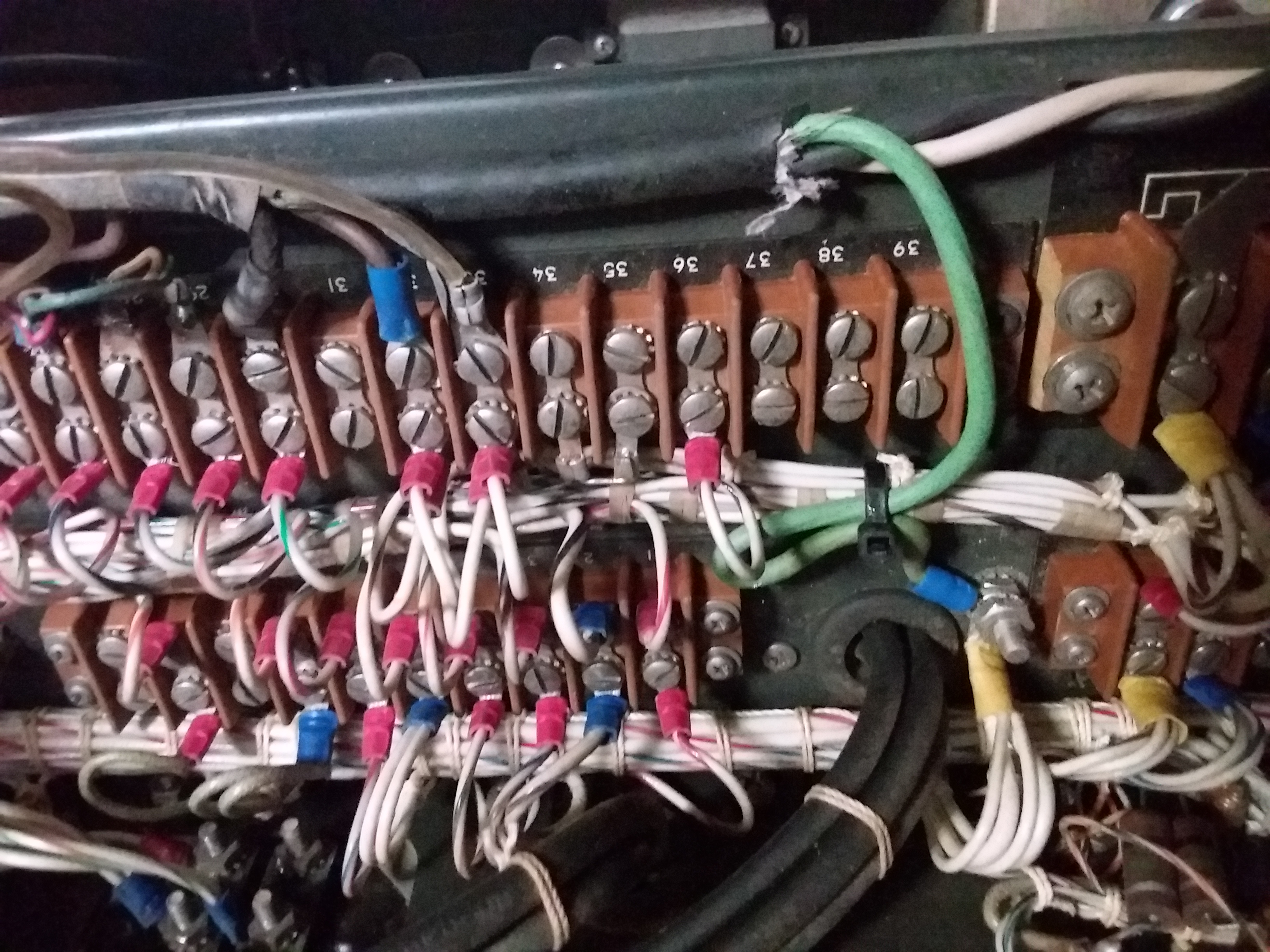
Not like any antenna relay I'd ever seen before but whatever, I didn't need it to test the transmitter so I hooked the KWS-1 directly to the Waters wattmeter and let the relay lay on the bench. As it turns out the relay is an integral part of the KWS-1 system. The outboarded switch is the Key Line Interlock switch which is supposed to be connected to terminals 36 and 35 of TB504 in the power supply cabinet.

Interlock2
TB504 terminals 36 and 35

It is this switch which controls transmitter keying in SSB mode. The switch is normally open. Pulling on the D-104 handle closes the antenna relay. The closing relay pushes the brown plunger which closes the switch contacts which connects the keying signal to ground back at TB504. As you can see there were no connections to anything at terminals 36 and 35. So you pull on the D-104, the antenna relay closes, the plunger pushes against the switch contacts and the KWS-1 sits there patiently waiting for something to happen. Not only that but the switch is missing one of its solder lugs. The lug on the left hand contact is sheared off. So we had to do some improvising now, but at least it looked like the mechanical filter was not the issue anymore.

Interlock4 Interlock5
The refurbished antenna relay assembly

The screws holding the switch to the relay housing were crusted in tightly. I gave them a shot of WD-40 and let it sit overnight and the next day they came out fairly easily. I got an old spool of Radio Shack lamp wire from the junk box and hooked it up to TB504. I ran it out and tie wrapped it to the antenna relay line. I soldered one wire directly onto the lugless contact. The other wire went on to the remaining solder lug. I tested it for continuity and found that the plunger wasn't making them have solid contact. I built up the end of the plunger with some shrink tubing to give it more reach and I made sure the switch was pushed as tight as it could be towards the relay plunger. Now it was testing good.

So this was it I hoped, ready for the final test. Everything got cleaned off the bench. I buttoned the KWS-1 back up. The back panel went back on the power supply cabinet. I hooked up the maple sap tubing and all the other lines. I gingerly placed the antenna relay contraption on a wooden box next to the KWS-1 and I switched over to the MFJ peak reading wattmeter. I fired the KWS-1 up, pulled the lever and watched the MFJ bounce up and down as I spoke into the D-104.


The Bronze Dust Twins
BronzeDustTwins

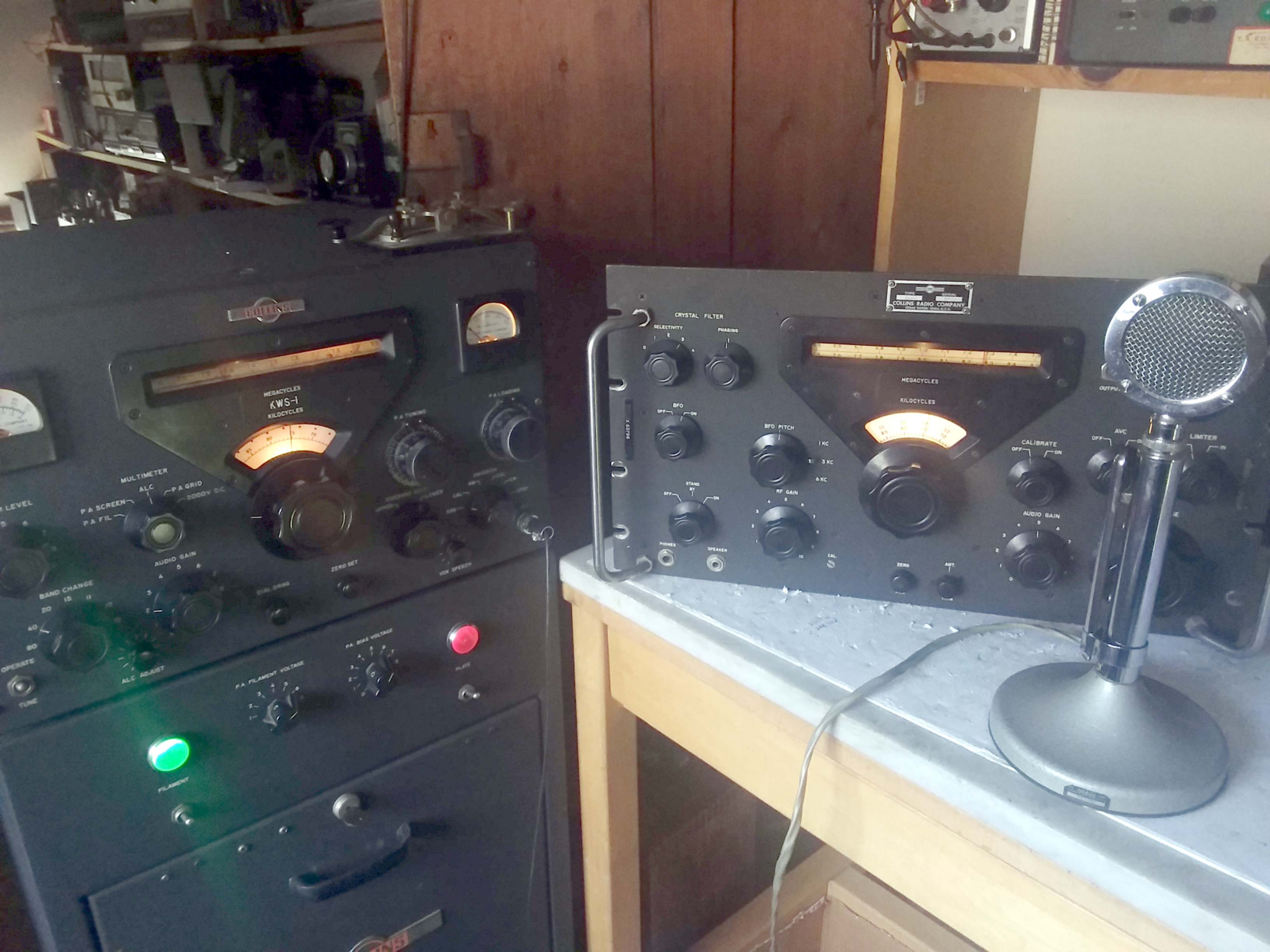
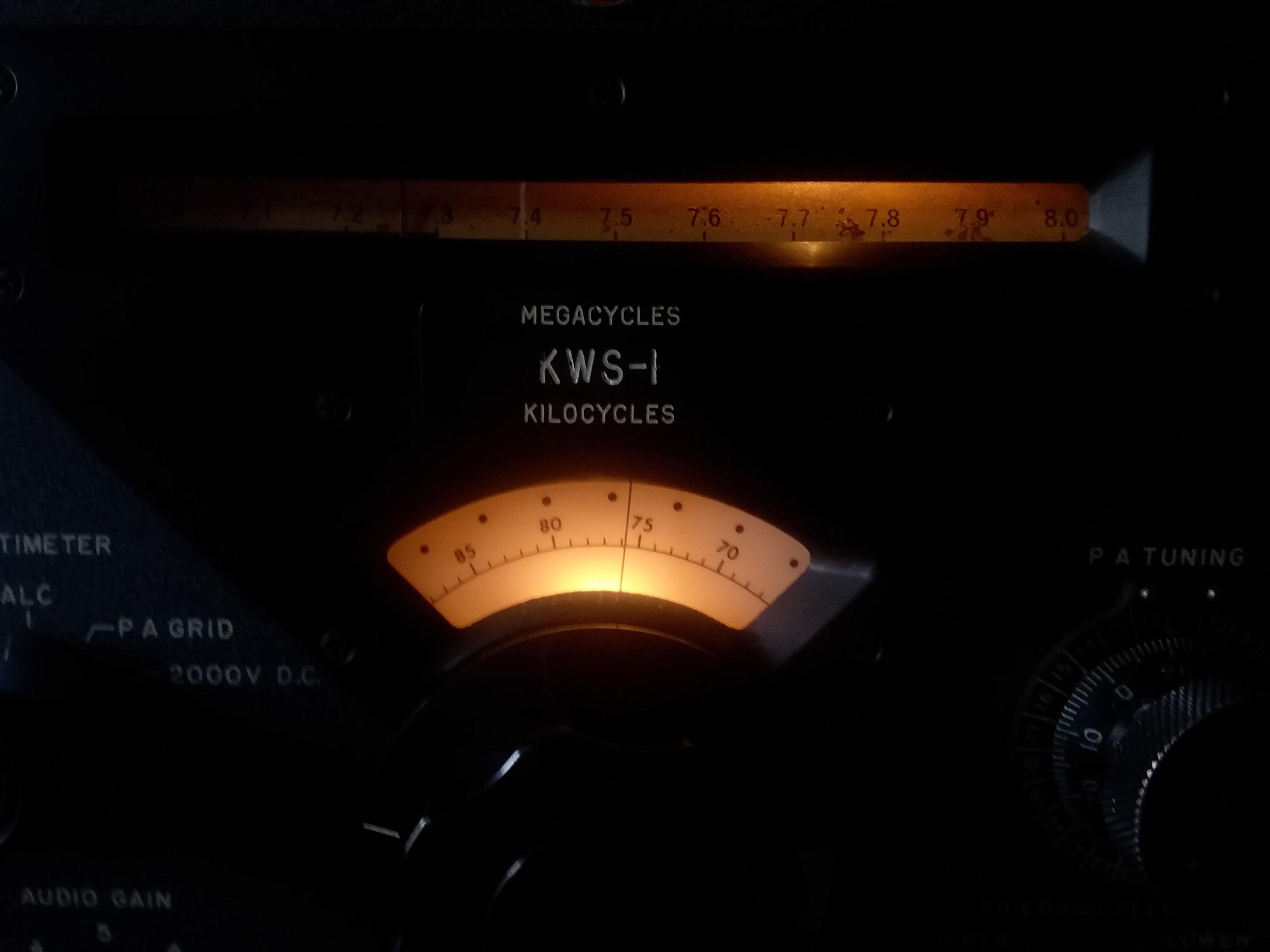
That was 2 nights ago. I spent yesterday playing around with receivers to mate with the transmitter. I had a chance to take a 75A-4 with the KWS-1 but I passed on that knowing I could use my 51J-4 that I got going a few years ago. Not ideal but it was something that would work. Well, it would work if the receiver worked. I plugged it in and then remembered that it had an assortment of strange mechanical filters in it. As I tuned around it was quickly apparent that the AVC had died and the S-Meter was not working. I thought about the R-388 sitting on the shelf that probably had good AVC but then I remembered I stole it's T/R relay and a couple of other components to use in the 51J-4. I also remembered that the receiver muting required a 12VDC input which I'm pretty sure was not available from the KWS-1. But I was determined to get on the air right away so I hooked up the receiver, turned everything on and parked on the upper part of 40 meters, tuning around to avoid the foreign broadcasters, calling CQ. It was nerve wracking at first bouncing around between the Cal signal, Standby Switch, D-104 switch and riding the RF and AF gain. After what seemed like an eternity I finally got a call back from Larry W3RL outside of Washington DC with an S9 signal report and "very good audio". Then he added, "by the way your frequency measures here at 7275.5 if that helps at all".

7275.5
7275.9 - Pretty Close

It helped. Tnx OM es 73 de WA2FXM.


HV Oscillations - 8 Nov 2020

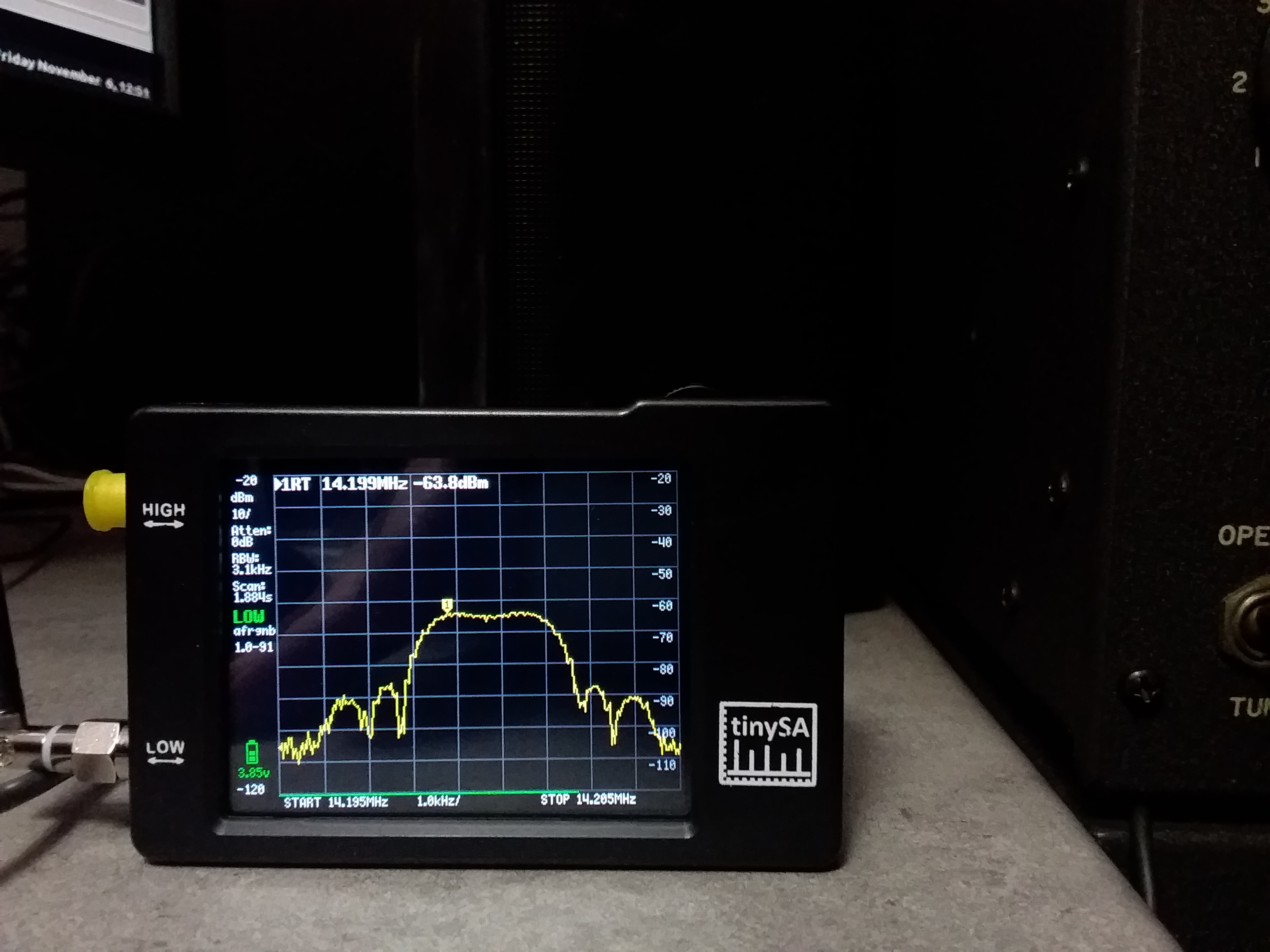
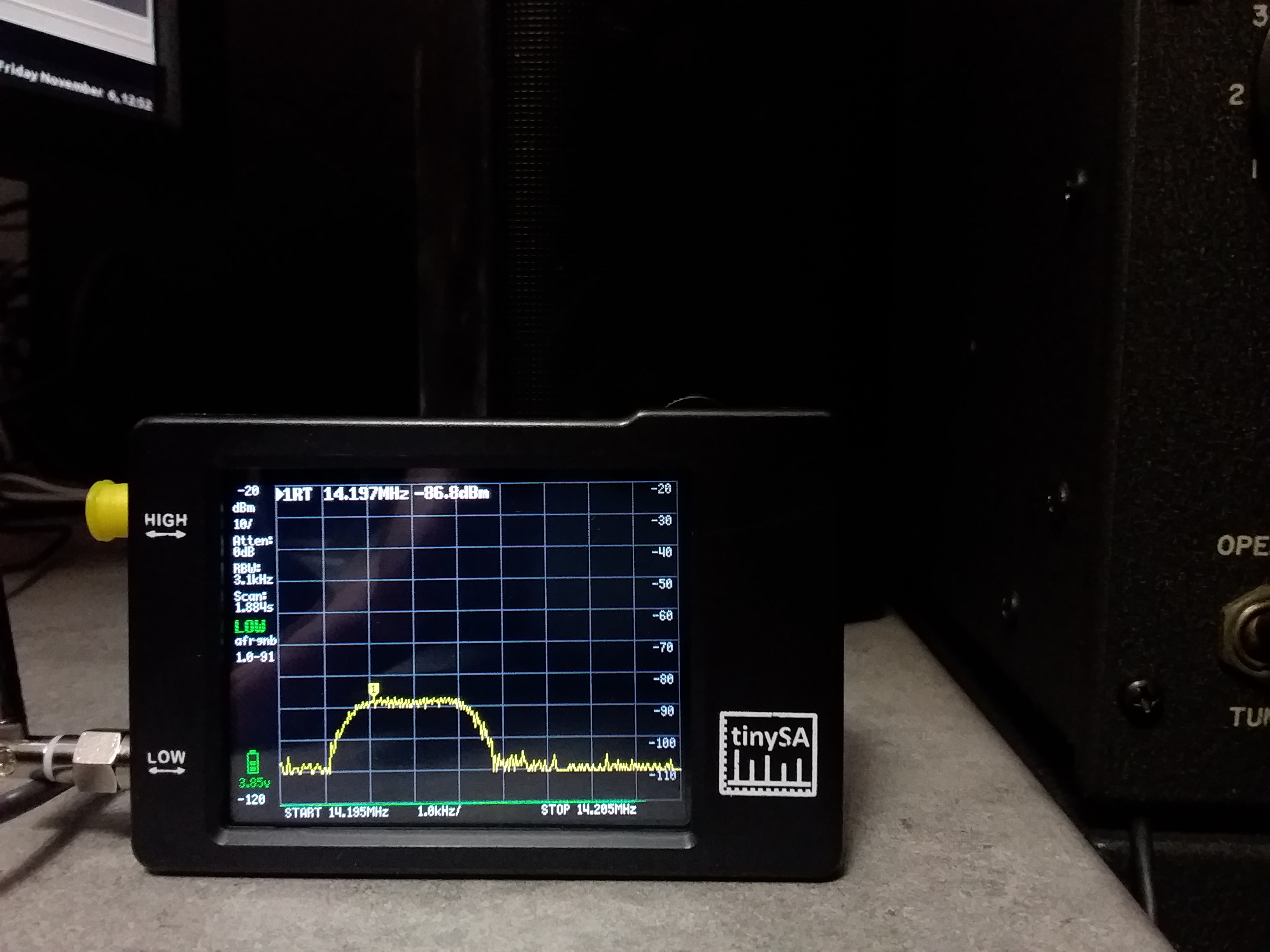
I was just starting to settle down and get acquainted with the KWS-1 when an oscillation problem popped up. I had made a handful of 20 meter contacts and was getting good signal reports. Then one morning I flipped the HV switch and within a second or two heard a strong carrier nearby on the 51J-4. I switched HV off and the carrier lingered for about 10 seconds before it disappeared. It just so happens that the TinySA I ordered had shown up the week before. I hadn't had a chance to play with it yet but I clicked around and got a display of the CAL signal frequency at 14.2 mHz and the spur at around 14.198 kHz.

Cal HV
CAL signal and the spur with HV turned on about 2 kHz below

So, it's time to roll the beast back to the bench and see what's going on.


VFO Alignment - 11 Nov 2020

As long as the KWS-1 was back at the bench I decided it was time to do a preliminary overall alignment. I got the book out and started with the VFO alignment. Tracking from one end of a band to the other was not great. It was enough work getting used to spotting the KWS-1 with the 51J-4 but I was also having to CAL the transmitter every 100 kc to keep track of where I was.

I've had some experience with VFO endpoint calibration with my R390. So I was prepared mentally to do battle with this particular PTO. But I was quite pleased to find that unlike the 70H-2 PTO used in the R-390 the KWS-1 uses a 70E-23 which has an outboarded, somewhat accessible Endpoint Trimmer stud. With the R-390 you could only access the trimmer by unscrewing that plug located just to the right of the trimmer stud. And you needed a very long thin screwdriver that would fit through the hole on the front mounting plate to make the adjustment. Which of course meant you had to remove the PTO from the receiver to do it. That part of the R-390 rebuild was a very good learning experience for me but I am very glad that this PTO is serviceable from within the rig.

R390PTO VFOEndPoint
R-390 vs. KWS-1 PTO

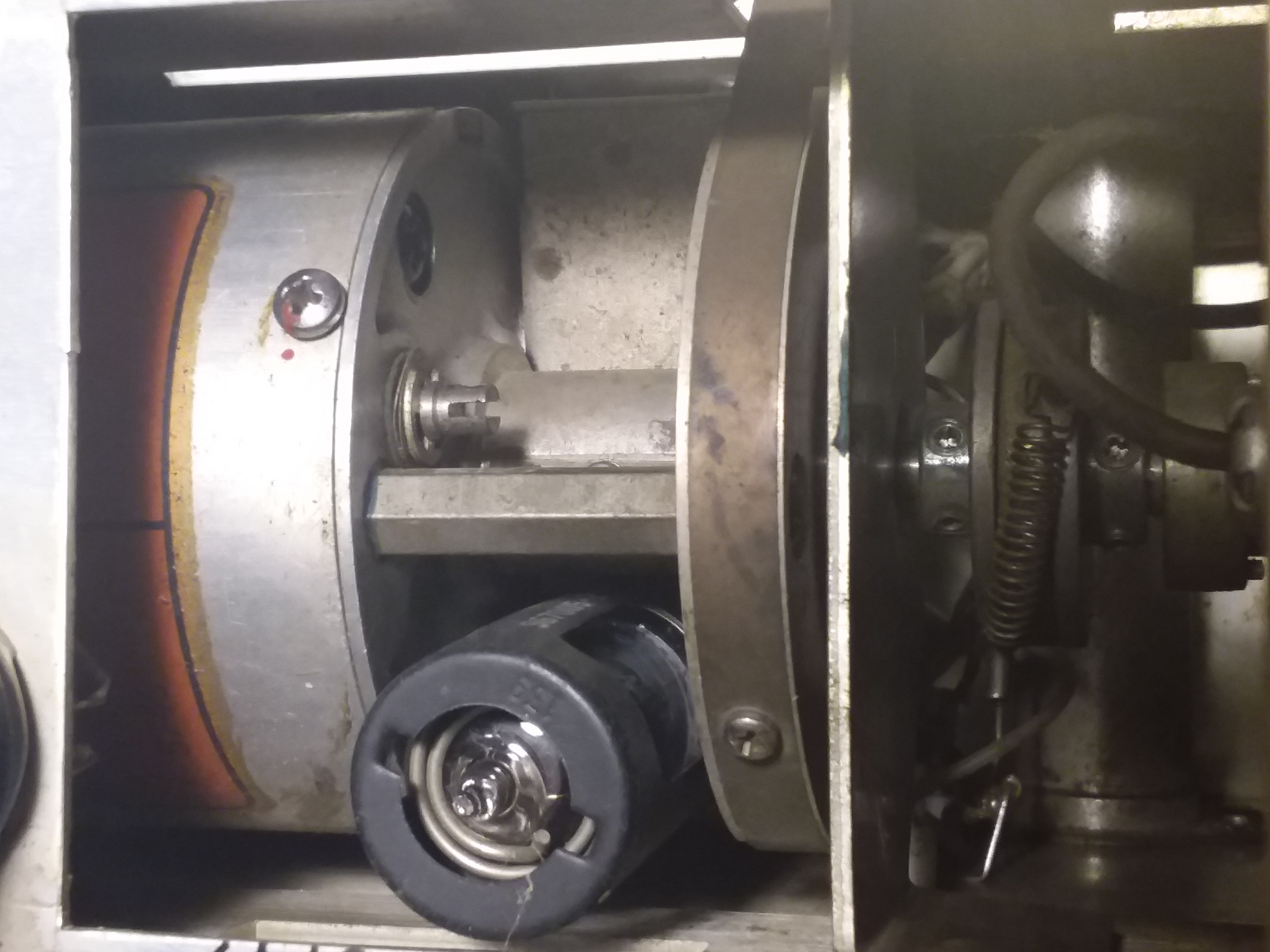
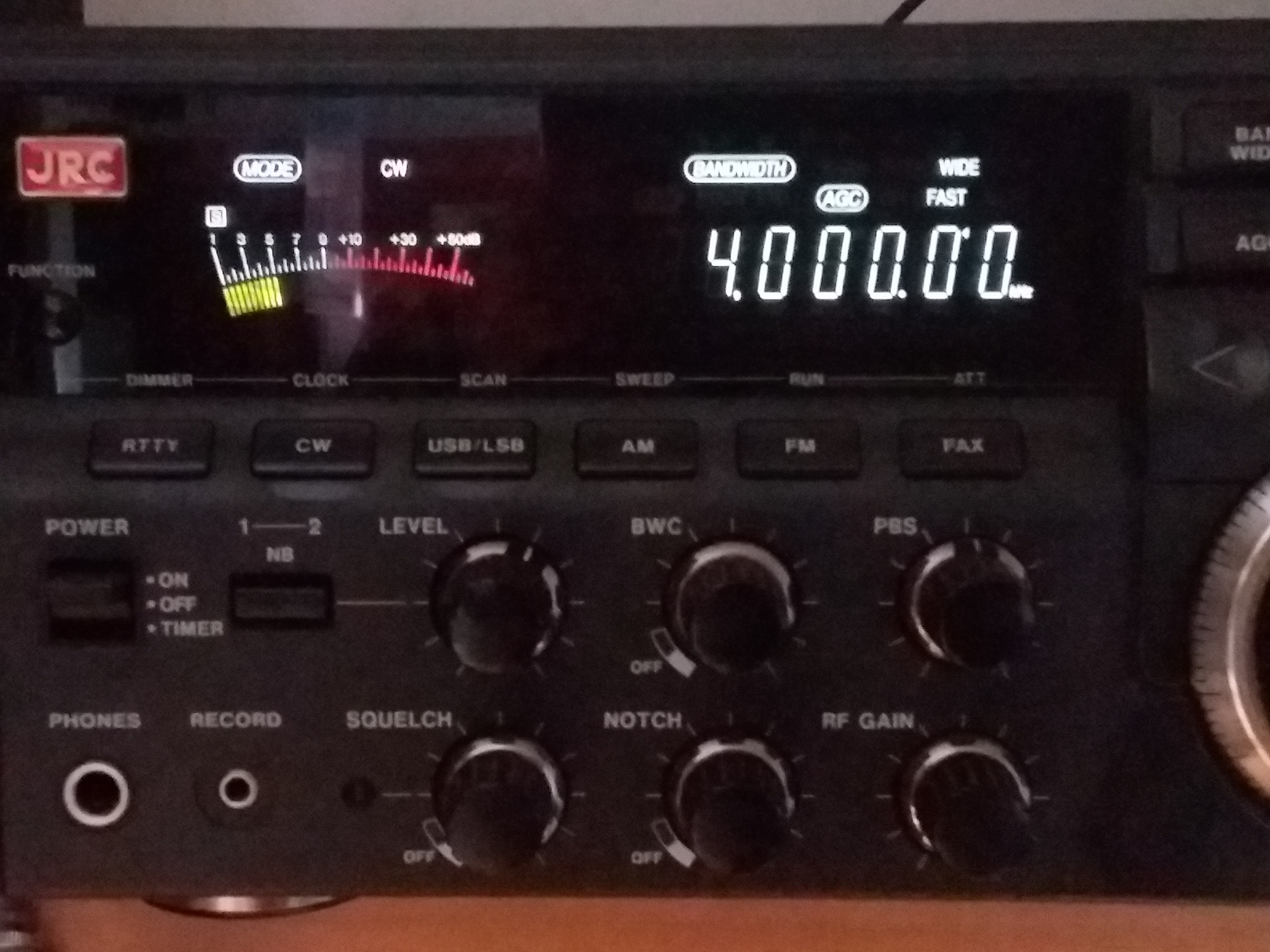
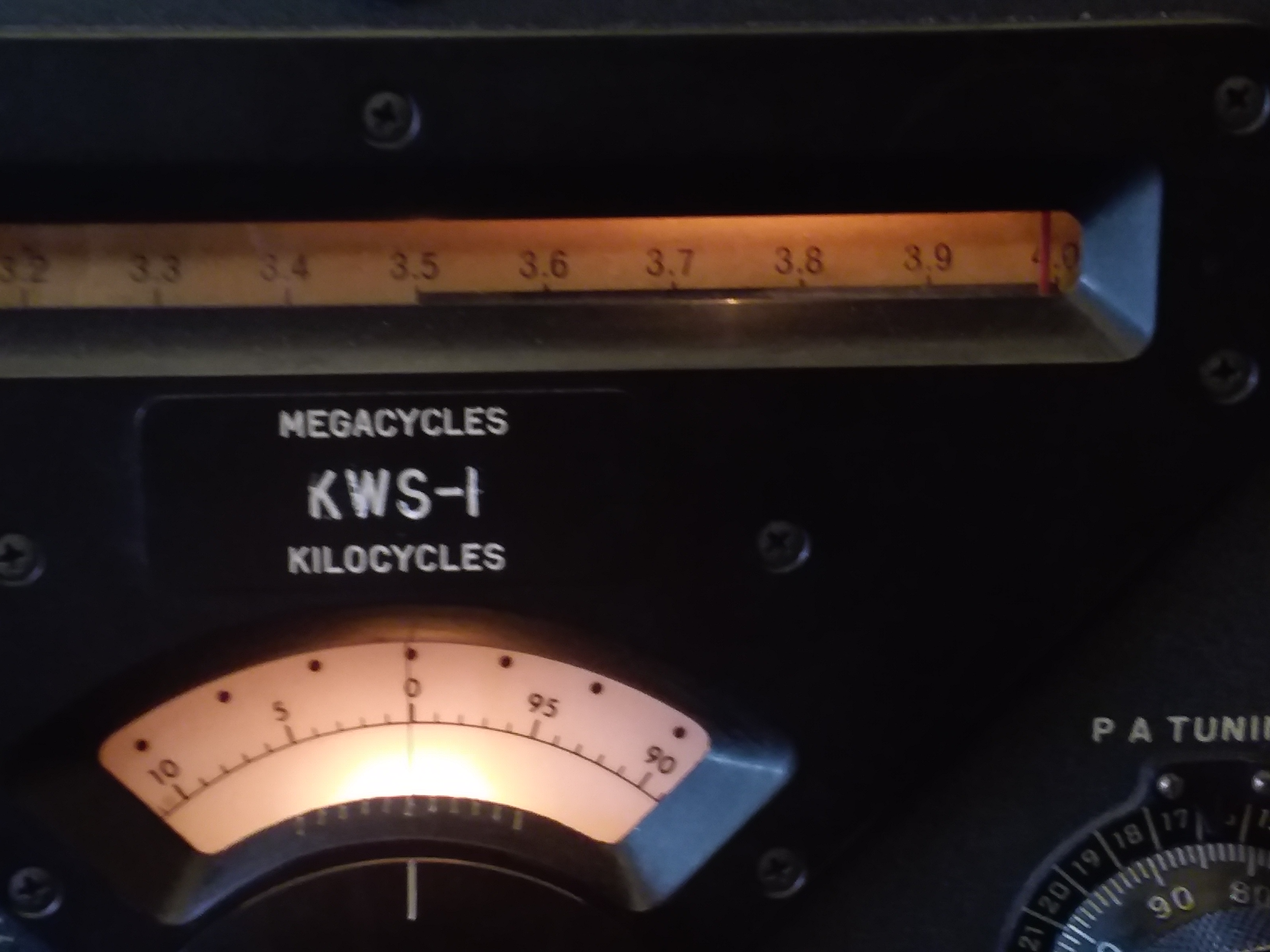
I started at the low end of 80 meters at 3.0mc and I used my Japan Radio Co. NRD-535 receiver to make the adjustments. 10 turns of the PTO only brought me to 3.92mc on the upper end. It was a little tricky finding the right tiny screwdriver to fit in the stud hole and slot and I used a pair of pliers as gingerly as I could to turn the stud when the hole or slot were out of reach. But a few times back and forth and I was able to make up the 8kc difference. Unfortunately the Zero Set had run out of room on the lefthand side and needed to be readjusted. I had to search the toolbox to find the right sized Bristol wrench to get in on the VFO dial coupler. With the VFO set to 4.0mc I loosened the dial knob coupler setscrews, moved the dial shaft for zero beat in the NRD-535, turned the fiducial dial to zero, straight up and then tightened back down on the setscrews. 4.0mc = 0.

4MCRcv 4MCCal
Using the NRD-535 to calibrate the KWS-1 VFO

The Megacycle dial is off about 100kc. No big deal really, but it does bug me that the pointer is not sitting exactly on the 4.0mc mark. I'm not sure if that's a Megacycle dial vs. Fiducial plate thing or a simple adjust the Megacycle dial pointer thing. A detail to worry about later.


A Neutralization Muddle

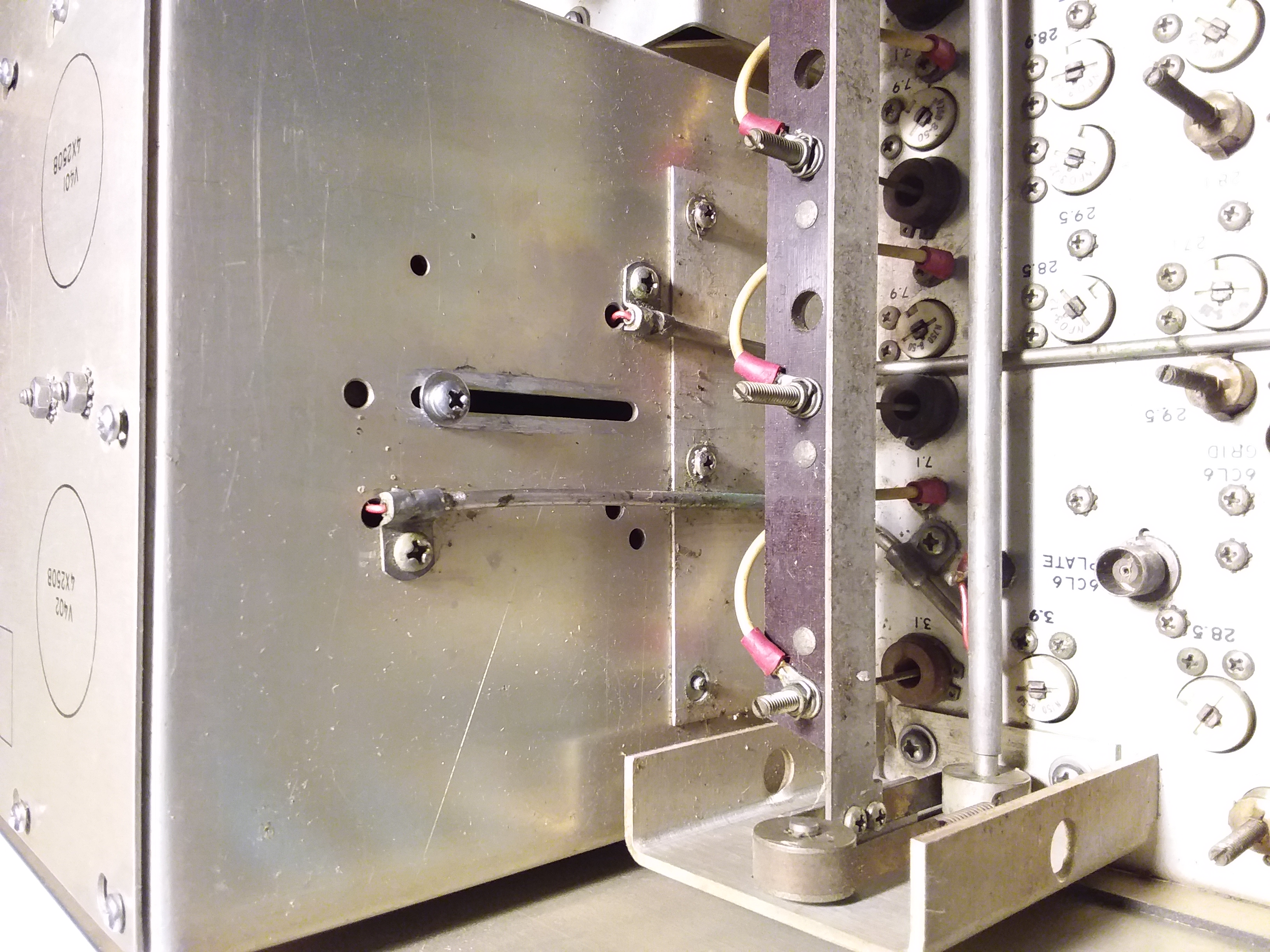
To me there's nothing more frustrating than an alignment procedure that goes awry. Not the kind of awryment that happens when you unknowingly tweak yourself out of bounds and into chaos and oblivion. But the kind of frustrating muddle you enter when you religiously follow the alignment procedure in the manual and you wind up with inconclusive results. You tweak the trimmer cap and nothing happens. You reach the end of travel on the coil adjust and you still haven't yet reached a peak or a null on the meter. I've entered just such a muddle going through the KWS-1 Neutralization procedures in the manual. Neither of the 2 Driver nor the 80 Meter neutralization tweaks showed any results on the meter. I had to mangle the aluminum strip capacitor and it's wooden block mounting to get what is possibly a minimum reading for the PA Grid-Plate neutralization. It's certainly not a viewable null.

And on top of all of this the HV oscillation on 20 meters has disappeared. So did I fix it? And if so which inconclusive tweak was the cure? I suppose I should be happy that it's gone. I've made some European contacts from the bench on 20 and 40 meters with good reports. But I need to get to the bottom of the neutralization muddle because I'm pretty sure it's a problem.

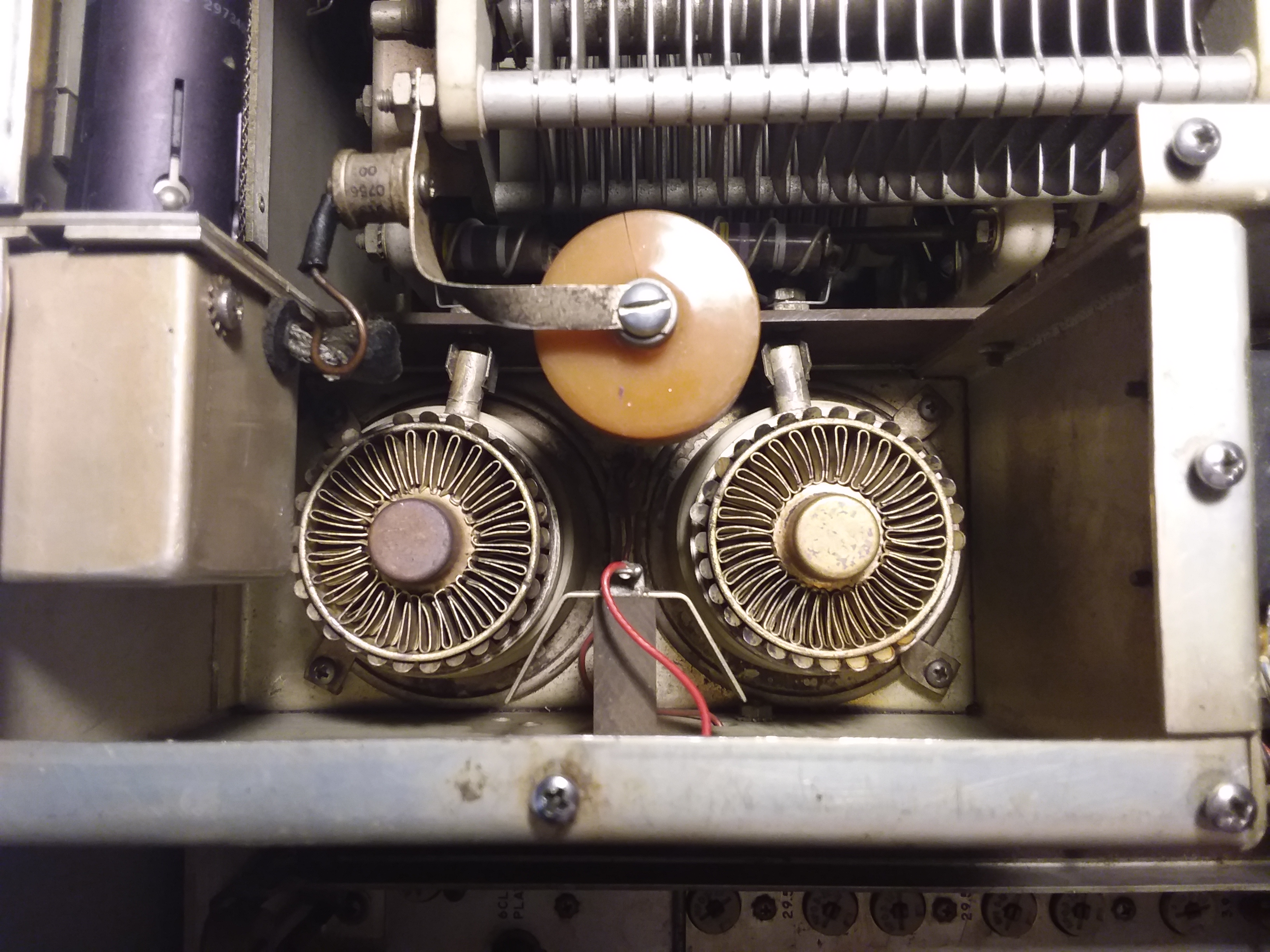
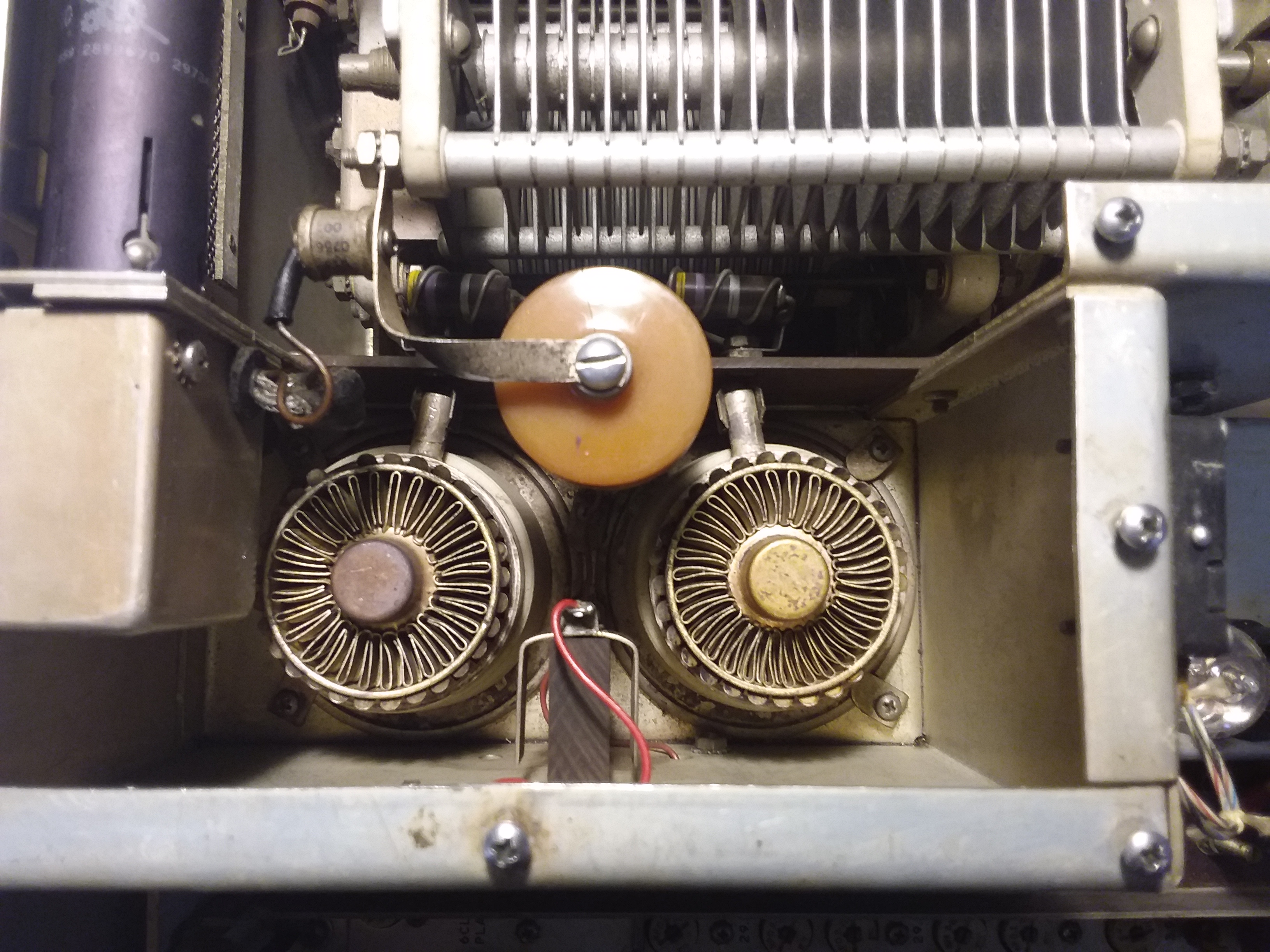
After the VFO alignment I moved on to the Sideband Select, Crystal Oscillator and Trap adjustments which all seemed to go fine. Next up was the Driver Grid-Plate neutralizing procedure and it gave me nothing. The S-Meter on the NRD-535 bounced up and down as I swung C713 back and forth but C238 had no effect on it. I moved on anyway to the PA Grid-Plate Neutralization. It took me awhile to locate the capacitor which was hanging on the inside of the PA cage. It was sitting about 80% up in the slot and moving it up reduced the meter reading. But it maxed out at the top with no null. So now I had two muddled results.

Neut1 Neut2
The PA Neutralizing Capacitor before and after

I did some research and found out that there was a fix for the PA capacitor. Decreasing its capacitance by bending in the wings of the aluminum strip until they were parallel. I did this, but once again the S-Meter decrease stopped with the capacitor at the top of the slot. Still muddled. More research found a statement saying that you might have to shave off some of the aluminum wing to further decrease it's capacitance. That sounded to me like going one step beyond. So instead I removed the top screw from the capacitor mounting block. This gave me and extra 1/2" or so of vertical maneuvering in the slot. I tried it again and this time it seemed that the S-Meter decrease stopped just short of the top of the slot. I tried it a few times to make sure I wasn't willing it to happen and it seemed to be real. So I carefully tightened the single screw making sure that the wooden block stayed aligned vertically with the slot.

Neut3

Next, the Driver Grid-Cathode and 80 Meter neutralizations both turned out to be busts. No change on the S-Meter readings. I didn't know where else to go with all of this but testing on 20 and 15 meters into the dummy load at least I wasn't getting any HV oscillations. I switched over to the Multiband V-Beam antenna and tuned up on 15 meters with the Johnson Kilowatt Matchbox. When I switched over to SSB and pulled the D-104 lever I was staring at a big fat carrier on the output monitor scope. I switched back to the dummy load and as before got good audio out. Switch back to the Matchbox, a carrier. I detuned the Matchbox slightly and the carrier disappeared. But keying the mic you see a flash of carrier before it disappears.

So maybe I didn't fix anything. Maybe I just shifted the HV oscillation problem from there to a 15 meter oscillation problem? It's time to break my rule of looking for the obvious and instead dive into some reading research. My old musty ARRL Handbooks from the 70's have neutralizing procedures involving wavemeters. And someone at CCA got just as frustrated as I am right now and came up with an anti-manual alternative procedure for neutralization which he swears works. For his KWS-1. We'll see.