The Mystery Bronze Twin
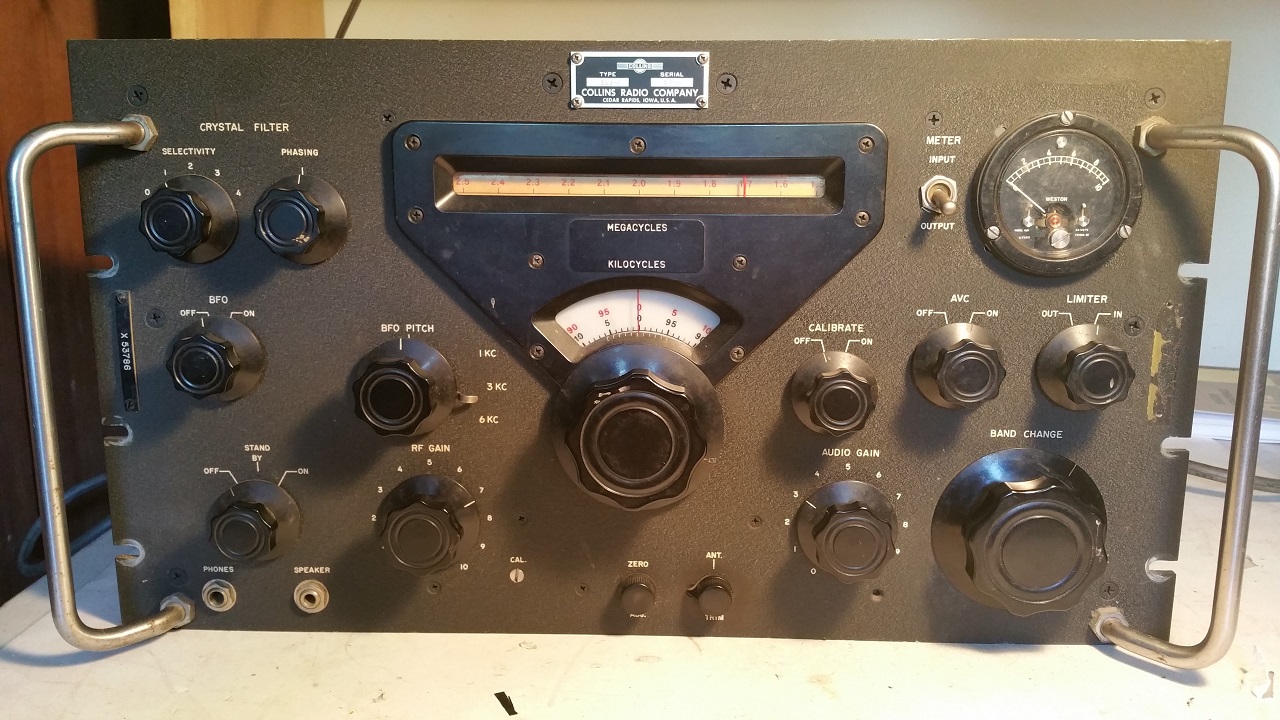
51J4

Where Did It Come From?

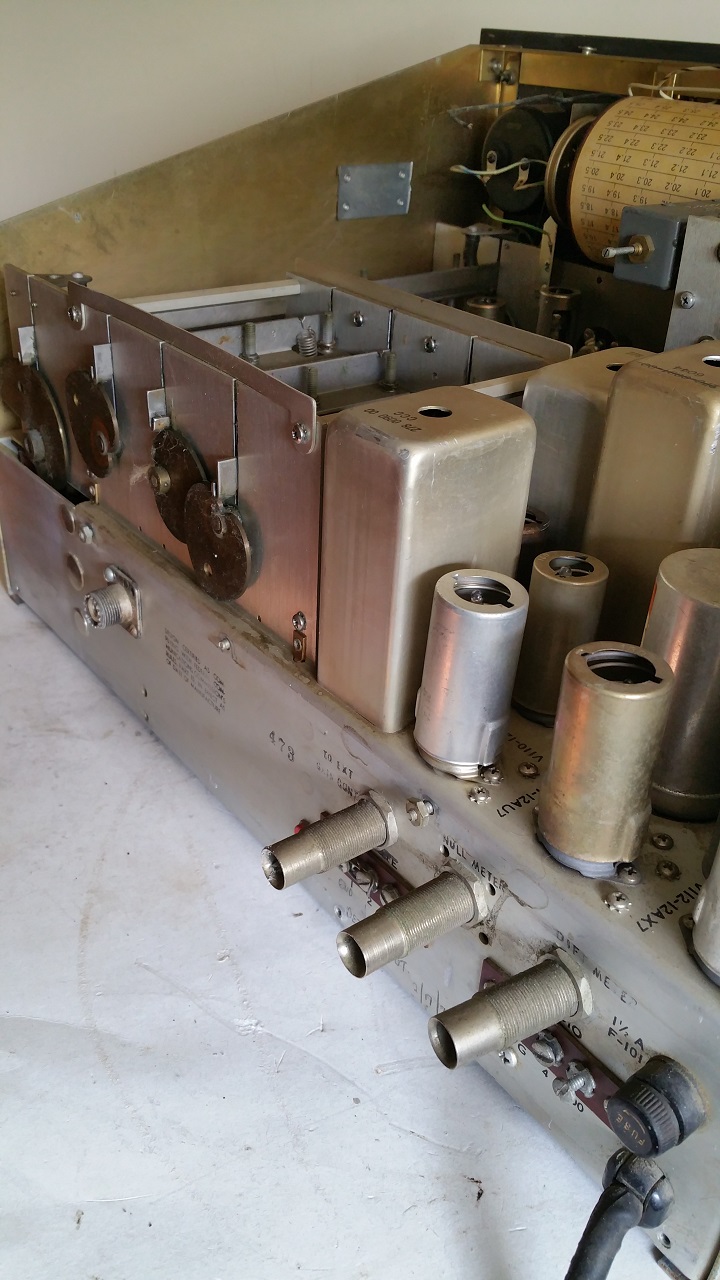
I picked this 51J-4 up a couple of years ago. It must have been on Craigslist because I met the guy nearby at the Wheelock, Vt. Town Hall parking lot and we traded heavy metal for cash. It was a good price and I could see why as I lifted it onto the back seat of the pickup. It had these 3 strange, very long connectors sticking out the back of the rear panel. Not that I was extremely familiar with the 51J-4 setup, but they just seemed odd and I assumed that it had been hacked up a bit. I got it home and started looking it over

51J4IDTag 51J4RearPanel2

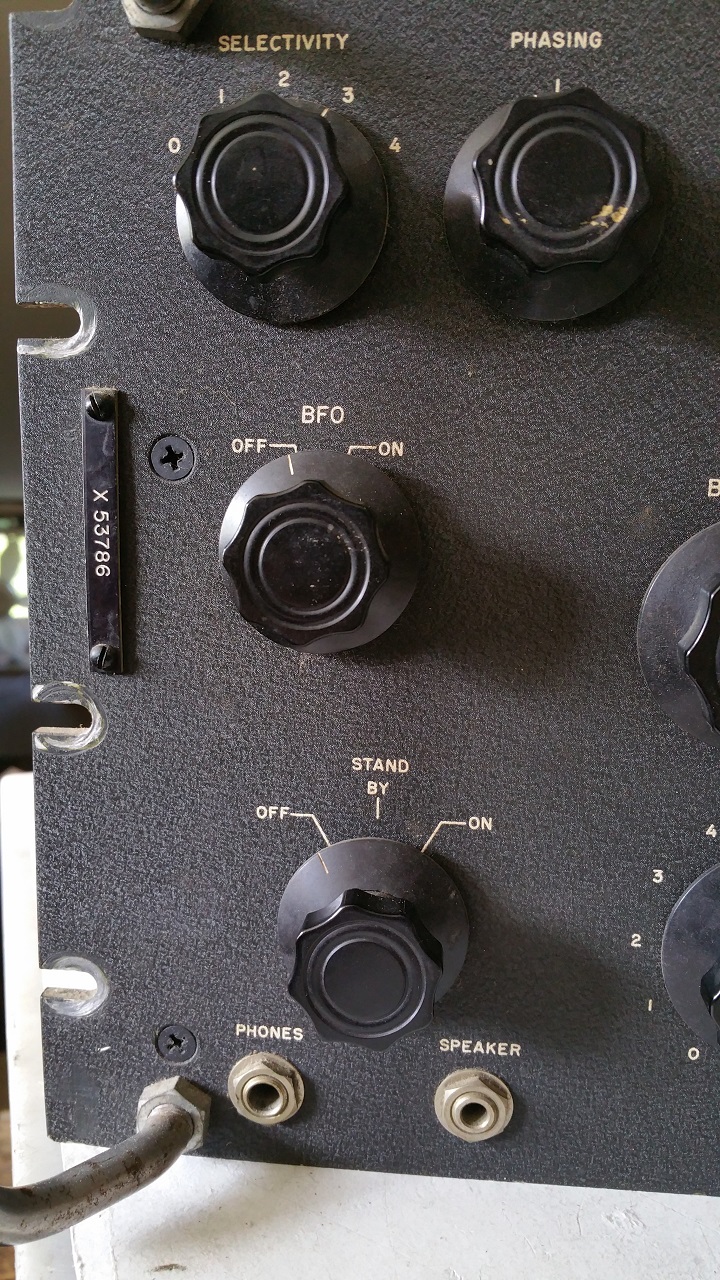
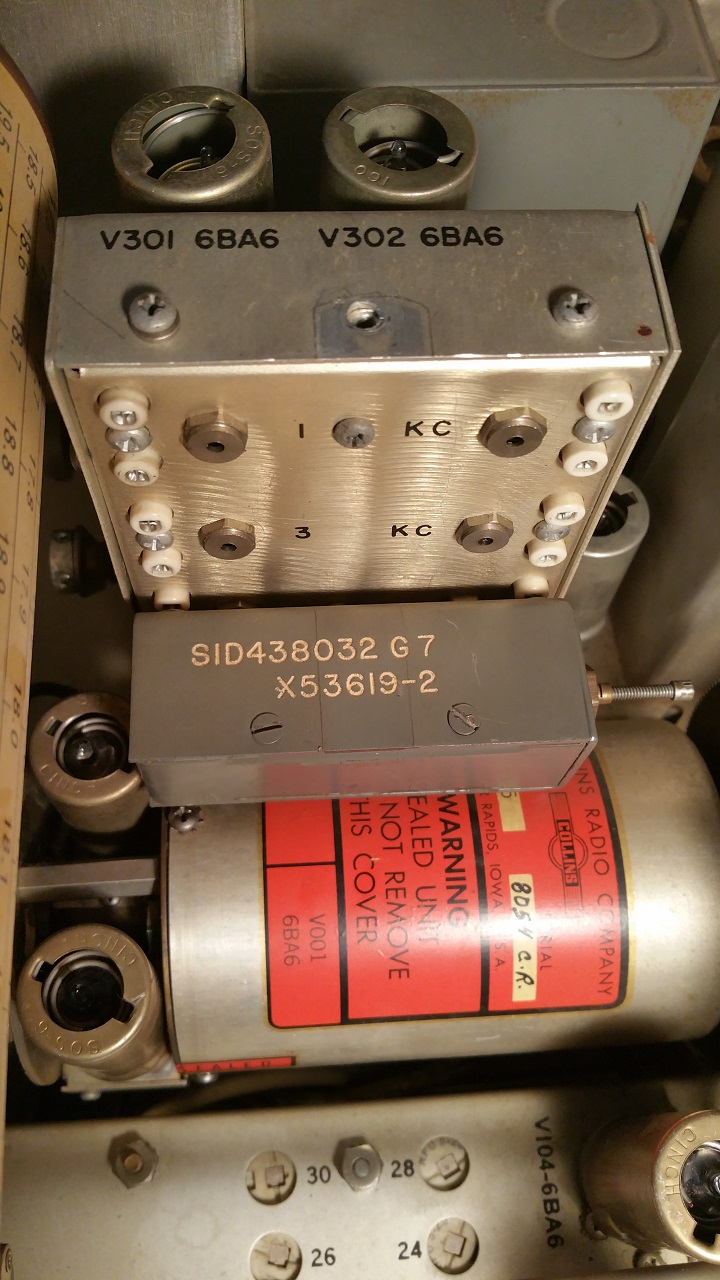
I found it had indeed been hacked, but not in the usual way that I thought a "normal" ham would dig into something like this. It's got a Collins 51J-4 label plate, serial number 5944. But on the left side of the front panel was a screwed in plastic ID tag X53786. On the right hand side, it looked like a similar tag had been there and later removed. The meter had been changed from receiver use to a Weston with a generic 0 to 10 scale. There was a single gray non-Collins mechanical filter featuring a tweakable screw sitting in the 6KC slot of the filter compartment. Was this some type of industrial testing setup mod?

51J4Filter

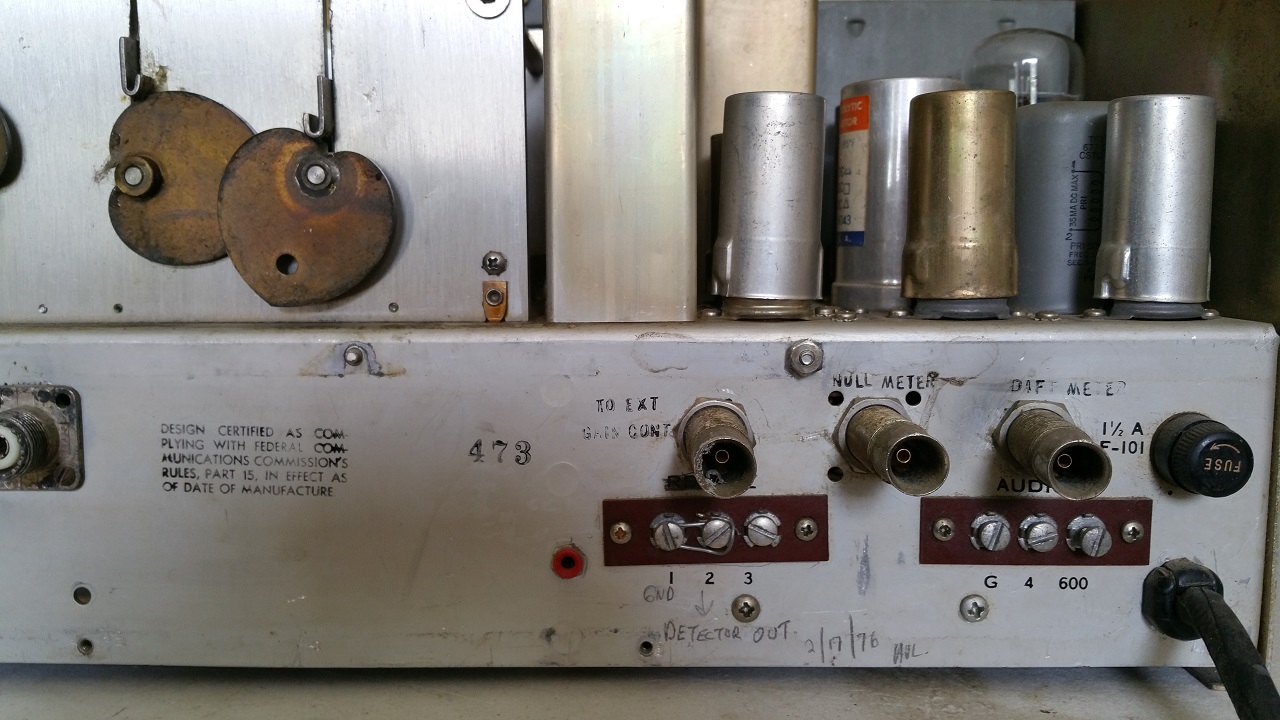
On the backside the IF connector had been removed and 2 additional holes had been drilled in the chassis. There were now 3 very large coaxial connectors on the chassis labelled TO EXT GAIN CONT, NULL METER, and DIFF METER. And they had gone through the trouble of labelling the connectors with some type of industrial looking block letter labels. There was now a small red testpoint connector added just to the left of the 3 terminal Remote connector. 2 of the terminals had pencilled in labels for GND and DETECTOR OUT with a date 2/17/76. And maybe the initials of the technician who did the modification? AVL? Underneath K101 the antenna relay and I104 the static discharge bulb had been removed. The EXT GAIN CONT, NULL METER and the red testpoint were all connected to T105 the 4th IF transformer.

51J4RearPanel1

It took me a while to figure out what had been done to it and get it back in operable shape. I put the back panel back in order, rewired it properly and left the testpoint hooked up to the Diode Load. I replaced the antenna relay and static discharge bulb and returned all the circuit wiring that I could see back to normal. When I went to test it for the first time there was no AVC and the meter was moving backwards. Turned out the wire to the AVC switch had broken off and the meter had been wired in backwards.

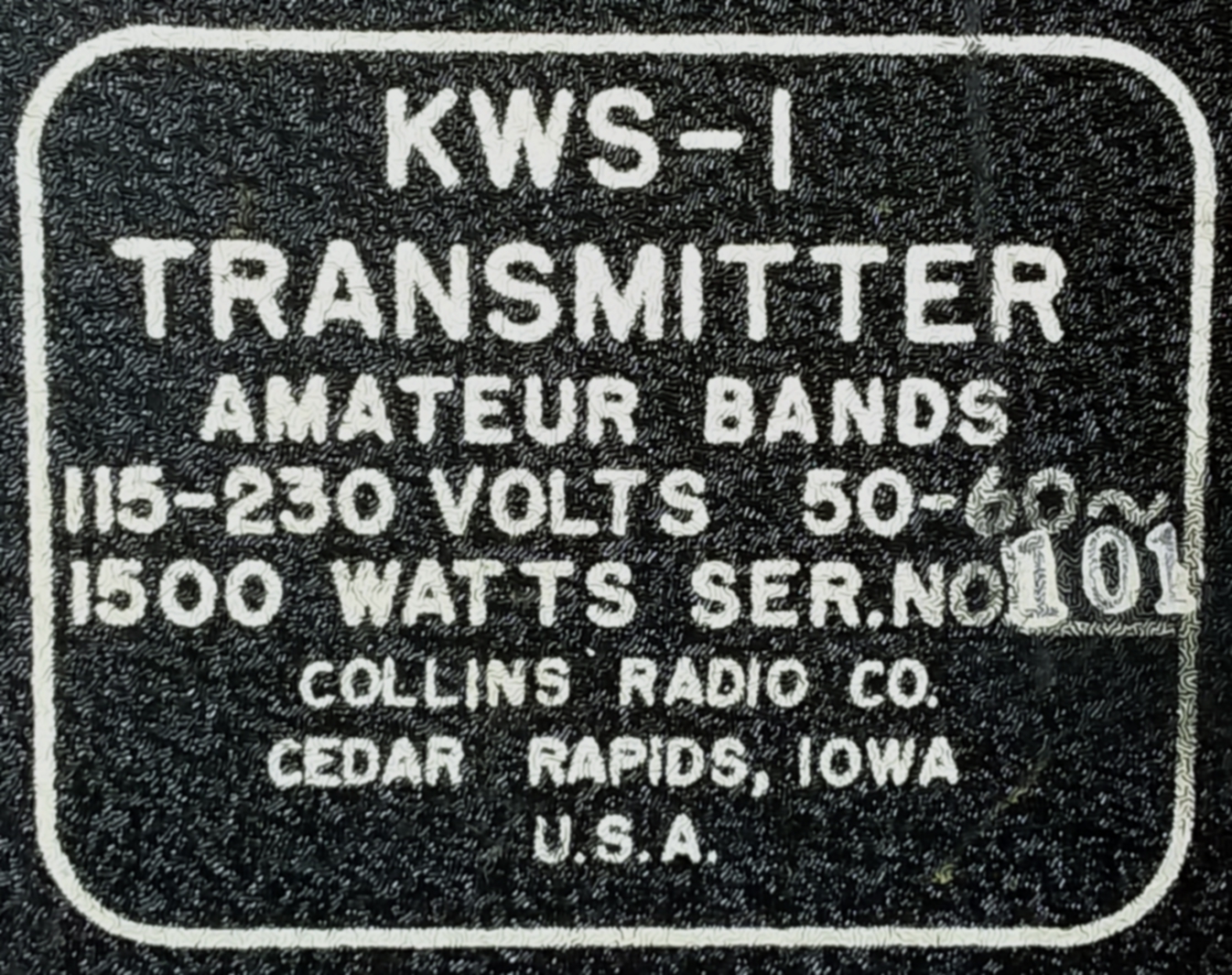
So once I got the receiver working it went on the shelf and that's where it's been for a few years. Now it's dusted off and sitting next to the KWS-1 ready for service, almost. I've been happy to make the first few on air contacts with it, but without some more narrow filtering, remote receiver muting and some decent SSB AVC action it's not going to be that much fun to be working this pair of Bronze Dust Twins. I've got some more work to do on it.


The VE3TOU "Treetop Circuits" SB-51 Product Detector - 5 Nov 2020

While it was very exciting to finally get the Bronze Dust Twins on the air I immediately found the 51J-4 lacking with the handful of contacts I had made in the first week or so. What I thought was a broken AVC system was more likely to be the inherent limits of mid-century, AM reception design of the 51J-4. It was hard enough getting used to the process of spotting the KWS-1 with the receiver, but the added necessity of riding the RF and AF gain pots made getting back on the air a particular chore. Add to that the lack of receiver muting (I had a plan involving a 12V wallwart buried inside the receiver) and basically my head was spinning trying to coordinate the CAL, ZERO SET, RF GAIN, AF GAIN, STANDBY, and PTT controls for each contact.

SB51

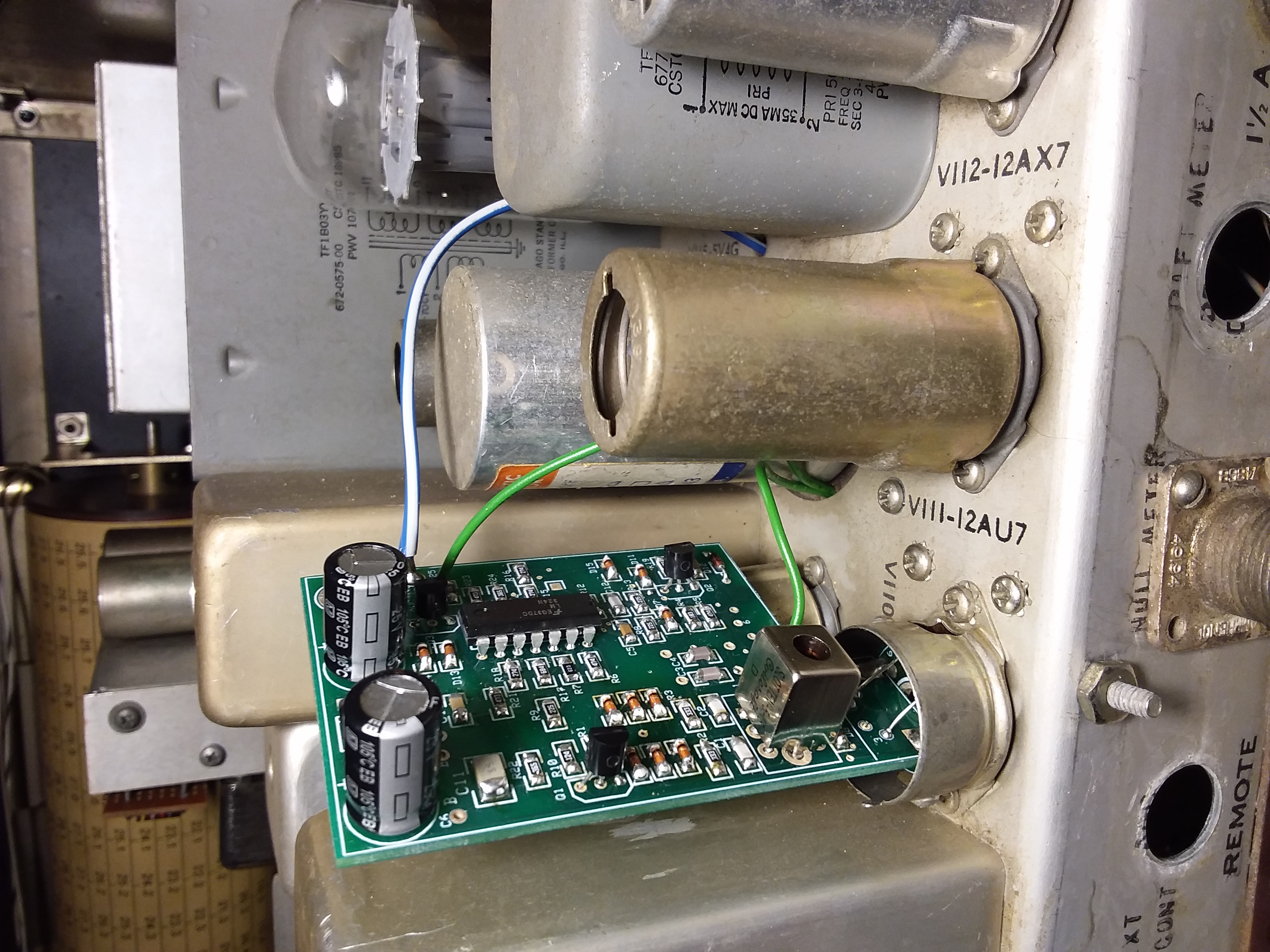
I started searching around and found Dallas Lankford's Product Detector and AVC modification circuits. I started making lists of parts and checking my junkbox and spare tube boxes. Then on eBay one day I stumbled on a modern plug-in Product Detector for the 51J-4 manufactured by Treetop Circuits up in Ontario Canada. It looked good so I ordered one. It would have taken less than hour to install except my 51J-4 has been so hacked up, I had to do some additional hacking to get the unit hooked up.

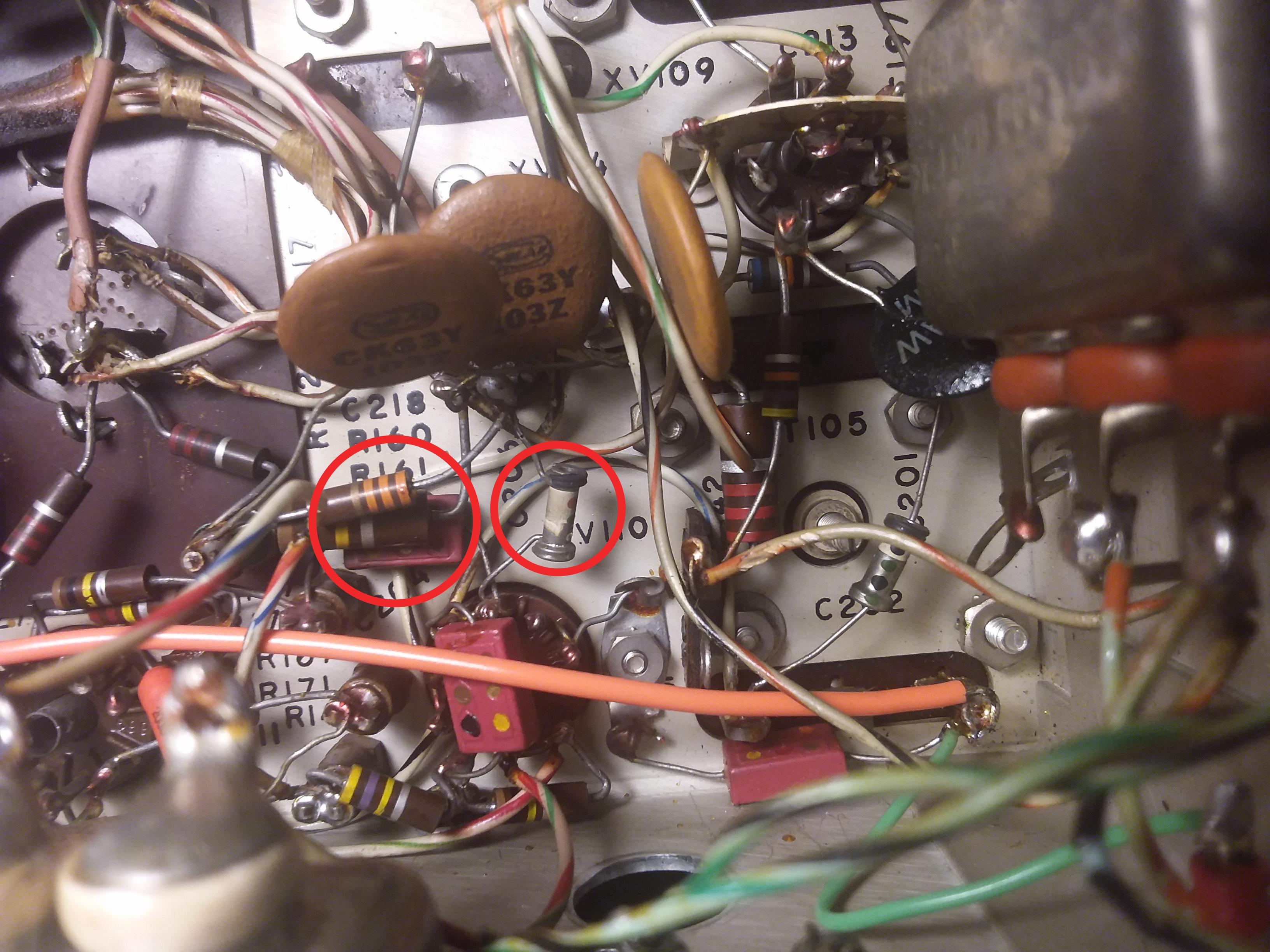
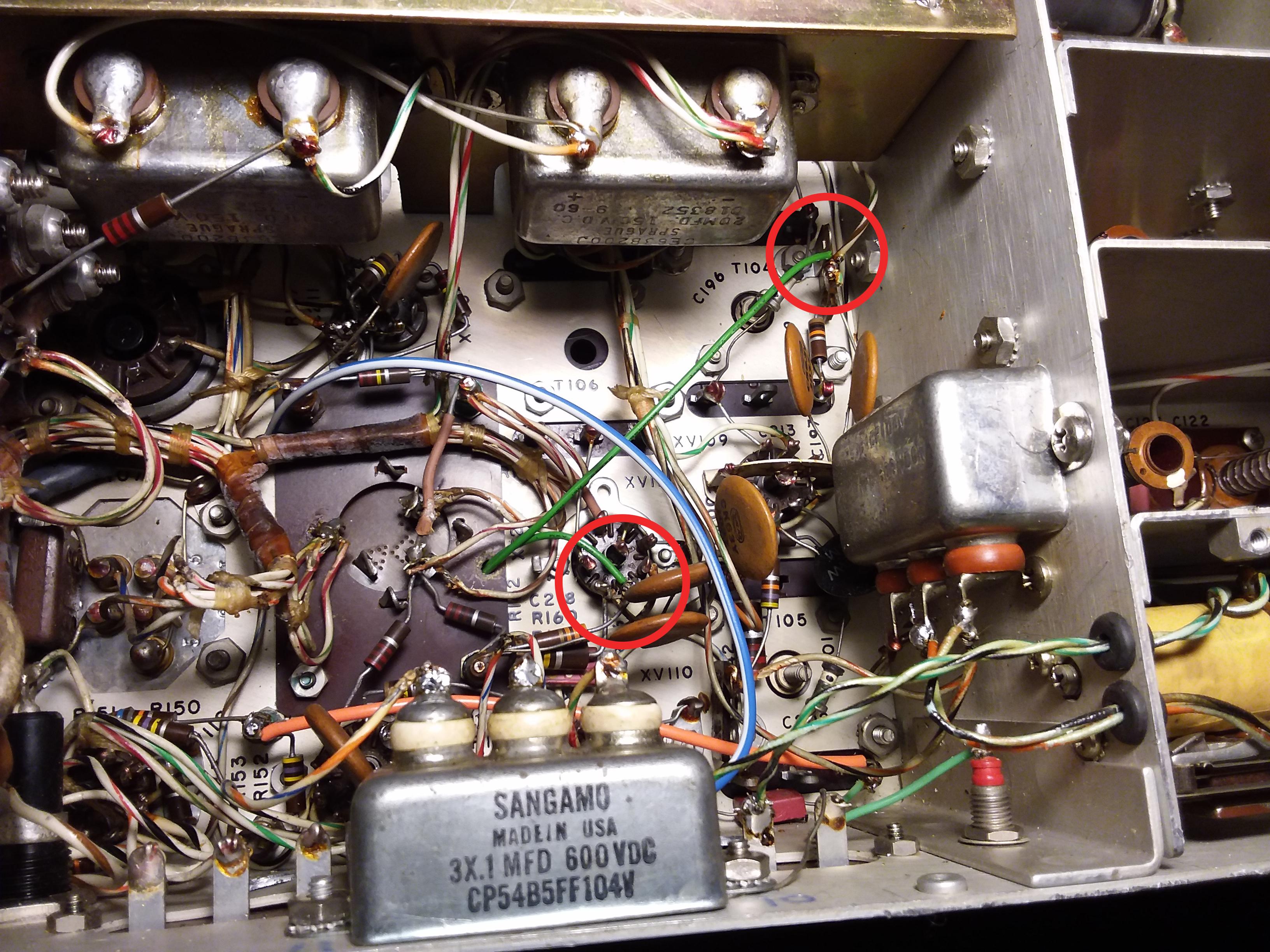
Basically you clip the 2 coupling capacitors to unhook the original BFO and AVC circuits. Then you add 2 wires to place the SB-51 into the circuits. It takes the place of the BFO tube V110 and plugs right in. My only problem was that the nearby original C217 aluminum electrolytic had been replaced with a smaller can. The SB-51 comes with a band that is meant to wrap around the electrolytic can to give the circuit board some added stability. The band doesn't reach the smaller can. Also when the capacitor can was replaced the original offset mounting bracket was removed. The new can was mounted on a fiber board which was fastened flat to the chassis surface. Instead of snaking the 2 wires from the SB-51 through the space of the offset bracket I had to drill a small hole in the fiber board at the base of the can to fit the wires through.

51J4Caps SB51Wiring
Clip out C204 and C206 - Add the two green wires

The SB-51 also includes a 12VDC test point so you can run a wire to the 51J-4 REMOTE terminal and have the muting relay ready to go. And the whole thing works. RF Gain can be cranked up full with no overload. I don't have to reach for the STANDBY switch anymore. And the S-Meter actually responds to the signals, mostly (I've got a mechanical filter issue to sort out). So here's a good word for VE3TOU Robert Thomas' SB-51 Product Detector for the 51J-4.


Cold War Mechanical Filters - 16 Nov 2020

This 51J-4 has had a weird complement of filters since I acquired it a few years ago. It came with the strange gray adjustable filter shown above plugged into the 6kc slot. Even though I had no idea what it really was it was wide enough for nice AM reception. But the two empty filter slots bugged me. And it really would need a narrower filter for the ham bands. So I started searching around for the 4 proper Collins filters 526-9007(.8kc), 9030(1.4kc), 9008(3.1kc) and 9009(6.0kc). There used to be a guy on eBay who was selling the real 51J-4 filters for $149.00 bucks a piece. I offered him $75 one time for the 3.1kc one and he just laughed at me. Back then this receiver just was not one of my priority boxes and I couldn't see paying all that money for a filter that would sit inside the radio which would be mostly sitting on a shelf. So I settled for a real Collins bread loaf filter fairly cheap that I knew wasn't the right one for the rig, but it fit in the slot and it seemed to be a bit narrower than the grey box.

But now that I was going to pair it with the KWS-1 suddenly having the proper filters was going to be an imperative. I went back on eBay scanning through all the Collins filters available. The guy with the $149 filters was still in business. Only now all he had was the 1.4 filters. For $199. I widened my search to any mechanical filter and found myself on the German eBay website looking at 3 very familiar Russian filters.

A long time ago when I first got this receiver I had bookmarked VE7CA Marcus Hansen's Collins 51J-4 website as a reference page for digging into the receiver. He had torn his apart and put it back together again. He had also solved his mechanical filter problem by purchasing 3 Russian manufactured 500 khz mechanical filters from a dealer in Slovenia. He had even gotten a copy of the specifications and knew they would work in the 51J-4.

Filter1
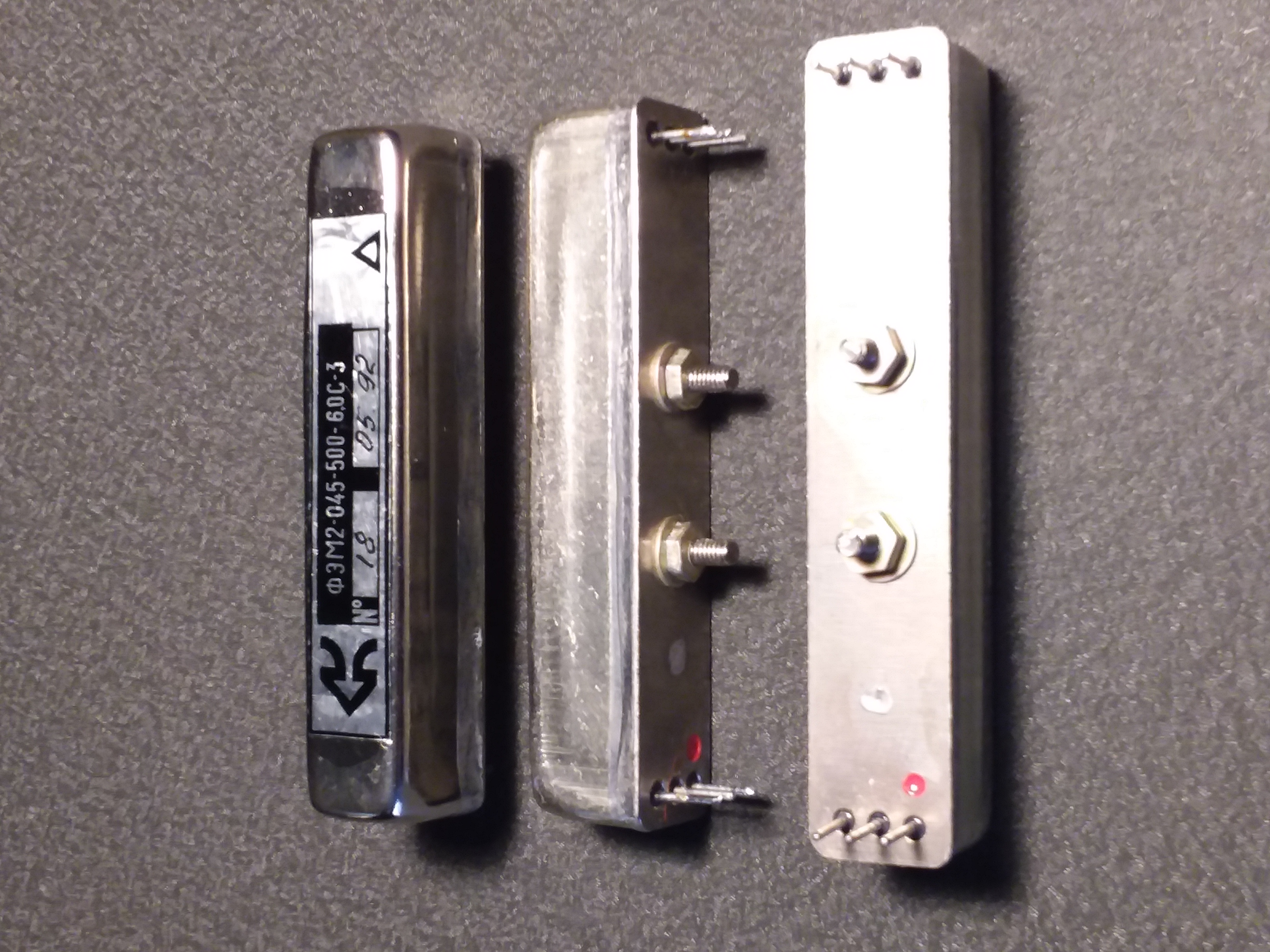
Russian 500kc mechanical filters

So here I was staring at 3 of the exact same filters from a dealer in Germany. 49 Euros for all 3 of them with 5 days to go in the auction. It was a nerve wracking 5 days but I managed to scoop up all 3 of them and they arrived in the mail last week.

Filter2 Filter3

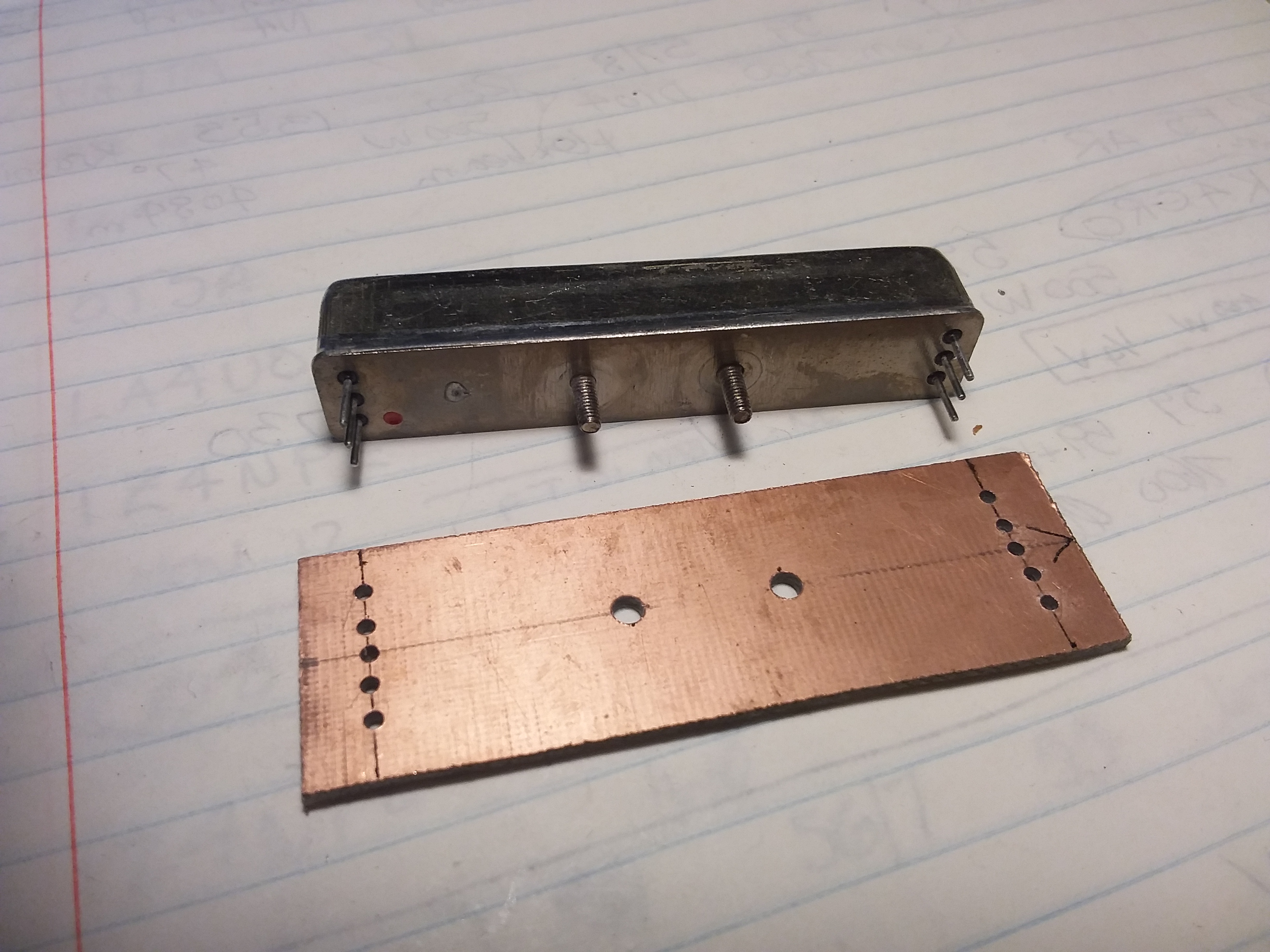
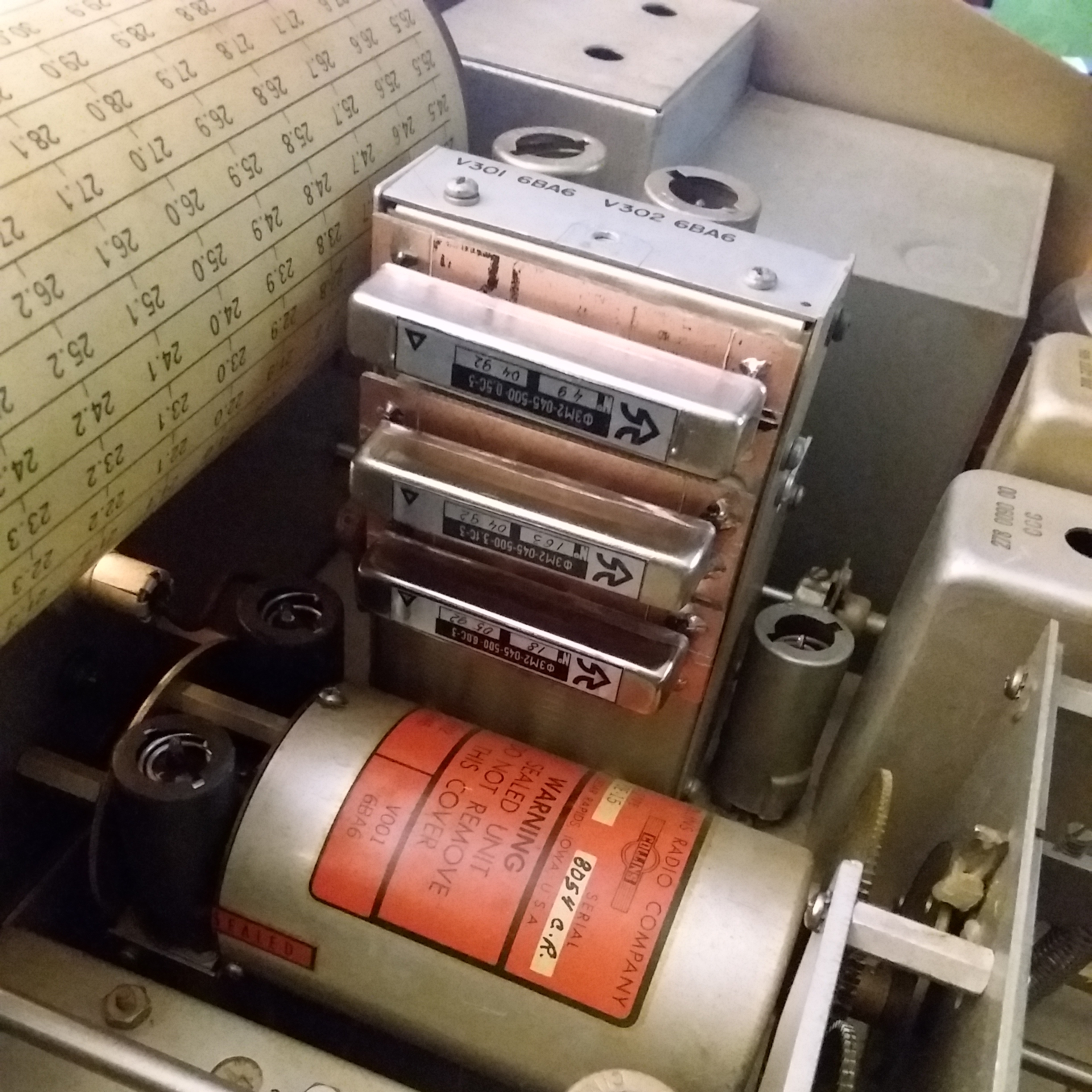
Marcus had done a fantastic job of documenting his work making mounting plates for the filters to fit in the Collins slots. The Russian filter has 3 small closely spaced connecting pins on each end so the plate has to accept these pins and then connect out to longer wider spaced pins to fit in the Collins connectors. I had a piece of old Radio Shack (I seem to rely a lot on old Radio Shack stuff. Who would have thought that 30 years ago?) double sided copper clad board that has been sliding around in the bottom of the bottom junk drawer for ages. I pulled it out, sawed off 3 proper sized rectangles and started drilling and gouging my way into them. As I've said before, the mechanical aspects of this hobby are not my strong suit. But I measured very carefully by eye (down to the 32nd of an inch) and the 3 filters fit very nicely into the drilled holes. I used successively a mat knife, a little "greenie" and then a red Xcelite screwdriver to separate and then gouge out the solder landings. For the long connectors I cut up a couple of 2 watt resistors leads and soldered them to the outside holes.

So, coupled with the SB-51 product detector I think I've got a decent rig. It's going to take a while to get used to the filters. They really work. The 0.5 is so good on the lower end of the bands it makes me want to take up CW again. The 3.1, is different. You really have to fine tune the BFO to make it work but when you get it the audio is very good. The 6.0 is fine for AM although it's a bit restricted compared to the original gray box.