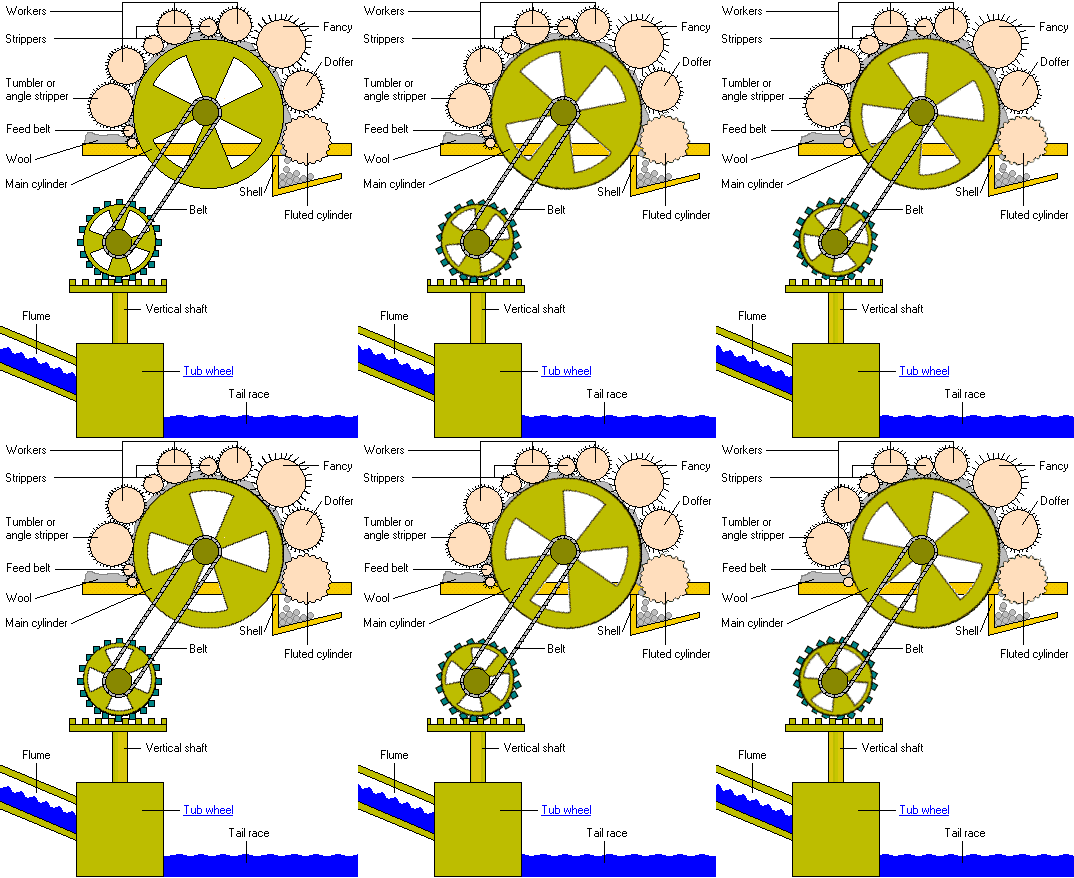
Water powered carding machine (Old Sturbridge Village)
| What's a Fulling Mill? |
|
A Fulling mill was a variety of water mill used for fulling cloth. Fulling mills
were introduced to England in about the 12th century and existed in most cloth
making areas of England and Wales. They were also known as walk mills, presumably
because fulling was once done by a man walking on the cloth in a tub of water.
Fulling or walking is a step in clothmaking which involves the cleansing of
cloth (particularly wool) to get rid of oils, dirt, and other impurities.
Originally, this was literally pounding the cloth with the fuller's feet, but
from the medieval period it was often carried out in a water mill in which the
cloth was beaten with wooden hammers, known as fulling stocks. Such mills were
known as fulling mills. (1)
|
| What's a Fulling Mill For? |
|
Immediately after a piece of woollen cloth has been woven, the fibres of its fabric are loose,
airy and unmeshed, similar in texture and appearance to a piece of cheese-cloth or sack-cloth.
The cloth still retains, clinging to its fibres, a significant amount of oil or grease, either
natural oil such as lanolin in wool, or an introduced substance
to facilitate weaving. This must be removed if the cloth is to be dyed, since oils and grease will
inhibit the binding action of the dyes. Fulling, also known as felting, was one in a sequence of
processes involved in the production of woollen cloth and fulfilled two of the functions that were necessary
for the proper finishing of the cloth: scouring and consolidation of the fibres of the fabric. (1)
|
| What's a Carding Machine? |
| Before wool can be spun into yarn for knitting or weaving into cloth, it first must be brushed, or carded. Carding takes the unordered wool fibers and lines them up getting rid of any tangles. In a carding machine the fibers are fed into a series of round drums and rollers. Each roller is covered with a series of bent iron wires which grab the wool and feed it on to the next roller. The output is in the form of a flat orderly mass of fibers. |
|
Water powered carding machine (Old Sturbridge Village) |
|
References: 1. Isle of Wight Industrial Archeology Society 2. Old Sturbridge Village - Carding Machines |